Electrical Panel Upgrade Mistakes: What Homeowners Should Avoid
Electrical panel upgrade mistakes include choosing the wrong panel capacity, skipping load calculations, overlooking wiring compatibility, using incorrect breakers, ignoring grounding, neglecting permits and inspections, and treating warning signs as minor repairs; Electrician Pittsburgh checks the existing system, explains the corrective work, and provides Free Estimates Available.
Get a Free EstimateWhy Electrical Panel Upgrade Mistakes Matter
Electrical panel upgrade mistakes matter because an incorrect panel, connection, or protection device can leave the home vulnerable to electrical faults.
An electrical panel controls circuit protection throughout the home. We inspect the equipment, connections, and labeling so the electrical panel upgrade supports electrical safety and code compliance.
Mistake 1: Choosing Panel Capacity Without a Load Calculation
Why the mistake happens
Panel capacity should follow an electrical load calculation, not a guess based on the number of spaces in a panel.
Homeowners may focus on adding breakers without reviewing demand load, service capacity, and the equipment already served. We complete a load calculation before recommending panel equipment.
Why it creates risk
An undersized service can struggle with the electrical load, while an oversized plan may not match the available utility service. We explain whether the repair scope calls for load changes, panel work, or a service capacity upgrade.
How we correct it
Our team reviews demand load, existing circuits, and planned equipment before selecting panel capacity. The quote identifies the work needed to make the installation safe and compatible.
Mistake 2: Replacing the Panel Without Checking the Service Equipment
Why the mistake happens
A panel replacement does not automatically correct problems with the service entrance, meter base, or service conductors.
We inspect the main disconnect and the connection between utility service and the electrical panel before planning the work.
Why it creates risk
Damaged service conductors or unsuitable service equipment can affect the entire installation. We identify those conditions so the upgrade scope accounts for the actual service capacity.
How we correct it
Our crew examines the service entrance, meter base, main disconnect, and panel connection. We explain any required coordination with the utility service before work begins.
Mistake 3: Installing Breakers That Do Not Match the Panel
Why the mistake happens
Breaker compatibility depends on the panelboard listing and the circuit requirements.
Breakers that appear to fit may not provide the correct connection or overcurrent protection. We verify the approved circuit breaker type before circuit breaker replacement.
Why it creates risk
An incompatible breaker can weaken circuit protection and complicate panel labeling. We review the breaker arrangement and match each device to the panelboard.
How we correct it
Our team checks breaker compatibility, conductor requirements, and the circuit directory. We replace incorrect devices with equipment approved for the panel and document the changes.
Mistake 4: Reusing Damaged or Incompatible Wiring
Why the mistake happens
Branch circuit wiring may look usable while its insulation, conductor size, or connections have already been damaged.
We inspect accessible electrical wiring before reconnecting it to new equipment.
Why it creates risk
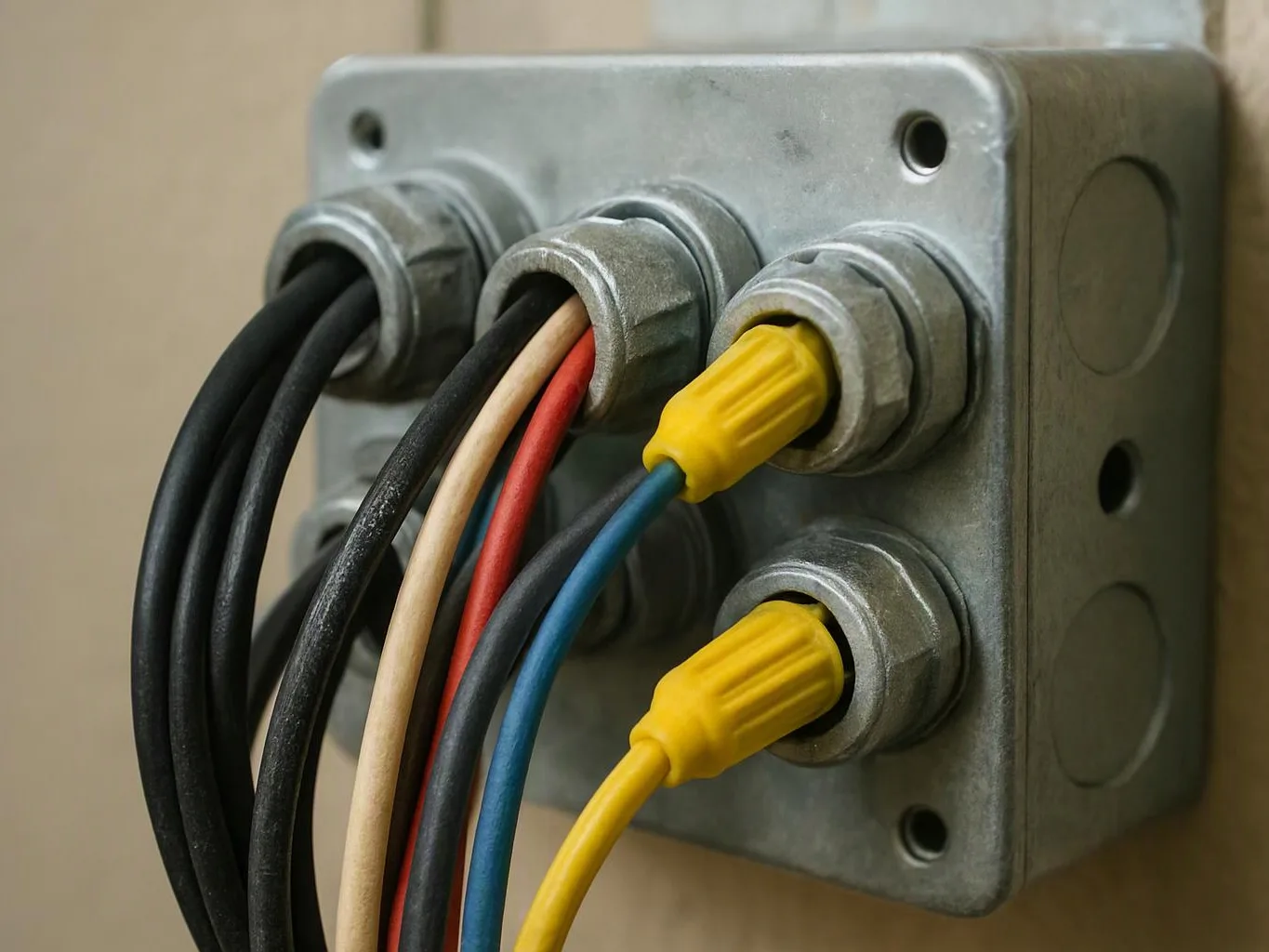
Insulation damage, poor wire connections, and an incorrect conductor size can cause heat or unreliable operation. We trace questionable wiring and identify whether a junction box or wiring correction is needed.
How we correct it
Our crew checks the branch circuit, conductor size, insulation, and accessible junction boxes. We repair or replace damaged sections before completing the panel connection.
Mistake 5: Ignoring Grounding and Bonding Details
Why the mistake happens
Grounding and bonding details can be hidden behind the panel cover, so they are easy to overlook during a replacement.
We trace the grounding electrode system, equipment grounding conductor, neutral conductor, ground bar, and bonding points.
Why it creates risk
Incorrect neutral and ground arrangements can affect fault-current paths and circuit protection. We correct connections according to the equipment design and applicable code requirements.
How we correct it
Our team verifies grounding electrodes, equipment grounding conductors, neutral bar connections, and bonding points. We document the completed work during final verification.
Mistake 6: Adding Circuits Without Reviewing the Whole Panel
Adding a branch circuit requires a review of panel space, electrical load, existing breakers, and the circuit directory.
A tandem breaker may not be suitable for every panel or circuit arrangement. We review the complete panel before adding circuits and update the panel labeling when changes are made.
Our inspection also looks for crowded wiring, loose terminations, and signs that the service capacity cannot support the planned demand.
Mistake 7: Skipping Permits, Inspection, and Final Testing
Code compliance depends on completing the required permit and inspection process for the work.
We clarify the electrical permit requirements, arrange the work around the inspection process, and keep panel documentation with the project records.
Final testing confirms that connections, breaker operation, grounding, and panel labeling match the completed installation. We perform final testing before considering the work complete.
Mistake 8: Treating Panel Warning Signs as Minor Repairs
Warning signs that need attention
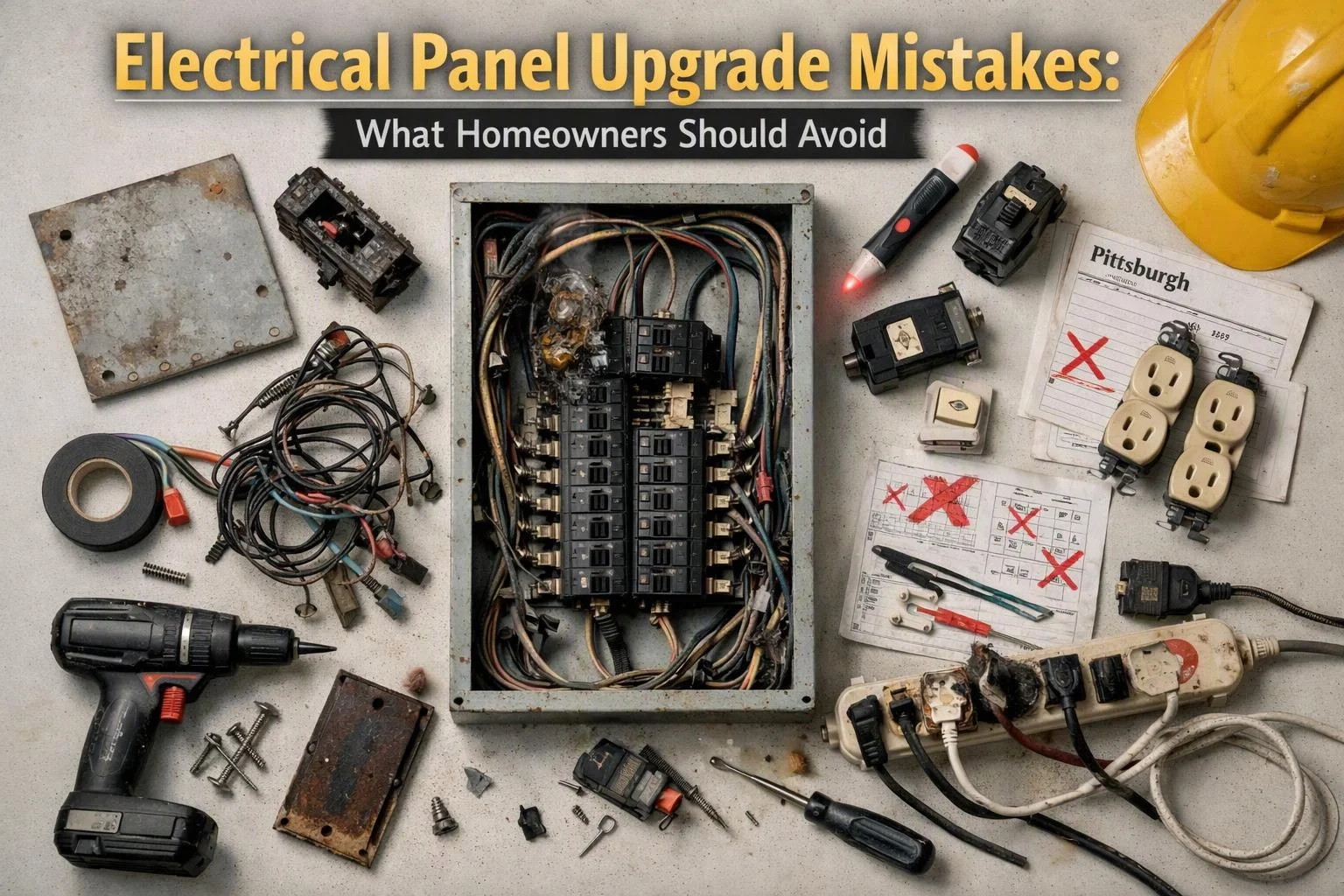
Burn marks, a buzzing breaker, overheating, repeated tripped breakers, and a loose connection can point to more than a simple part failure.
We inspect the electrical panel and connected circuits to find the source before recommending electrical panel repair.
Why a quick fix can fail
Replacing one breaker without checking the wiring or bus connection may leave the underlying fault in place. Our team checks the panel enclosure, bus bars, conductors, and terminations.
How we correct it
We determine whether the condition calls for circuit breaker replacement, panel wiring correction, electrical panel repair, or a complete panel replacement. We explain the cause and the corrective scope before work begins.
Mistake 9: Planning the Upgrade Without Considering Future Electrical Demand
Future electrical demand should be part of panel planning when a home may add an electric vehicle charger, heat pump, home addition, or backup generator.
We ask about planned equipment before selecting panel capacity and service equipment.
Ignoring future load can lead to another upgrade or limit where new circuits can be placed. Our team compares the present electrical load with the planned demand and explains the practical options.
What Each Panel Upgrade Should Include
A sound panel upgrade includes an assessment of the existing system, compatible equipment, correctly sized protection, verified connections, and required approval.
The exact scope depends on the condition of the electrical service, panel, branch circuits, and grounding system.
| Work area | What we verify |
|---|---|
| Existing electrical system | Panel condition, service equipment, branch circuits, and visible wiring |
| Load assessment | Electrical load, demand load, and available service capacity |
| Panel selection | Panel capacity, enclosure, bus bars, and approved equipment |
| Breaker replacement | Breaker compatibility, overcurrent protection, and conductor requirements |
| Grounding and bonding | Neutral, ground, bonding, and grounding electrode connections |
| Permit and inspection | Required approval and inspection steps |
| Final verification | Testing, circuit directory updates, and completed panel documentation |
How We Assess the Work Before Recommending an Upgrade
We assess the existing panel, service equipment, wiring, circuit demand, and safety condition before recommending an electrical panel upgrade or repair.
Our assessment separates a repair scope from an upgrade scope so the proposed work addresses the actual cause.
When to Call Electrician Pittsburgh Instead of Doing It Yourself
Call Electrician Pittsburgh when the work involves opening the panel, changing breakers, correcting damaged wiring, or investigating heat, noise, or burning smells.
Simple observation is safe, but panel work exposes you to energized electrical parts. We handle the testing, repair, replacement, and final verification.
What Changes the Cost of Correcting a Panel Upgrade Mistake
The cost of correcting a panel upgrade mistake depends on the panel condition, service capacity, wiring changes, compatible equipment, access, and required approval; our Free Estimates Available process explains the work included in the quote.
Panel repair may involve a different scope from panel replacement. We also consider service conductors, breaker compatibility, grounding, site conditions, permit requirements, and the need for final testing.
Our estimate identifies the corrective work, equipment, wiring changes, approval steps, and verification included in the proposed scope.
How to Avoid Panel Upgrade Problems Before Work Begins
A clear project scope helps prevent missed wiring, breaker, load, and approval issues before the work starts.
We use the planned equipment and existing system information to organize the inspection and final testing process.
Questions About Electrical Panel Upgrade Mistakes
Can an electrical panel be upgraded without replacing the wiring?
Yes, an electrical panel can be upgraded without replacing all wiring when the existing branch circuits are compatible, undamaged, correctly sized, and safely connected. Electrician Pittsburgh inspects the wiring and replaces only the sections that cannot support the planned work.
What should homeowners check after an electrical panel upgrade?
Homeowners should check that the circuit directory is accurate, breakers are labeled, required inspection steps are complete, and unusual heat, noise, or odors are not present. We also explain the final testing and documentation completed with the upgrade.
When does a breaker problem require circuit breaker replacement?
A breaker problem requires circuit breaker replacement when the device is damaged, incompatible, fails to reset, or cannot provide the required overcurrent protection. We inspect the breaker, circuit, conductor, and panel connection before replacing it.
Can an overloaded panel be repaired without a full upgrade?
Sometimes an overloaded panel can be corrected without a full upgrade when the cause is a faulty breaker, damaged connection, or incorrect circuit arrangement. We complete a load calculation and inspect the service capacity before choosing electrical panel repair or an upgrade scope.
What information should an electrical panel upgrade quote include?
An electrical panel upgrade quote should identify the panel and breakers, load and service work, wiring corrections, grounding and bonding, permit and inspection steps, and final verification. Our Free Estimates Available process explains which corrective work and equipment are included.
Electrical panel upgrade mistakes can affect safety, reliability, and code compliance. Contact Electrician Pittsburgh to review the existing system, explain the corrective scope, and arrange the next step.
Get a Free Estimate