Electrical Troubleshooting: Fault Types, Testing Methods, and Diagnostic Tools
Electrical troubleshooting uses fault symptoms, targeted tests, and diagnostic tools to locate electrical problems. At Electrician Pittsburgh, we use methods such as voltage testing and thermal imaging to guide repairs. The right method depends on the symptoms, safe access, and what each test can reveal.
Get a Free EstimateWhat electrical problems can troubleshooting identify?
Electrical troubleshooting can trace symptoms such as dead outlets and flickering lights to faults in a circuit. We check the affected wiring and equipment to narrow down the cause.
A tripped breaker may point to an overloaded circuit, a short circuit, or a ground fault. A loose connection can also cause flickering or loss of power. We use test readings and an electrical safety inspection to distinguish the symptoms from their cause.
Why does a circuit breaker keep tripping?
A circuit breaker can trip repeatedly because of an overload, a short circuit, or a ground fault. A faulty appliance can also cause a trip. Don't keep resetting the breaker.
An overload occurs when equipment draws more current than the circuit can safely carry. A short circuit or ground fault sends current along an unintended path. We investigate the circuit and connected equipment before recommending a repair.
How do electrical troubleshooting methods compare?
Electrical troubleshooting methods suit different faults, and their cost varies with the testing scope. Access and fault complexity also affect the estimate, so ask us for a quote covering the proposed work.
| Type | Key Features | Cost | Best For |
|---|---|---|---|
| Visual inspection | Checks accessible equipment for visible damage | Varies | Visible warning signs |
| Voltage testing | Measures voltage at selected points | Varies | Checking power and voltage |
| Continuity testing | Checks for an intact electrical path on a de-energized circuit | Varies | Tracing an open circuit |
| Current testing | Measures current draw | Varies | Investigating an overload |
| Insulation resistance testing | Checks how well insulation resists current leakage | Varies | Investigating insulation faults |
| Thermal imaging | Shows surface heat patterns | Varies | Locating signs of overheating |
Visual inspection
A visual inspection is a check for damage we can see. We look for burn marks and other warning signs on accessible equipment. A visual check can't reveal every hidden fault.
Voltage testing
Voltage testing is a check of electrical pressure at a selected point. We use a multimeter or voltage tester to investigate power at an outlet or other circuit point. A reading helps us narrow the fault, but it doesn't always establish the cause.
Continuity testing
Continuity testing is a check for an unbroken electrical path. We use a multimeter on a de-energized circuit to help trace an open circuit. A continuity reading alone doesn't prove the wiring is safe under load.
Current testing
Current testing is a measurement of electrical flow. We use a clamp meter to check current draw when investigating an overload. The reading reflects conditions at the time of the test.
Insulation resistance testing
Insulation resistance testing is a check of how well wiring insulation resists leakage. We use an insulation resistance tester to investigate deteriorated insulation. We prepare the circuit and equipment for the test to avoid damage and electrical hazards.
Thermal imaging
Thermal imaging is a method that shows surface heat patterns. We use a thermal camera to look for hot spots that may indicate overheating. Electrical load and access can limit what the camera reveals.
Can thermal imaging detect electrical problems?
Yes, thermal imaging can reveal unusual heat that points to an electrical problem. A heat pattern doesn't confirm the cause, and not every fault produces detectable heat.
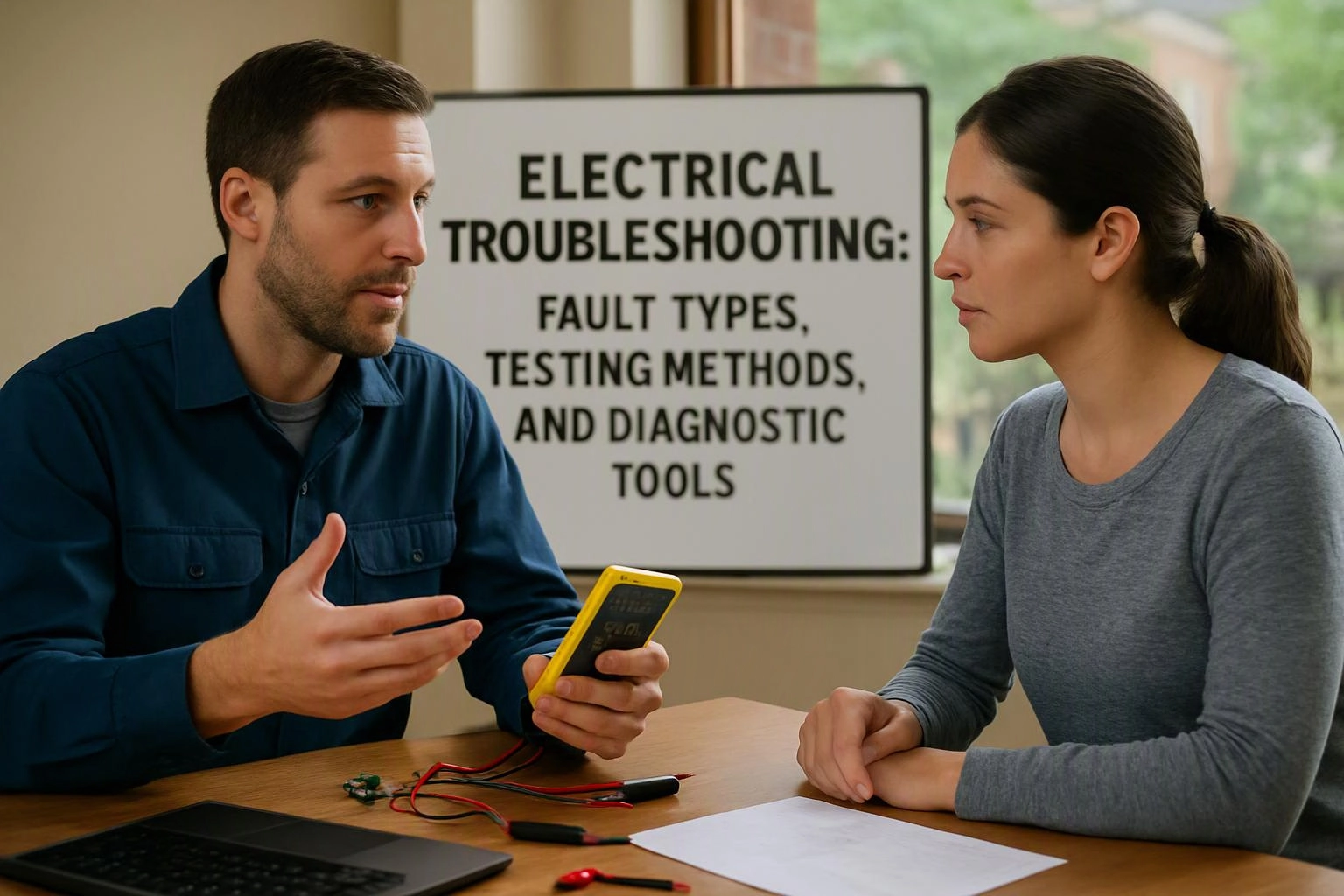
Overheated connections and overloaded equipment can create unusual thermal patterns. During Thermal Imaging Electrical Testing, we assess what the camera shows and use other tests to confirm the cause.
How do we troubleshoot an electrical fault?
We troubleshoot an electrical fault by reviewing symptoms, selecting tests, and using the results to locate the cause. Our approach depends on the equipment and the hazards we find.
When should you stop using an electrical circuit?
Stop using an electrical circuit if you notice sparks, a burning smell, or a hot outlet. Don't touch damaged equipment or open an electrical panel. Don't test live wiring yourself.
If there's fire or smoke, leave the area and contact emergency services. For an urgent electrical concern, contact Electrician Pittsburgh about our Emergency Electrician Service. We'll discuss the problem and the next steps.
Get a Free EstimateWhat Are the Key Specifications to Know?
- Topic Focus
- Electrical Troubleshooting: Fault Types, Testing Methods, and Diagnostic Tools
- Related Core Service
- Electrical Troubleshooting
- Evaluation Method
- On-Site Inspection & Written Scope
- Compliance Standard
- Local Building Code & Manufacturer Specs
Related Resources
What Happens During an Emergency Electrician Callout?
How Long It TakesHow Long Emergency Electrical Repairs Take in Pittsburgh, PA
What It CostsEmergency Electrician Cost Factors: After-Hours Calls and Troubleshooting
How to HireHow to Choose an Emergency Electrician: Credentials, Availability and Estimates