How Emergency Electrical Troubleshooting Works in Pittsburgh, PA
Emergency electrical troubleshooting identifies the immediate hazard, isolates the affected circuit, tests the electrical system, and explains the repair path; Electrician Pittsburgh performs the diagnosis and provides Free Estimates Available.
Get a Free Estimate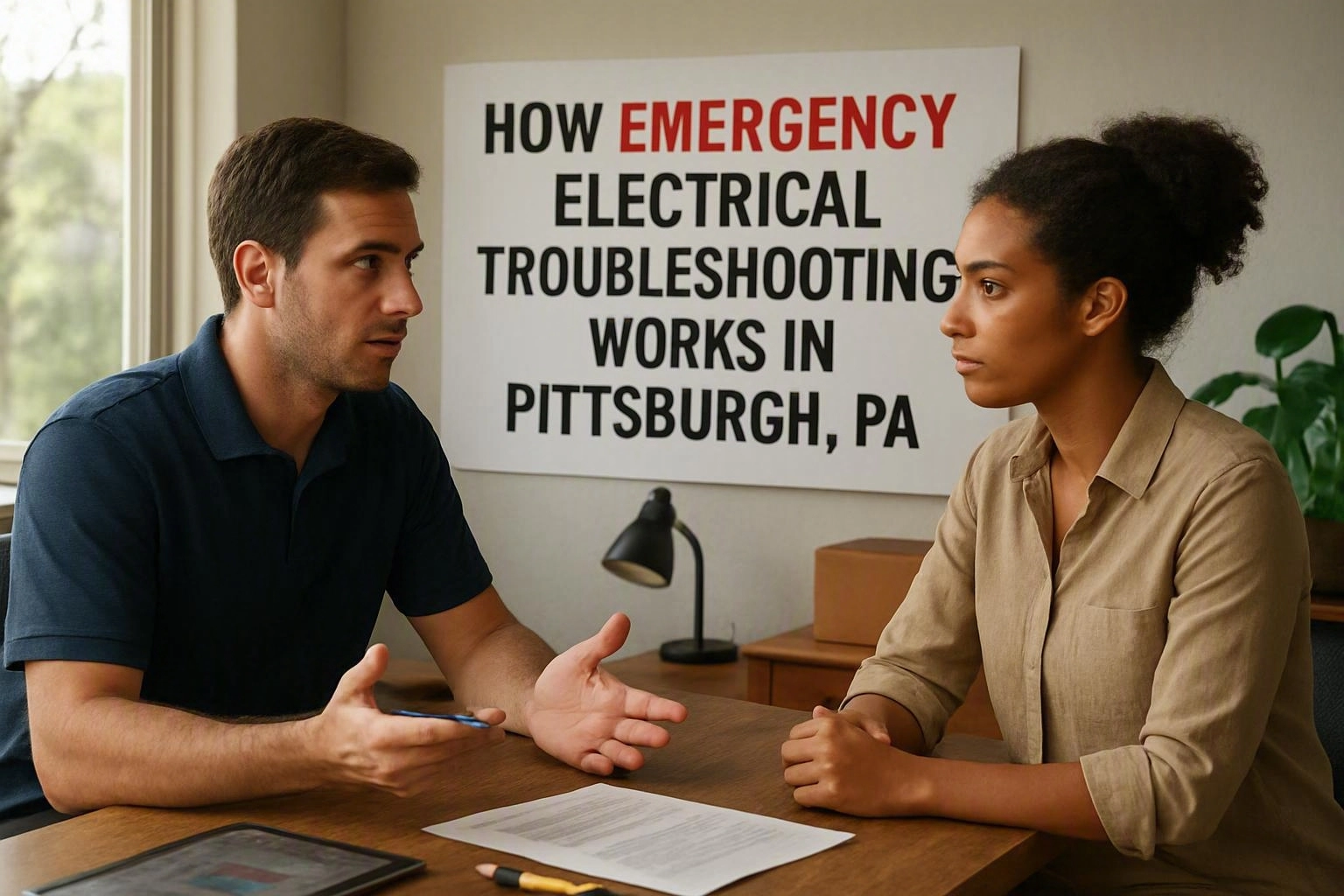
What Emergency Electrical Troubleshooting Covers
Emergency electrical troubleshooting is a safety-led process that identifies the source of an urgent electrical fault and determines the next safe repair.
An electrical fault can affect a circuit, outlet, switch, panel, or connected appliance. We first control access to the hazard and keep people away from live electrical parts.
Our team then uses inspection and testing to separate a local fault from a wider power interruption. The goal is a safe repair that protects the electrical system and the people using it.
How Electrician Pittsburgh Diagnoses an Electrical Emergency
Electrician Pittsburgh diagnoses an electrical emergency by making the area safe, gathering symptoms, inspecting equipment, testing circuits, isolating the fault, and explaining the repair.
For related wiring concerns, our Residential Rewiring Process: What to Expect in Pittsburgh, PA guide explains how broader wiring work is evaluated.
What We Check Before Recommending a Repair
Our electrical troubleshooting table connects each visible symptom with the system areas we inspect and the evidence needed to choose a safe repair.
We use the findings to decide whether the problem is limited to one component or involves a larger section of the electrical system.
| Reported symptom | Areas we inspect | Evidence we look for |
|---|---|---|
| Repeated tripped breaker | Electrical panel, circuit breaker, and branch circuit | Overload, short circuit, heat, or a wiring fault |
| Burning smell or overheating | Wiring, outlets, switches, and panel connections | Discoloration, melted insulation, loose parts, or heat damage |
| Sparking outlet or loss of power | Outlet, connected appliance, circuit, and panel | Voltage results, damaged contacts, and fault location |
| Storm-related electrical issue | Service entrance, panel, wiring, and surge protection | Surge damage, exposed equipment, and service-infrastructure faults |
How to Prepare Before We Begin Troubleshooting
Electrical safety starts with protecting people from the hazard, recording what happened, and keeping the affected area accessible.
You can prepare without opening the panel or touching damaged equipment. Our crew handles testing and contact with the electrical system.
How We Explain the Repair Plan and Estimate
Our repair plan explains the diagnosed fault, the work needed to correct it, the parts involved, and the available estimate before repair work proceeds.
Free Estimates Available applies to the estimate process we provide. We connect the estimate to the fault location, repair scope, replacement parts, and any electrical code corrections identified during the inspection.
We explain whether the work involves a circuit breaker, wiring, an outlet, the electrical panel, or service equipment. We also describe any safe temporary measure and the permanent electrical repair needed.
For backup power questions, our How Standby Generator Installation Works in Pittsburgh, PA guide covers a separate installation process.
What Can Cause an Urgent Electrical Fault in Pittsburgh?
Urgent electrical faults in Pittsburgh can involve exposed service-entry equipment, storm-related interruptions, or surge damage affecting household electrical systems.
Seasonal freezing, snow, and ice in Allegheny County can disrupt exposed electrical equipment and increase urgent faults. We inspect the service entrance and outdoor connections when winter conditions may have contributed to the problem.
Seasonal thunderstorms and strong winds in Allegheny County can cause electrical interruptions, surge-related damage, and service-infrastructure faults. We check affected panels, wiring, and protective equipment for signs that support a safe repair.
When Electrical Troubleshooting Requires Immediate Safety Action
Electrical troubleshooting requires immediate safety action when smoke, burning odors, sparks, water exposure, or repeated breaker operation indicates a possible hazard.
A smoke-filled area, burning odor, or sparking outlet can signal overheating or damaged wiring. Move away from the affected area and keep others away while we assess the electrical fault.
Water and electricity create a serious electrical shock hazard. Do not enter a wet area to reach a circuit breaker or appliance; our team evaluates the system after the area is safe to access.
A circuit breaker that repeatedly trips needs diagnosis instead of repeated resetting. We isolate the affected circuit and test it to identify the cause.
Questions to Ask About an Emergency Electrical Diagnosis
An electrical diagnosis should identify the fault location, explain the repair scope, and show how electrical safety guides the next step.
Ask which circuit or component caused the urgent electrical problem and what testing supports that conclusion. Ask whether the repair plan includes replacement parts, wiring work, or code correction.
Ask what the estimate includes and which safety concerns need attention before normal power use resumes. We answer these questions from our inspection and testing findings.
Questions About Emergency Electrical Troubleshooting in Pittsburgh
What should I do before emergency electrical troubleshooting begins?
Electrician Pittsburgh recommends keeping people away from smoke, sparks, water exposure, damaged equipment, and the affected circuit while recording what happened and clearing safe access.
Which symptoms help Electrician Pittsburgh locate an electrical fault?
Symptoms such as a tripped breaker, burning smell, sparking outlet, power interruption, smoke, and water exposure help us focus the inspection and fault isolation.
What changes the repair plan for an emergency electrical problem?
The repair plan changes with the fault location, damaged components, wiring condition, access to the system, replacement parts, and electrical code corrections.
Can storm damage affect electrical troubleshooting in Pittsburgh?
Yes, storm damage can affect electrical troubleshooting by causing power interruptions, surge damage, exposed service-entry equipment, and faults in outdoor electrical infrastructure.
Emergency electrical troubleshooting is safest when the hazard is controlled, the fault is isolated, and the repair plan is explained clearly. Electrician Pittsburgh can assess the affected electrical system and provide an estimate for the work identified.
Contact Electrician Pittsburgh about electrical troubleshooting