What is AFCI?
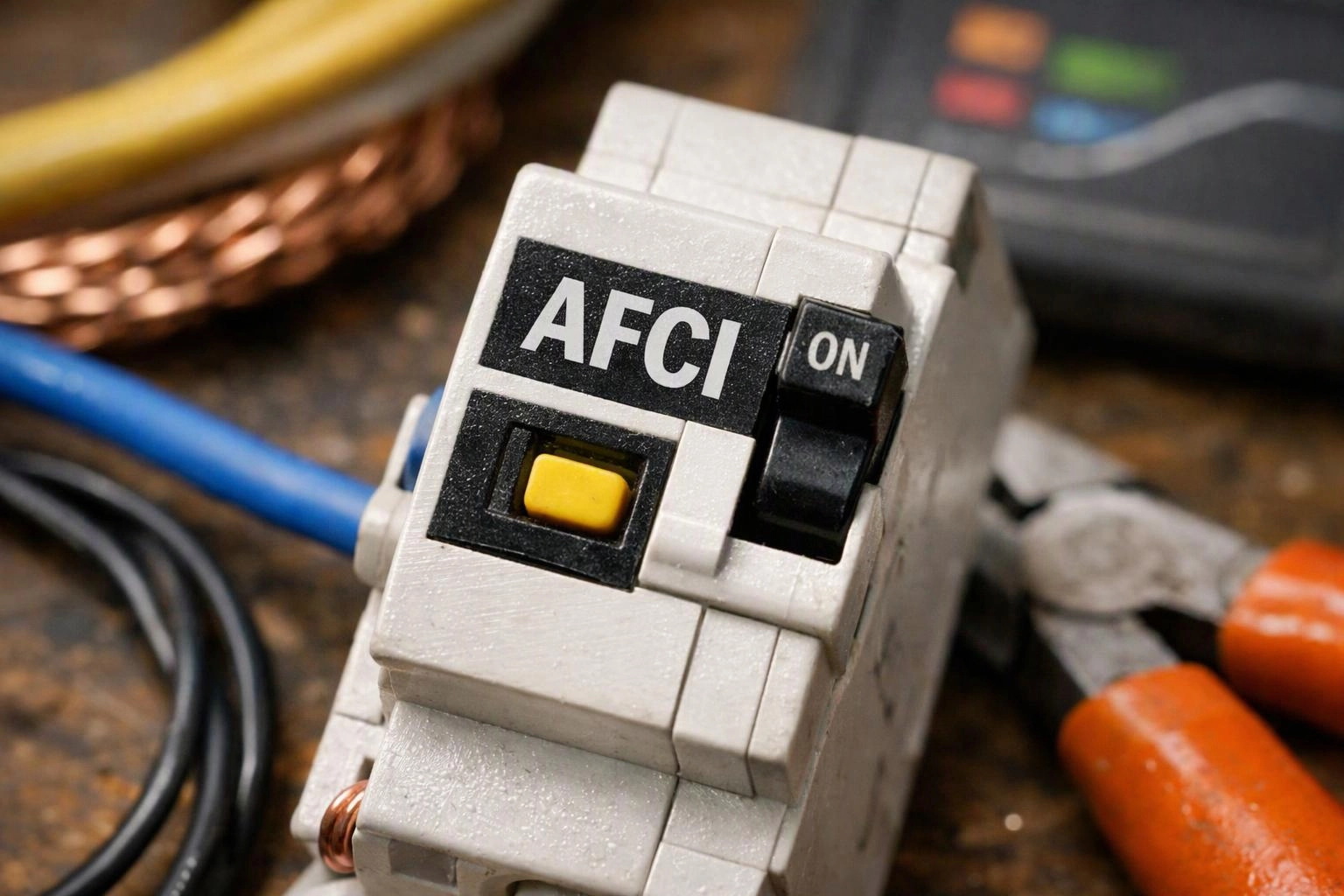
AFCI is a protective device that detects dangerous electrical arcing and disconnects power before an arc starts a fire. AFCI protection may be built into a circuit breaker or installed at a receptacle. The device monitors electrical waveforms and responds to arc patterns that ordinary overcurrent protection may not detect. For more detail, see How Much Does a 24-Hour Electrician Cost in Pittsburgh?.
Quick Facts About AFCI
Category
Electrical fire protection
Used for
Detecting hazardous electrical arcs
Common confusion
AFCI is not the same as GFCI protection
Relevant standard
National Electrical Code Article 210.12
Also called
Arc-fault circuit interrupter, Arc-fault breaker
Often discussed with
AFCI Protection Installation, Electrical Code Corrections
Key Takeaways About AFCI
- AFCI protection detects hazardous arcing that a standard circuit breaker may not recognize.
- An AFCI may be installed as a breaker or as a listed receptacle.
- AFCI devices protect people and property from fire caused by damaged wiring.
- Repeated tripping can indicate damaged insulation, loose connections, or an incompatible appliance.
- AFCI requirements depend on the adopted electrical code and the circuit location.
Understanding AFCI

AFCI means arc-fault circuit interrupter. An AFCI detects an unintended electrical arc. It disconnects the circuit before the arc creates enough heat to ignite nearby materials. Arc faults can develop when wire insulation is damaged. They can also develop when a connection becomes loose or a cord is pinched.
Related glossary terms: Circuit Breaker, Breaker Panel, Electrical Grounding.
A standard circuit breaker mainly responds to excess current. This current comes from an overload or short circuit. An AFCI looks for the electrical signs of arcing. Arcing may occur below the breaker’s normal trip point. AFCI protection can fit inside a breaker panel breaker. It can also fit inside a listed receptacle. The choice depends on the circuit and code rules.
How AFCI Works, Is Measured, or Is Used?
An AFCI uses electronic sensing to monitor current through a circuit. The device compares the changing waveform with arc patterns. These patterns include series arcs and parallel arcs. A series arc occurs along one conductor. A parallel arc occurs between conductors or between a conductor and ground. The device opens the circuit when it finds a dangerous pattern.
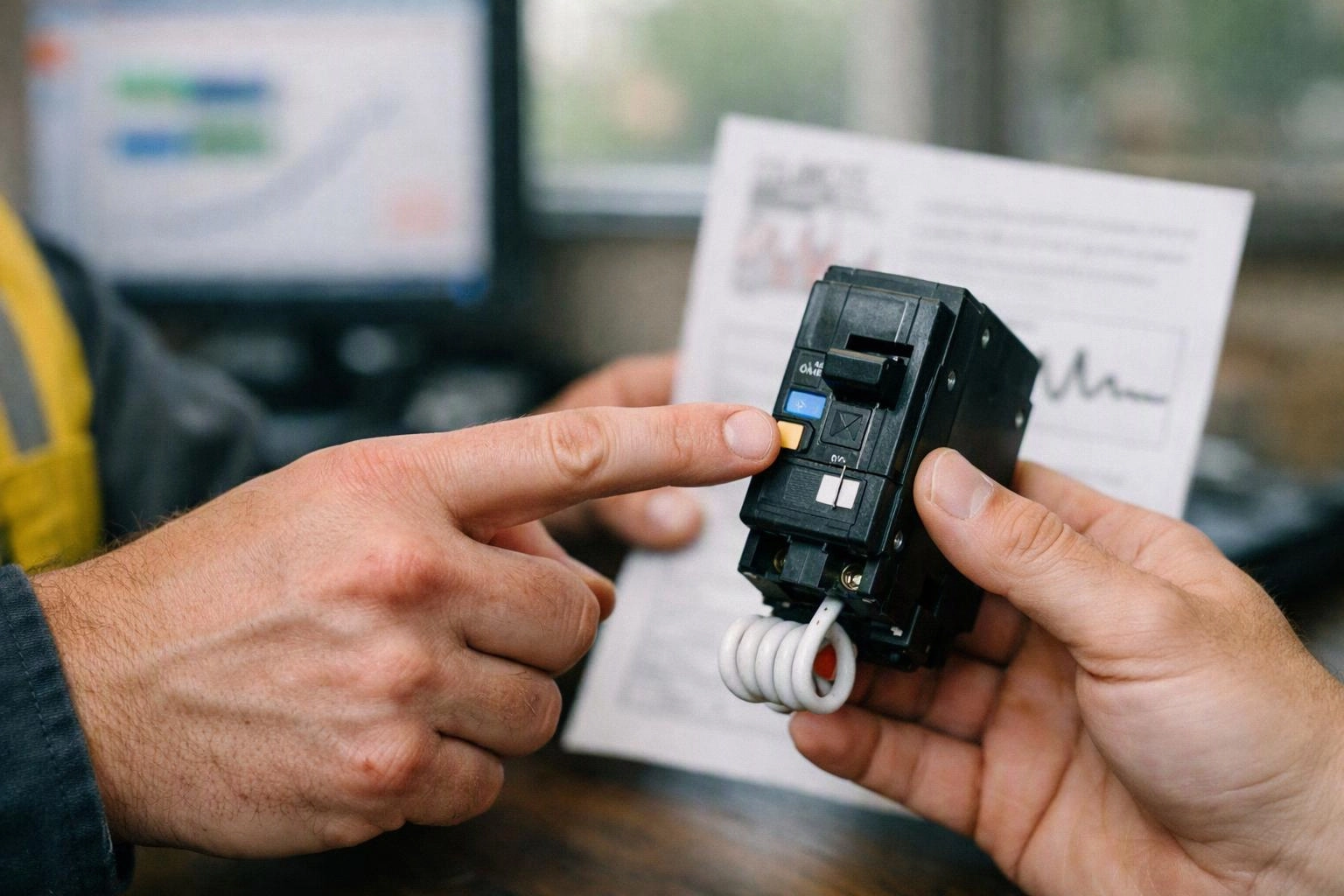
Installation follows the circuit design, equipment listing, and local electrical code. A breaker-type AFCI protects wiring downstream from the panel. A receptacle-type AFCI protects downstream outlets. It must be installed according to its listing. During testing, an electrician checks the device test button and conductor connections. The electrician also checks neutral routing and circuit labeling. The electrician checks panel compatibility too. A properly working neutral wire connection matters greatly. An incorrect neutral setup can cause nuisance trips. It can also prevent correct operation.
Why AFCI Matters?

Electrical arcing can create intense heat without causing a large current. That current would trip ordinary overcurrent protection. Damaged insulation can contribute to arc faults. Loose terminal screws can also contribute to arc faults. Backstabbed connections and aging appliance cords can contribute too. AFCI protection adds fire prevention at the point where the circuit's monitored.
Correct AFCI protection also supports code compliance. This applies during new construction, remodeling, and electrical changes. The National Electrical Code lists locations requiring AFCI protection. The rule depends on the code edition used by the local authority. An AFCI doesn't replace safe wiring or proper electrical grounding. It doesn't replace a working smoke alarm.
When AFCI Matters Most?
AFCI protection needs close attention during a panel replacement. It also matters during room additions and kitchen or bedroom remodels. Repairs involving existing branch-circuit wiring also need attention. Older homes may contain brittle insulation and loose connections. They may also contain wiring methods that don't match current practices. A code review should consider the work being done. It shouldn't assume every existing circuit needs the same device.
Frequent AFCI trips need diagnosis instead of repeated resets. The cause may be a damaged cord or defective appliance. Moisture or a loose connection may also cause the problem. Shared neutral wiring can cause it too. An incompatibility between the breaker and panel may also cause it. A qualified inspection can isolate the circuit and test connected equipment. It can inspect accessible junction boxes. It can verify the device listing for the panel and conductors.
How to Evaluate AFCI?
- Check whether the AFCI test button trips the circuit and restores power after a reset.
- Confirm the device is listed for the specific breaker panel and installed according to manufacturer instructions.
- Verify that required circuits match the electrical code edition adopted by the local authority.
- Look for repeated trips, warm connections, damaged insulation, buzzing, or visible scorch marks.
- Confirm that circuit labels identify the protected areas and that neutral conductors are routed correctly.
Related Concepts Compared
AFCI vs. Ground Fault Circuit Interrupter
A GFCI responds to current leaking from the intended circuit path, which helps reduce shock risk. An AFCI responds mainly to electrical arcing, which helps reduce fire risk.
AFCI vs. Circuit Breaker
A standard circuit breaker protects against overloads and short circuits. An AFCI adds electronic arc detection to those basic circuit protection functions.
AFCI vs. Overcurrent Protection
Overcurrent protection limits damage from excessive current. AFCI protection detects certain arc patterns even when current remains below a normal overcurrent trip level.
Expert Note
An AFCI that trips repeatedly should not be defeated, replaced with a standard breaker, or reset without testing. The trip may come from a faulty appliance, wiring defect, shared neutral, or device mismatch. Diagnosis should start with the circuit and connected loads.
Common Mistakes or Myths About AFCI
- Assuming an AFCI protects against every shock hazard.
- Resetting a repeatedly tripping AFCI without finding the cause.
- Installing a breaker that is not listed for the existing panel.
- Mixing neutral conductors between circuits protected by separate AFCI devices.
- Replacing an AFCI with a standard breaker to stop nuisance trips.
AFCI in Practice: A Real-World Example
A bedroom circuit trips its AFCI whenever a vacuum is plugged into a receptacle. Testing finds a damaged vacuum cord with exposed insulation. Replacing the cord and confirming AFCI operation resolves the fault without bypassing the protective device.
Related Terms
Circuit Breaker
Circuit Breaker is an automatic electrical switching device that stops current when a circuit draws too…
Breaker Panel
Breaker Panel is the enclosure that receives electricity from a utility service and distributes it through…
Electrical Grounding
Electrical Grounding is the intentional connection of an electrical system or equipment to earth through a…
Ground Fault Circuit Interrupter
Ground Fault Circuit Interrupter is a protective device that monitors current flowing through a circuit’s ungrounded…
Electrician Pittsburgh
Have Questions About AFCI?
Contact Electrician Pittsburgh for practical guidance on AFCI and related 24 hour electrician work in Pittsburgh.