
What Is a Ground-Fault Circuit Interrupter (GFCI)?
A GFCI is a protective electrical device that monitors current leaving and returning through a circuit. When the device detects an imbalance, it quickly interrupts power to reduce the risk of electric shock. GFCI protection commonly appears at receptacles serving damp areas, outdoor locations, kitchens, bathrooms, garages, and unfinished spaces.
Quick Facts About GFCI
Category
Electrical safety device
Used for
Ground-fault protection
Common confusion
Not a substitute for a circuit breaker
Also called
Ground-fault circuit interrupter, Ground-Fault Interrupter
Often discussed with
Electrical Code Corrections, Electrical Safety Inspection
Key Takeaways About GFCI
- A GFCI responds to current imbalance, not ordinary circuit overload.
- A tripped device may interrupt power at downstream receptacles.
- A GFCI is not the same as a standard circuit breaker.
How GFCI Works

A GFCI compares the current flowing out on the ungrounded conductor with the current returning on the grounded conductor. A difference indicates that some electricity may be taking an unintended path, such as through a person or damaged insulation. The device then opens the circuit and stops power at the protected point.
Related glossary terms: AFCI, Electrical Grounding, Tamper-Resistant Receptacle.
GFCI protection may be built into a receptacle or installed as part of a circuit-protection device. A receptacle can also protect other outlets farther along the same circuit. The test button creates a controlled imbalance, while the reset button restores power after the condition clears. A circuit breaker responds mainly to overloads and short circuits, so the two devices serve different protective functions. Grounding provides another path for fault current and does not perform the same monitoring function.
From the Electrician Pittsburgh team
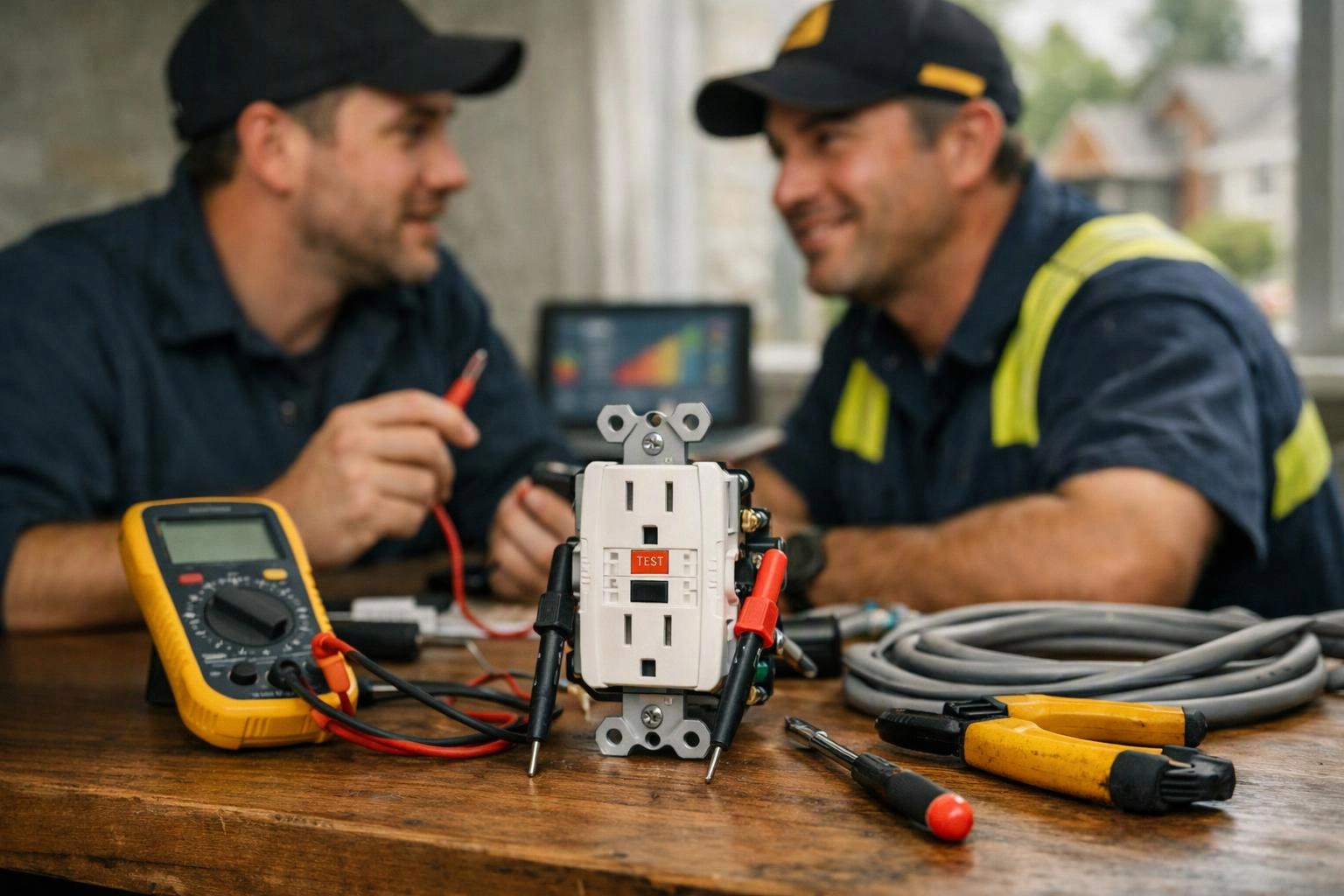
When we handle electrical code corrections, we inspect GFCI placement, wiring, polarity, and operation. We also check whether one device protects additional receptacles downstream. Our team looks for nuisance trips caused by moisture, damaged equipment, wiring faults, or a worn device.
GFCI in Practice: A Real-World Example
A basement receptacle near a utility sink may need GFCI protection as part of an electrical code correction. We check the receptacle, its wiring, and any downstream outlets to confirm that the protective function operates correctly.
Related Terms
AFCI
AFCI is an arc-fault circuit interrupter that monitors electrical current for patterns linked to unintended arcing…
Electrical Grounding
Electrical Grounding is a protective connection between an electrical system and the earth or another conductive…
Tamper-Resistant Receptacle
A Tamper-Resistant Receptacle is an electrical outlet with internal shutters that block access to the energized…
Neutral Wire
Neutral Wire is the circuit conductor that carries electrical current back toward the source after current…
Electrician Pittsburgh
Have Questions About GFCI?
Contact Electrician Pittsburgh for practical guidance on GFCI and related 24 hour electrician work in Pittsburgh.