
What Is a Circuit Overload?
A circuit overload is a condition that occurs when electrical devices draw more current than a circuit is designed to carry. The excess current can heat the wiring. A circuit breaker or fuse is designed to interrupt the current before the wiring becomes dangerously hot.
Quick Facts About Circuit Overload
- Category
- Electrical circuit condition
- Applies to
- Circuits serving electrical devices
- Common confusion
- Electrical short
- Also called
- Overloaded Circuit, Electrical overload
- Often discussed with
- Emergency Electrician Service, Electrical Troubleshooting
Key Takeaways About Circuit Overload
- An overload involves demand during normal appliance operation.
- A tripped breaker can point to excessive demand.
- A short circuit involves an unintended path for current.
How Circuit Overload Works
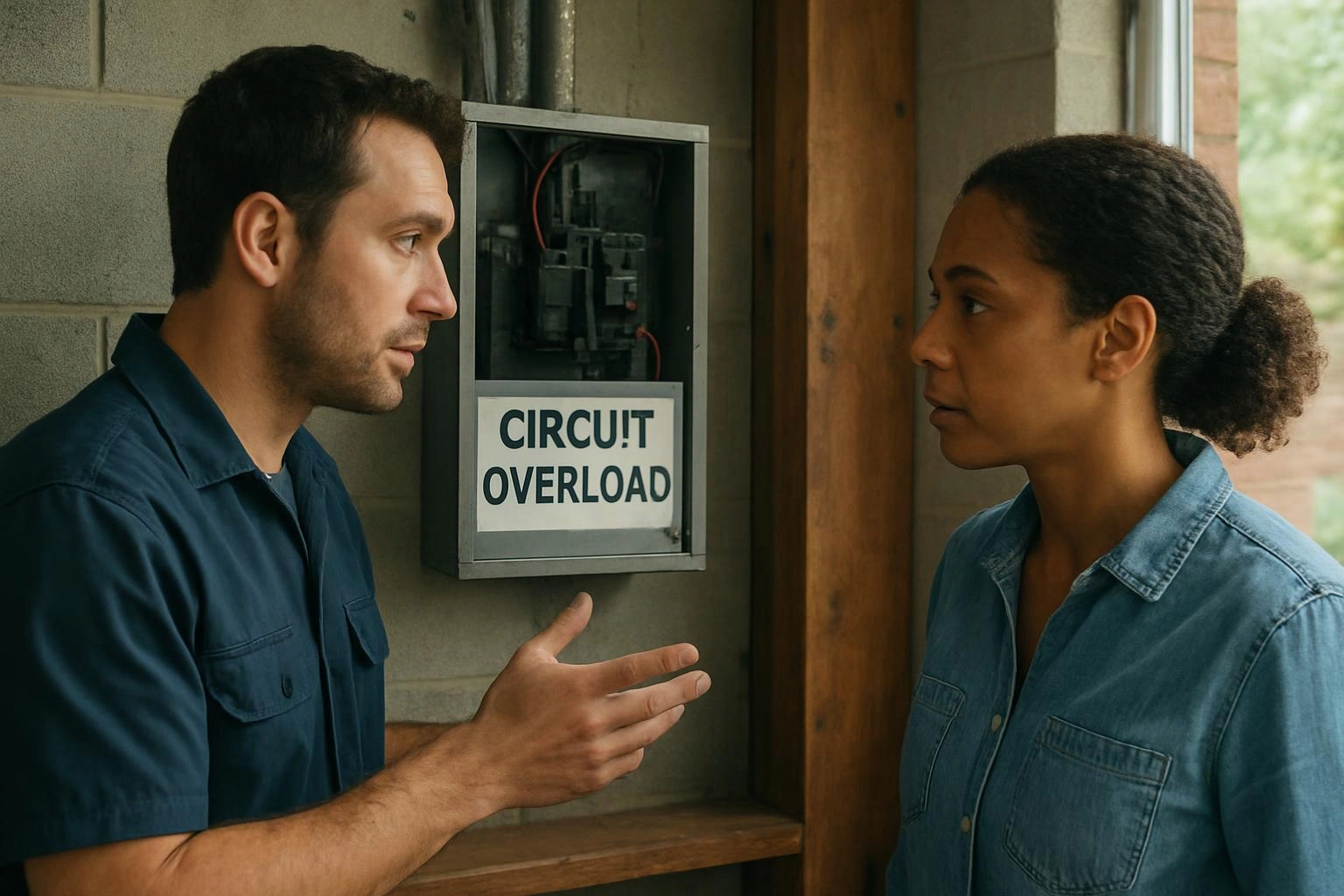
A circuit overload develops as connected devices draw current through the same wiring. Each device adds to the circuit's electrical load. The combined demand can exceed what the circuit can carry. Related service: Emergency Electrician Service.
Related glossary terms: Branch Circuit, Circuit Breaker, Electrical Load.
A circuit breaker responds to excess current by opening the circuit. A fuse performs a similar role by melting an internal element. Either action stops current from flowing through that circuit.
An overload differs from an electrical short. A short creates an unintended path for current, such as contact between damaged wires. An overload can occur even when the connected devices and wiring are working as intended. A tripped breaker alone doesn't identify which condition caused the interruption.
From the Electrician Pittsburgh team
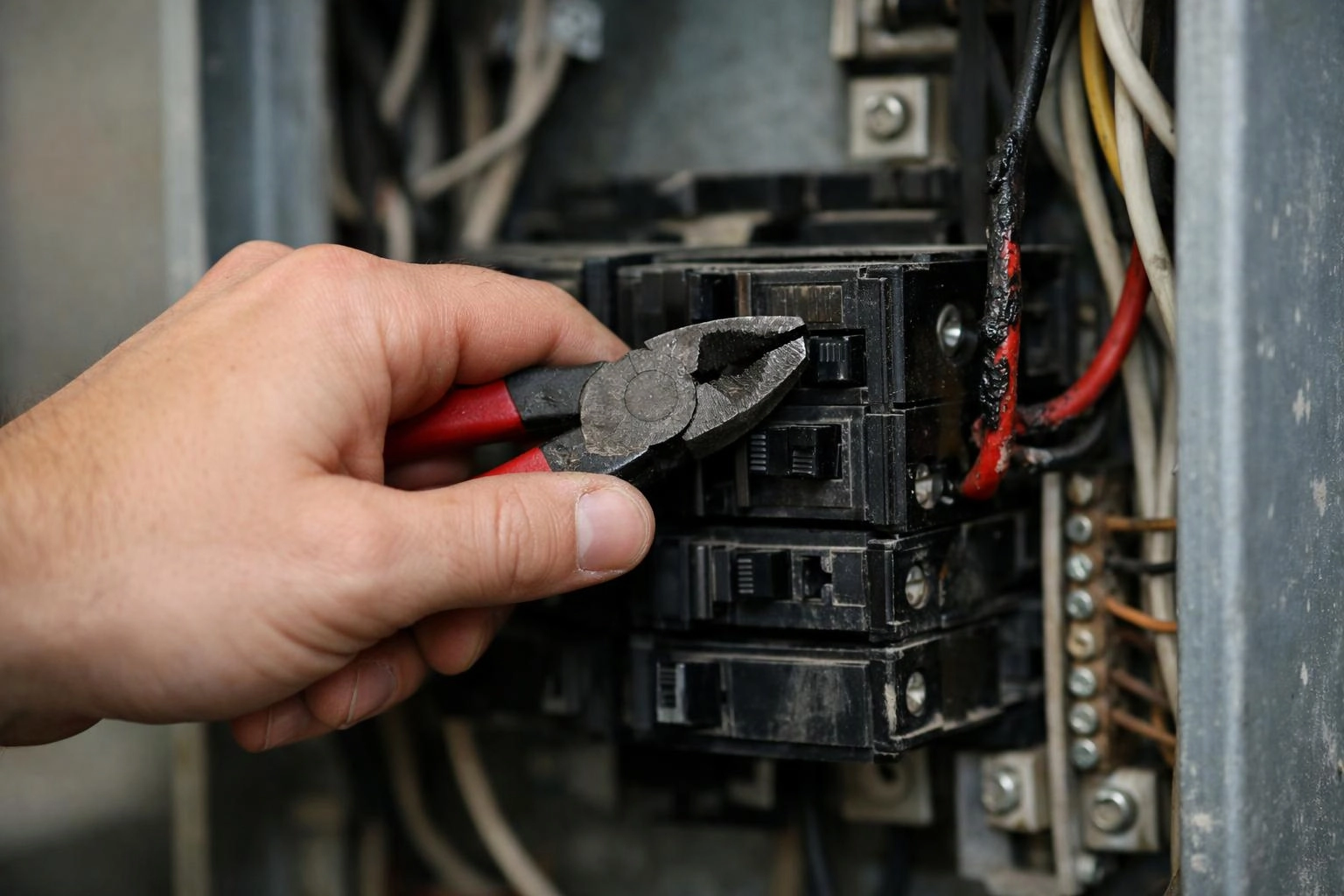
When we respond to an emergency call, we look at what was running before the circuit stopped working. We also check the circuit and its protective device. That helps us distinguish excess demand from a fault that needs a different repair.
Circuit Overload in Practice: A Real-World Example
A Pittsburgh homeowner runs a space heater and a vacuum on the same circuit. The breaker trips, and an emergency electrician checks whether their combined demand overloaded the circuit.
Related Terms
Branch Circuit
A branch circuit is an electrical path that carries power from a final circuit breaker or fuse to outlets and equipment.
Circuit Breaker
A circuit breaker is an electrical protection device that stops current when a circuit draws too much power or develops a short.
Electrical Load
Electrical load is the amount of electrical power that a device or group of devices draws from a circuit.
Electrical Short
An electrical short is a fault that lets current travel along an unintended path with little resistance.
Electrician Pittsburgh
Have Questions About Circuit Overload?
Contact Electrician Pittsburgh for practical guidance on Circuit Overload and related 24 hour electrician work in Pittsburgh.