
What is Ground Fault Circuit Interrupter?
Ground Fault Circuit Interrupter is a protective device that monitors current flowing through a circuit’s ungrounded and grounded conductors. It trips when the outgoing and returning current differ, often because electricity is leaking through a person or wet surface. The device disconnects power quickly to reduce shock and electrocution risk.
Quick Facts About Ground Fault Circuit Interrupter
Category
Electrical safety device
Used for
Shock protection from ground faults
Common confusion
It is not the same as an AFCI or standard breaker
Relevant standard
NEC requirements depend on location and installation type
Also called
GFCI, GFI
Often discussed with
Electrical Troubleshooting, Electrical Safety Inspections
Key Takeaways About Ground Fault Circuit Interrupter
- A GFCI protects people from electrical shock caused by current leaking to ground.
- The device compares outgoing current with returning current and trips when they differ.
- GFCI protection commonly applies near water, including bathrooms, kitchens, garages, and outdoor areas.
- A test button checks the trip function, while a reset button restores power after a trip.
- A GFCI does not replace overcurrent protection from a circuit breaker.
Understanding Ground Fault Circuit Interrupter

Ground Fault Circuit Interrupter, often called a GFCI or GFI, reduces electric shock risk. It watches current moving through a circuit. It opens the circuit when current takes an unsafe path to ground. That path could pass through a person, water, damaged insulation, or grounded metal.
Related glossary terms: AFCI, Circuit Breaker, Electrical Grounding.
A GFCI may appear as a receptacle with test and reset buttons. It may also appear as a circuit breaker or portable device. The device protects people from ground-fault current. A standard circuit breaker mainly protects wiring from overloads and short circuits. GFCI protection doesn't make damaged cords, wet equipment, or unsafe wiring acceptable.
How Ground Fault Circuit Interrupter Works, Is Measured, or Is Used?
A GFCI uses a sensing coil to compare current leaving on the ungrounded conductor. It compares that current with current returning on the neutral conductor. Under normal conditions, those amounts match closely. If the device detects a large difference, an internal part opens the circuit. This often happens before the current causes serious injury.
The test button creates a small imbalance to check the trip function. Pressing the button should remove power. Pressing reset should restore power when no fault remains. A GFCI receptacle can protect other receptacles farther along the circuit. Wiring must place those outlets on its load terminals. Electricians use a circuit tester or meter to check voltage, polarity, continuity, and operation. A simple plug-in tester doesn't replace a complete inspection.
Why Ground Fault Circuit Interrupter Matters?
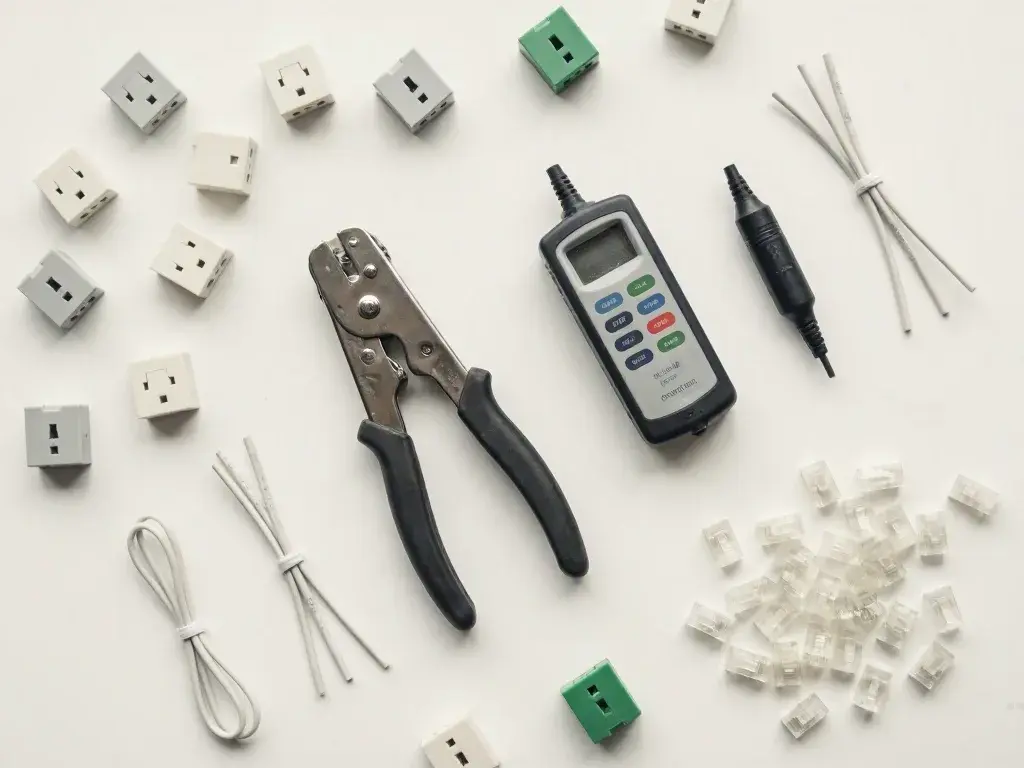
Electricity and moisture create a higher shock hazard. Water can help current reach grounded surfaces. GFCI protection reduces that hazard in bathrooms, kitchens, and laundry rooms. It also helps in garages, unfinished basements, and outdoor locations. Protection also covers spaces serving pools or spas. Exact rules depend on the National Electrical Code, local adoption, and installation date.
A tripping GFCI provides useful information. It doesn't identify the cause by itself. Moisture, a damaged appliance, or a neutral-to-ground connection can cause a trip. Wiring errors or damaged insulation can also cause one. Repeated trips require diagnosis instead of repeated resetting. Bypassing the device can leave a dangerous fault energized.
When Ground Fault Circuit Interrupter Matters Most?
GFCI protection deserves close attention during remodeling and electrical inspections. It also matters after a shock, nuisance trip, or water leak. Older homes may have receptacles without modern protection. Replacement work may reveal missing grounding, reversed conductors, or shared neutral problems. A correct installation must match the circuit voltage, amperage, wiring method, and location.
Check the device after installation and as the maker recommends. Look for a firm reset and a working test function. Also check for heat, discoloration, buzzing, cracked plastic, or water entry. If the reset button won't stay engaged, unplug connected equipment. Test again once, then stop using the circuit. The fault needs a proper diagnosis.
How to Evaluate Ground Fault Circuit Interrupter?
- Press the test button and confirm that power stops at the protected receptacle.
- Press reset and verify correct voltage with an approved electrical tester.
- Check whether the device protects every required location and downstream receptacle.
- Look for heat, discoloration, cracked housing, moisture, loose connections, or repeated trips.
- Confirm that the GFCI rating matches the circuit voltage, amperage, and wiring.
Related Concepts Compared
Ground Fault Circuit Interrupter vs. Arc-Fault Circuit Interrupter
An AFCI responds to dangerous arcing patterns that can start fires. A GFCI responds to current leaking from the intended circuit path, which creates a shock hazard.
Ground Fault Circuit Interrupter vs. Circuit Breaker
A standard circuit breaker opens during an overload or short circuit to protect conductors. A GFCI detects a small current imbalance to protect people from ground faults.
Ground Fault Circuit Interrupter vs. Electrical Grounding
Electrical grounding provides a planned path for fault current and helps stabilize a system. GFCI protection monitors current and disconnects power when leakage occurs, even when grounding is incomplete.
Ground Fault Circuit Interrupter vs. GFCI Receptacle
A GFCI receptacle is one physical form of a Ground Fault Circuit Interrupter. A GFCI breaker provides similar protection from the electrical panel and can protect an entire branch circuit.
Expert Note
A GFCI that trips repeatedly may be working correctly. Do not replace it with a standard receptacle or keep resetting it without finding the fault. Moisture and neutral connections downstream are common causes that require circuit testing.
Common Mistakes or Myths About Ground Fault Circuit Interrupter
- Assuming a GFCI protects against every overload or short circuit.
- Replacing a tripping device without checking appliances, moisture, and downstream wiring.
- Installing a GFCI without identifying the line and load conductors.
- Using the reset button without testing the device first.
- Believing a GFCI removes the need for equipment grounding and proper wiring.
Ground Fault Circuit Interrupter in Practice: A Real-World Example
A bathroom receptacle trips when a hair dryer is plugged in. The user unplugs the dryer, presses reset, and checks whether the receptacle holds. If the GFCI trips again with nothing connected, the circuit or a downstream device needs testing.
Sources & Further Reading on Ground Fault Circuit Interrupter
Related Terms
AFCI
AFCI is a protective device that detects dangerous electrical arcing and disconnects power before an arc…
Circuit Breaker
Circuit Breaker is an automatic electrical switching device that stops current when a circuit draws too…
Electrical Grounding
Electrical Grounding is the intentional connection of an electrical system or equipment to earth through a…
Receptacle
Receptacle is a wiring device that provides contact points for a plug and connects electrical equipment…
Electrician Pittsburgh
Have Questions About Ground Fault Circuit Interrupter?
Contact Electrician Pittsburgh for practical guidance on Ground Fault Circuit Interrupter and related 24 hour electrician work in Pittsburgh.