Skip to content
Glossary

What is Junction Box?

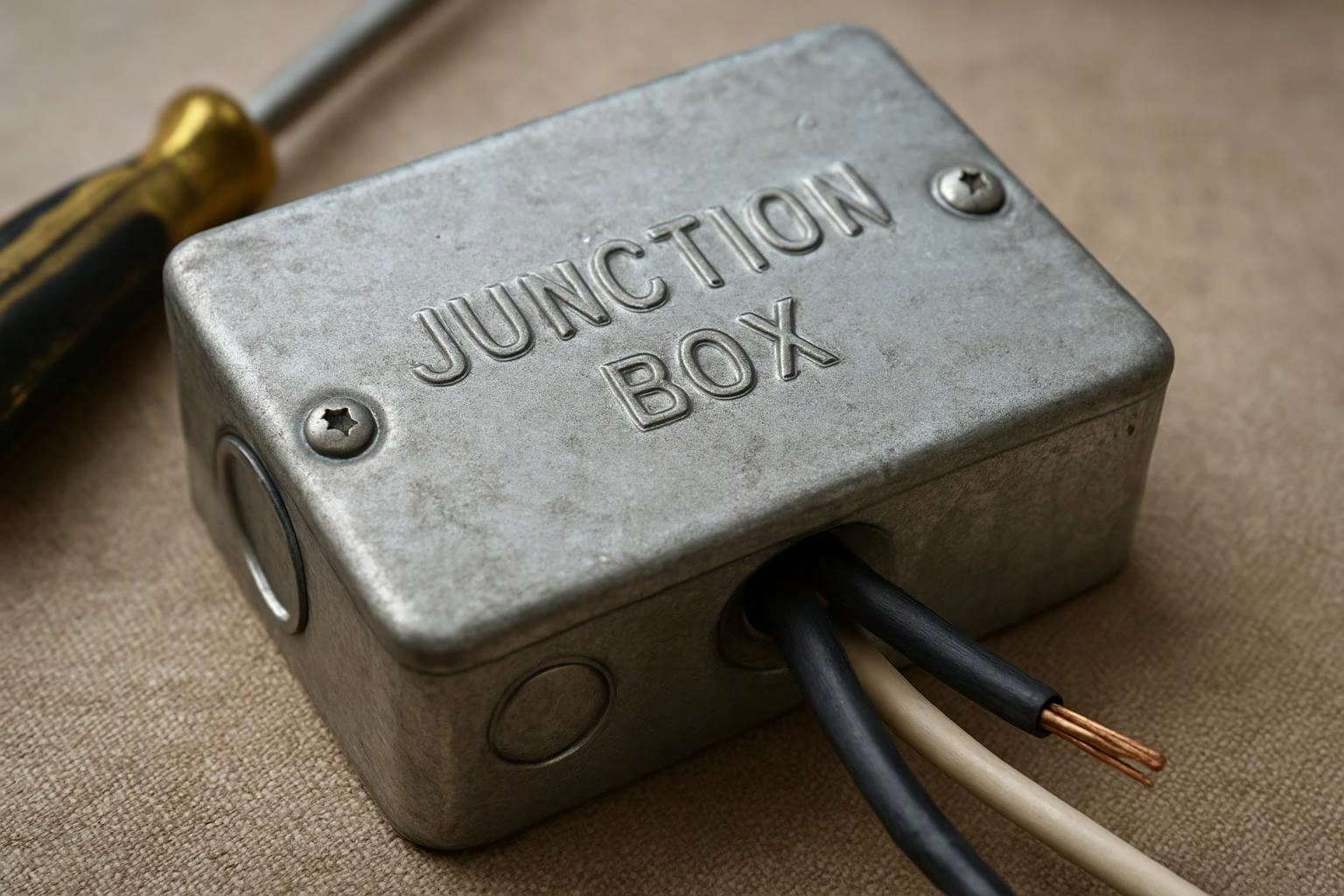
Junction Box is an approved enclosure that protects electrical wire connections, cable splices, and branch-circuit junctions. The enclosure keeps energized conductors covered, limits contact with dust or moisture, and provides access for inspection and maintenance. Junction boxes may be metal or nonmetallic and must match the wiring method, location, and circuit requirements.

Quick Facts About Junction Box

Category

Electrical enclosure

Used for

Protecting wire splices and circuit connections

Common confusion

A junction box is not the same as a breaker panel

Main risk

Loose, crowded, or inaccessible connections

Also called

Electrical junction box, Splice box

Often discussed with

Electrical Troubleshooting, Electrical Code Corrections

Key Takeaways About Junction Box

  • A junction box encloses wire splices and connections where multiple conductors meet.
  • The cover must remain accessible for inspection, testing, and future repairs.
  • Box size depends on conductor count, wire size, devices, clamps, and grounding conductors.
  • An approved box protects connections from accidental contact, physical damage, and environmental conditions.
  • A junction box does not replace overcurrent protection or correct an overloaded circuit.

Understanding Junction Box

Electrician Pittsburgh — detail view — Understanding Junction Box

The first body mention is a junction box. It's an enclosure that holds electrical connections. It also protects those connections. A box may hold a cable splice or branch circuit split. It may connect a light fixture, receptacle, or switch. Its cover keeps live parts safe from contact. It also keeps the box open for inspection.

Related glossary terms: Conduit, Electrical Grounding, Overcurrent Protection.

Boxes come in steel, aluminum, PVC, and other approved materials. The choice depends on the wiring method and location. It also depends on the grounding plan and moisture or impact risks. A box used with Romex cable needs proper cable connectors. A box used with conduit needs fittings that secure the conductors.

The enclosure is part of the electrical installation. It's not simply a storage container for wires. Each connection must stay secure and electrically sound. A box also needs a properly fitted cover and enough support. It must remain accessible after walls, ceilings, or finishes are installed.

How Junction Box Works, Is Measured, or Is Used?

Electricians route conductors into the junction box through approved openings. They secure each cable or raceway. They strip only the needed amount of insulation. They join matching conductors with listed connectors. They connect grounding conductors to metal boxes. The completed splice stays inside the enclosure. The cover protects it from contact and damage.

Box capacity depends on conductor volume, not appearance. The calculation counts insulated conductors and grounding conductors. It also counts internal clamps and devices mounted in the box. For example, a box with several 12 AWG conductors needs more usable volume. A box with the same number of 14 AWG conductors needs less volume.

Installation also follows a practical workflow. The installer identifies the circuit. They turn off and check the power. They select a listed box and check conductor fill. They make the connections and secure the cables. Then they install the cover. Overcurrent protection stays at the panel. A circuit breaker must match the circuit conductors and equipment.

Why Junction Box Matters?

Electrician Pittsburgh — service highlight — Why Junction Box Matters?

A properly installed box lowers the risk of loose splices. Loose splices can overheat, arc, or expose live metal. It also gives a technician a set place to test and repair the circuit. This avoids opening finished surfaces when possible. A missing cover or crowded enclosure can make maintenance dangerous. It can cause shock, fire, or wiring damage.

Correct box selection affects long-term reliability. Metal boxes can provide strength and a grounding path. They must be installed correctly. Nonmetallic boxes resist corrosion and suit many cable installations. The box, connectors, conductors, and cover must work as one listed assembly. They must meet the applicable National Electrical Code requirements.

When Junction Box Matters Most?

A junction box matters during remodeling and circuit extensions. It also matters during fixture changes and troubleshooting. It helps when existing cables are too short. It helps when several circuits meet in one area. It also helps when a splice must stay above a finished ceiling. Connections hidden behind drywall need correction. Buried connections under flooring also need correction. Connections outside a suitable enclosure are warning signs.

Inspect the box before adding conductors or a device. Check for heat discoloration and brittle insulation. Check for corrosion, loose connectors, and missing clamps. Check that the cover fits. In damp, dusty, outdoor, or impact-prone locations, check the enclosure rating. Make sure the fittings suit the environment. Verify that the box stays accessible after the work is complete.

How to Evaluate Junction Box?

  • Confirm that the box is listed for the wiring method, location, and environmental exposure.
  • Calculate conductor fill from wire size, conductor count, clamps, grounds, and installed devices.
  • Check that every cable or conduit entry has a secure, approved connector.
  • Look for a fitted cover, accessible location, intact insulation, and no heat or arc damage.
  • Verify that metal boxes and grounding conductors have the required bonding connections.

Related Concepts Compared

Junction Box vs. Electrical Panel

An electrical panel contains circuit breakers or fuses that distribute power and provide overcurrent protection. A junction box usually contains connections but does not control or protect the circuit by itself.

Junction Box vs. Pull Box

A pull box provides space for pulling conductors through a raceway and may not contain splices. A junction box is intended to enclose electrical connections, although some boxes serve both purposes when listed and sized correctly.

Junction Box vs. Device Box

A device box is designed to mount equipment such as a switch, receptacle, or dimmer. A junction box primarily houses conductor connections and may not provide the mounting support required for a device.

Expert Note

A box can look large enough and still fail its fill calculation. Count all current-carrying conductors, grounds, internal clamps, and devices by their required volume. Also check whether the box remains accessible after construction, since a concealed splice is a serious installation defect.

Common Mistakes or Myths About Junction Box

  • Hiding a junction box behind drywall, paneling, flooring, or permanent cabinets.
  • Using electrical tape as the only protection for a wire splice.
  • Filling a small box beyond its permitted conductor volume.
  • Leaving cable entries without approved clamps or connectors.
  • Installing a metal box without bonding it to the grounding conductor.

Junction Box in Practice: A Real-World Example

A remodeler extends a kitchen circuit to a new receptacle but finds that the existing cable cannot reach the device box. An accessible junction box can house the approved splice, with a cover and cable connectors, while the new cable continues to the receptacle. The breaker and conductor size still need to match the circuit load.

Related Terms

Conduit

Conduit is a tube or raceway that encloses and protects electrical conductors from physical damage, moisture…

Electrical Grounding

Electrical Grounding is the intentional connection of an electrical system or equipment to earth through a…

Overcurrent Protection

Overcurrent Protection is a safety method that limits electrical current when a circuit carries more amperage…

Romex Cable

Romex Cable is a common trade name for nonmetallic-sheathed electrical cable used in residential and light…

Electrician Pittsburgh

Have Questions About Junction Box?

Contact Electrician Pittsburgh for practical guidance on Junction Box and related 24 hour electrician work in Pittsburgh.

+1 (412) 530-6737