Skip to content
Glossary

What is Neutral Wire?

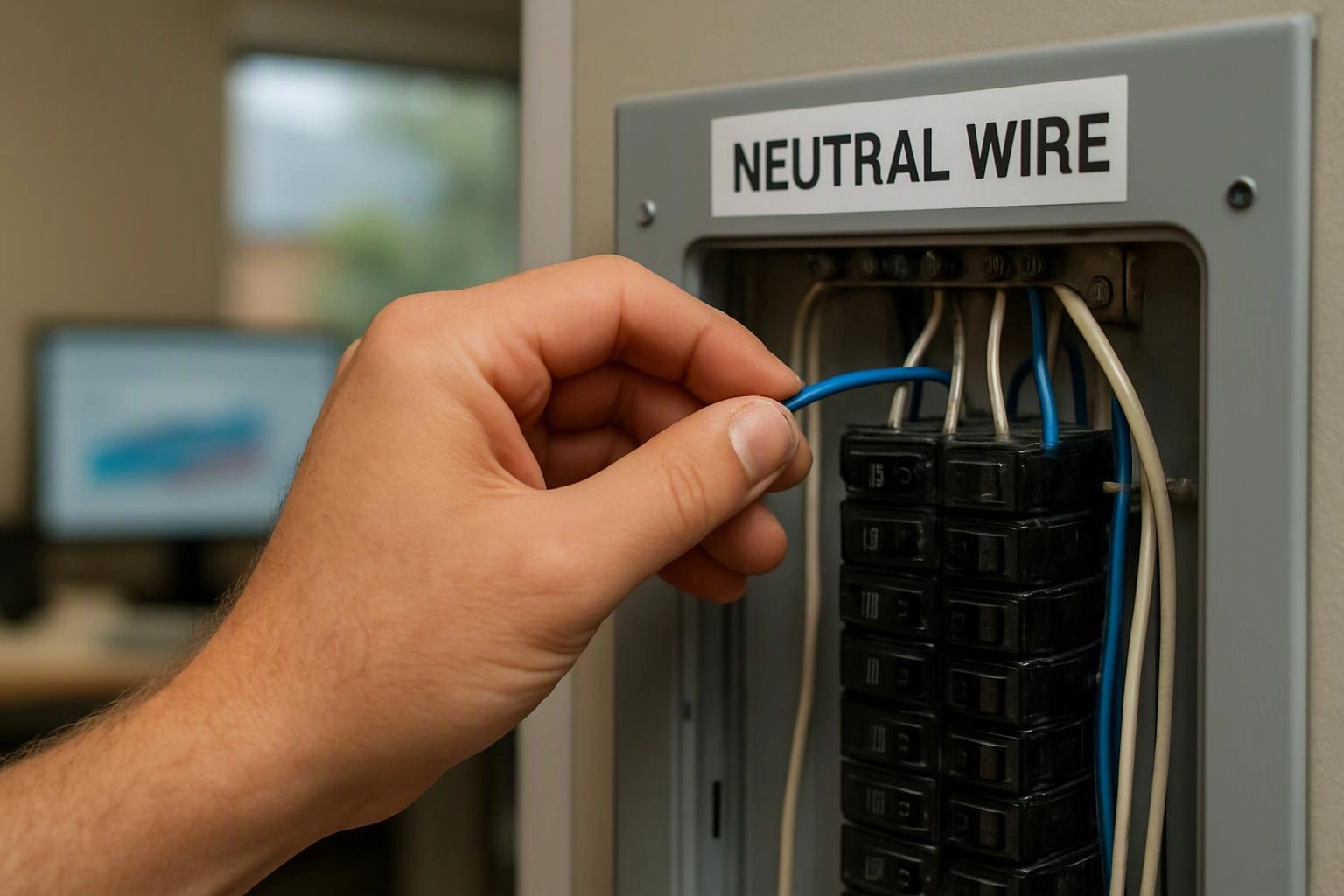
Neutral Wire is the grounded conductor that normally carries current back to the electrical source after power flows through a load. It connects to the neutral bar in a service panel and commonly operates near 0 volts relative to ground. A neutral wire is not the same as an equipment grounding conductor. Which provides a safety path during faults.

Sources reviewed: Electrical Safety Foundation International, Electrical Safety Basics

Quick Facts About Neutral Wire

Category

Circuit conductor

Used for

Current return path

Common confusion

Neutral is not ground

Typical identification

White or gray insulation

Also called

Grounded conductor, Neutral conductor

Often discussed with

Electrical Troubleshooting, Residential Rewiring

Key Takeaways About Neutral Wire

  • A neutral wire normally returns current from an electrical load to the source.
  • Neutral wires connect to the neutral bar in an electrical service panel.
  • Neutral and ground wires serve different purposes and should not be interchanged.
  • An open neutral can create dangerous voltage changes across connected loads.
  • Wire identification and termination must follow applicable electrical code requirements.

Understanding Neutral Wire

Electrician Pittsburgh — detail view — Understanding Neutral Wire

Neutral wire is a current-carrying conductor in many alternating-current systems. It provides a return path from a device, lamp, or receptacle to the electrical source. In a typical North American 120-volt branch circuit, current travels from the hot conductor through the load. It then returns through the neutral conductor.

Related glossary terms: Electrical Grounding, Electrical Panel, Residential Electrical Code.

The neutral is usually connected to the grounded conductor at the service equipment. Downstream panels normally keep the neutral bar isolated from the equipment grounding bar. White or gray insulation commonly identifies a neutral conductor. Color alone doesn't prove that a wire is safe or correctly connected. A qualified person should verify conductors with proper testing equipment before work begins.

How Neutral Wire Works, Is Measured, or Is Used?

Neutral wire works as part of a circuit that has a voltage difference between conductors. A 120-volt receptacle circuit commonly uses one hot conductor and one neutral conductor. The load determines the current, while the neutral carries the return current under normal conditions. In a balanced multiwire branch circuit, the shared neutral carries only the difference. This difference comes from the two hot-conductor currents.

Electricians check a neutral by tracing its termination, testing voltage, and measuring current when conditions allow. A voltage reading between hot and neutral should match the circuit design. A reading between neutral and ground should normally remain low under load. The exact reading depends on circuit length, load, connections, and system condition. Loose terminals, damaged conductors, or an open neutral can produce unstable readings. These problems require prompt diagnosis.

Why Neutral Wire Matters?

Electrician Pittsburgh — service highlight — Why Neutral Wire Matters?

A properly connected neutral conductor helps equipment receive the voltage it needs. A loose or open neutral may cause lights to brighten or dim. It may also cause electronics to reset or line-to-neutral voltages to shift. In a shared-neutral circuit, an incorrect connection can place excessive voltage across some loads. This problem can damage equipment.

Neutral conductors also affect electrical safety and code compliance. The service panel, neutral bar, and equipment grounding conductors must be arranged correctly for the system design. Bonding a neutral to ground in the wrong panel can place normal return current on metal enclosures. It can also place current on grounding paths. That condition can increase shock risk and complicate fault protection.

When Neutral Wire Matters Most?

Neutral wiring deserves close attention during a panel upgradecircuit addition, or remodel. Older wiring may lack a neutral at some switch locations. Newer controls may require one for continuous power. A technician must identify the cable type, circuit arrangement, and panel connections. This work must happen before changing a device or adding a load.

Warning signs include flickering lights, unexplained appliance failures, and warm terminals. They also include buzzing at a panel and different voltage readings on connected circuits. Don't use a grounding conductor as a substitute for a missing neutral. Electrical troubleshooting, rewiring, and code corrections should follow the adopted requirements. These requirements apply to the building and jurisdiction. Power must be isolated before conductors are handled.

How to Evaluate Neutral Wire?

  • Confirm that the neutral terminates on the correct neutral bar for the panel location.
  • Check voltage from hot to neutral and compare the result with the circuit rating.
  • Inspect terminals for looseness, heat marks, corrosion, or damaged insulation.
  • Verify that neutral and equipment grounding conductors remain separated where required.
  • Ask whether a shared neutral has proper disconnecting means and correct conductor arrangement.

Related Concepts Compared

Neutral Wire vs. Equipment Grounding Conductor

An equipment grounding conductor normally carries no current. It provides a low-impedance fault path so overcurrent protection can operate. While a neutral carries normal return current.

Neutral Wire vs. Hot Wire

A hot wire supplies voltage from the source to a load. A neutral wire normally carries current back to the source after the load uses electrical energy.

Neutral Wire vs. Grounded Conductor

Grounded conductor is the formal electrical term often used for the neutral conductor. The word grounded describes its connection to the system reference point. Not its role as an equipment grounding conductor.

Expert Note

A neutral can show voltage to ground even when a circuit appears to work. Load current creates voltage drop across resistance, so testing under operating conditions can reveal a loose termination that a no-load test misses.

Common Mistakes or Myths About Neutral Wire

  • Treating the neutral wire as a safe wire that can never carry current.
  • Connecting a neutral and ground together in a downstream panel.
  • Using a bare or green grounding conductor as a replacement for a missing neutral.
  • Assuming white insulation proves that a conductor is correctly connected.
  • Ignoring flickering lights or changing voltage readings after an open-neutral warning sign.

Neutral Wire in Practice: A Real-World Example

A kitchen receptacle circuit has power, but its lights flicker when a microwave starts. Testing finds a loose neutral connection in a junction box. Tightening or replacing the damaged connection restores stable voltage after the circuit is de-energized and verified safe.

Sources & Further Reading on Neutral Wire

  • Electrical Safety Foundation International, Electrical Safety Basics

Related Terms

Electrical Grounding

Electrical Grounding is the intentional connection of an electrical system or equipment to earth through a…

Electrical Panel

Electrical Panel is the enclosure that receives electricity from a service utility and distributes it through…

Residential Electrical Code

Residential Electrical Code is the set of safety rules that governs electrical wiring, equipment, circuits, and…

Romex Cable

Romex Cable is a common trade name for nonmetallic-sheathed electrical cable used in residential and light…

Electrician Pittsburgh

Have Questions About Neutral Wire?

Contact Electrician Pittsburgh for practical guidance on Neutral Wire and related 24 hour electrician work in Pittsburgh.

+1 (412) 530-6737