
What Is Wire Size?
Wire Size is the classification of a conductor’s diameter and current-carrying capacity. The selected size depends on the circuit’s load, conductor material, installation conditions, and allowable voltage drop. Correct sizing helps the wiring carry electrical current without excessive heating and supports reliable operation of connected equipment.
Quick Facts About Wire Size
Category
Electrical wiring specification.
Used for
Matching conductors to circuit loads.
Common confusion
Wire size differs from cable length and insulation type.
Also called
Conductor size, Wire Gauge
Often discussed with
Electrical Code Corrections
Key Takeaways About Wire Size
- Wire Size describes conductor capacity, not just its physical appearance.
- Circuit load and installation conditions guide the selection.
- Wire Size is not the same as wire length or cable type.
How Wire Size Works
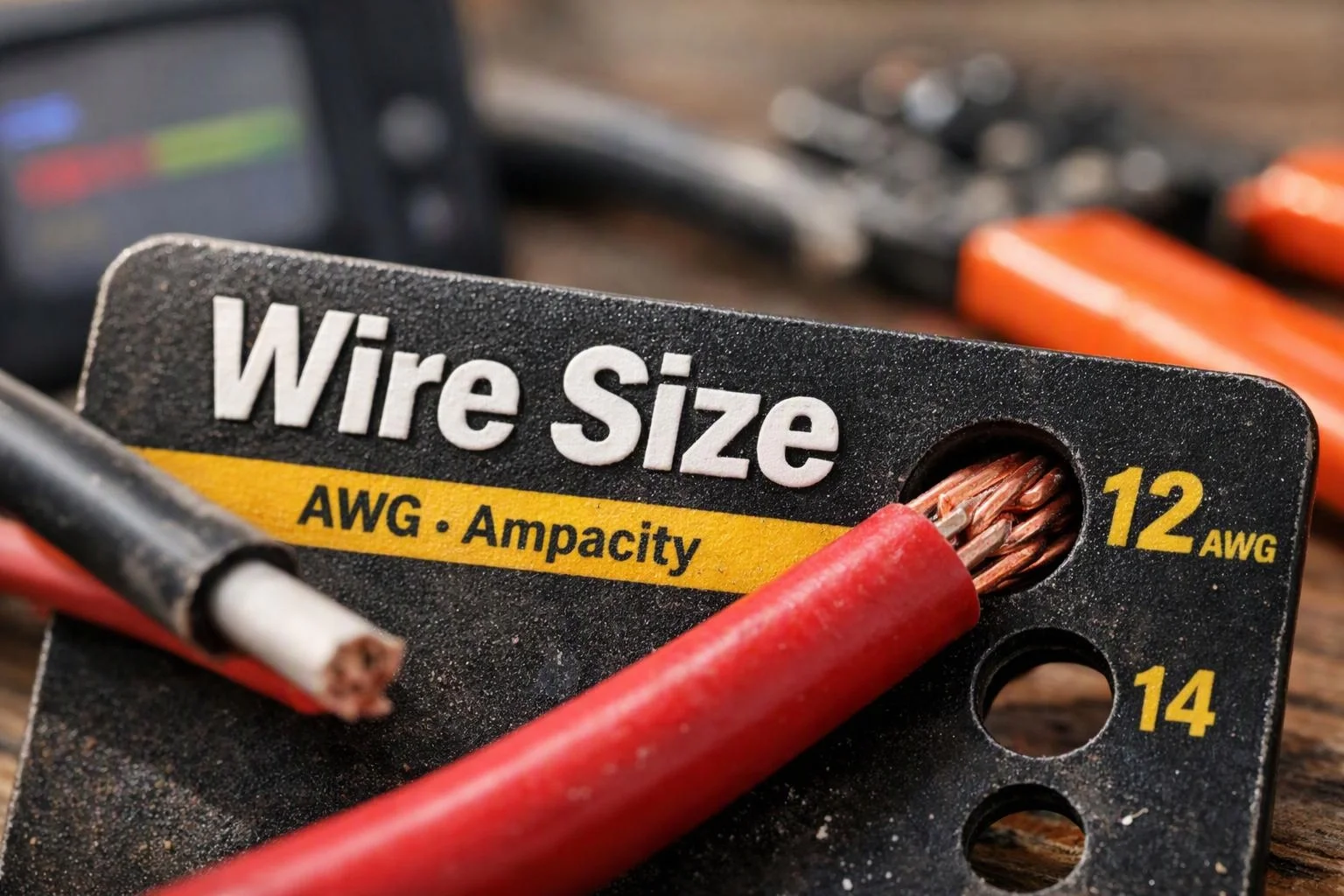
Wire Size identifies the conductor dimension used to carry electrical current. A larger conductor generally offers less resistance and can carry more current under the same conditions. The choice also depends on conductor material, insulation, circuit length, and how the wiring is installed.
Related glossary terms: Load Calculation, Voltage Drop, Cable.
Electricians compare the expected circuit load with the conductor’s permitted capacity. They also consider voltage drop on longer runs and the heat produced when conductors share a raceway or cable. Voltage Drop describes the reduction in voltage along a circuit, while Load Calculation estimates the demand that the wiring must serve. These checks help connect the wire choice to the actual circuit design.

From the Electrician Pittsburgh team
When we check Wire Size during Electrical Code Corrections, we trace the circuit, identify the conductor material, and compare the wiring with the connected load. We also inspect termination points, insulation condition, and installation space because those details can change how the conductor performs. Our team records the correction needed before work proceeds.
Wire Size in Practice: A Real-World Example
A homeowner adds a high-demand appliance to an existing circuit, but the installed conductor may not match the new load. During Electrical Code Corrections, the electrician checks the circuit path, load, conductor material, and terminations before selecting an appropriate correction.
Related Services
Related Terms
Load Calculation
Load Calculation is a method for estimating the electrical demand a property places on its service…
Voltage Drop
Voltage Drop is the reduction in electrical pressure that occurs as current travels through a conductor…
Cable
Cable is an assembly of one or more insulated conductors enclosed within a shared jacket or…
Conduit
Conduit is a protective pathway that houses and routes electrical conductors through walls, ceilings, floors, and…
Electrician Pittsburgh
Have Questions About Wire Size?
Contact Electrician Pittsburgh for practical guidance on Wire Size and related 24 hour electrician work in Pittsburgh.