How Long Standby Generator Installation Takes
Standby generator installation has a timeline determined by the property, electrical work, permits, equipment, and inspections; Electrician Pittsburgh reviews those factors before planning the work.
Get a Free EstimateWhat Determines the Standby Generator Installation Timeline?
Standby generator installation timing depends on the property, generator setup, electrical connections, permitting, and required inspection.
Our team reviews the property layout and electrical system before setting expectations. We also check the generator location, automatic transfer switch, fuel connection, electrical panel, permit requirements, and inspection needs.
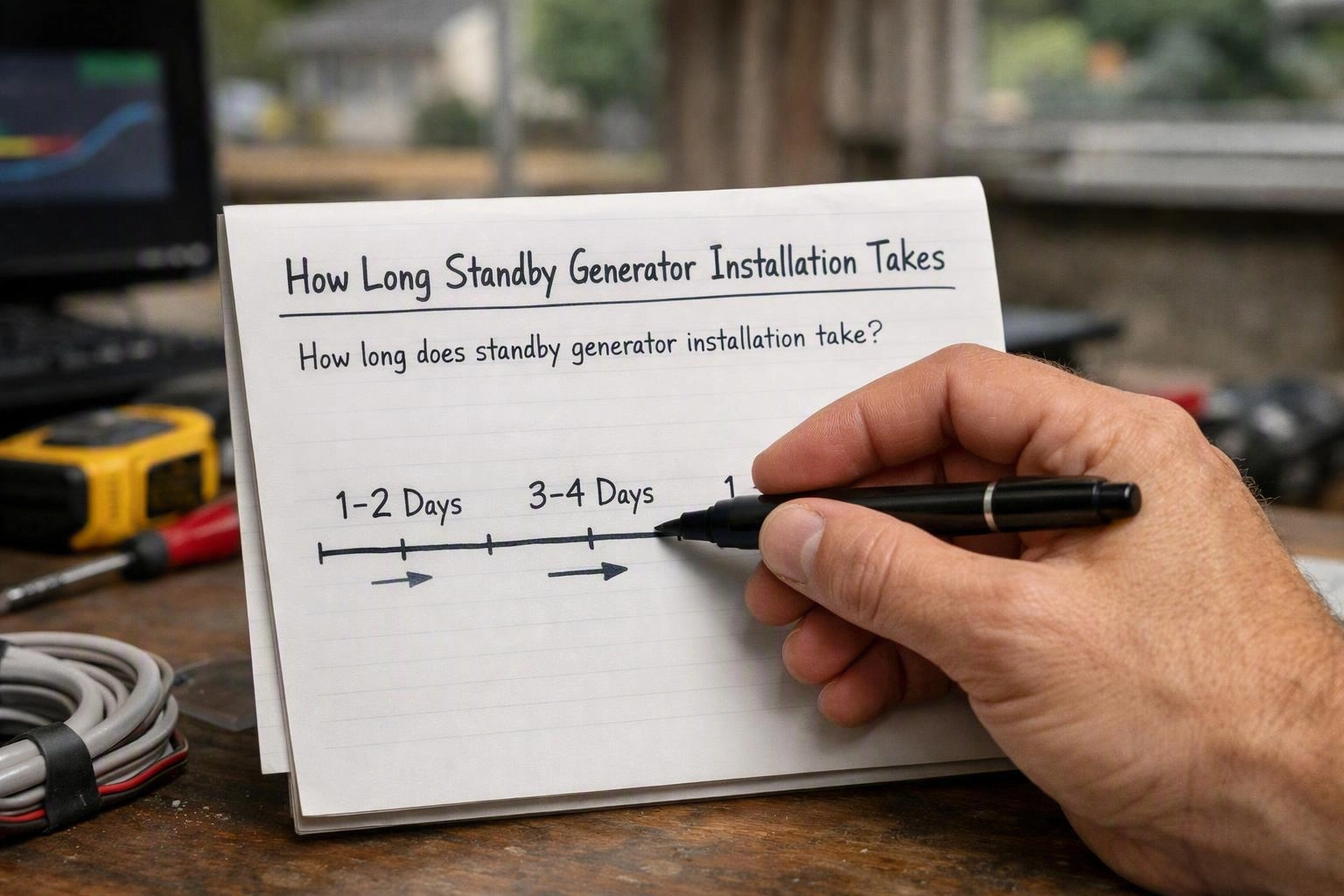
How the Installation Schedule Changes From Site Review to Final Testing
Standby generator installation scheduling changes at each stage according to site readiness, required connections, permit status, and inspection needs. We use the site assessment to identify work that must be completed before commissioning.
Each stage can affect the next one. Our crew coordinates the electrical work, fuel work, permit process, inspection scheduling, and system testing as part of the installation plan.
| Stage | What changes the schedule | Our work at this stage |
|---|---|---|
| Site assessment | Property access, generator placement, surface conditions, and utility service affect readiness. | We review the property layout and identify site preparation needs. |
| Equipment and pad preparation | Equipment delivery and generator pad preparation must match the planned location. | We confirm placement, clearances, conduit routes, and grounding connections. |
| Electrical and fuel connections | The electrical panel, transfer switch, fuel line, and utility connection may require different work. | We complete the required connections and coordinate the installation sequence. |
| Permit and inspection | Permit approval and inspection scheduling depend on local requirements and project readiness. | We prepare the work for the required permit review and inspection. |
| Commissioning and testing | System testing depends on completed connections, approved work, and safe operating conditions. | We test the standby generator, transfer operation, controls, and backup power function. |
What We Check Before Planning the Installation
Electrician Pittsburgh checks the property layout, electrical service, generator location, fuel connection, and project requirements before confirming the installation plan.
We review the electrical load to understand which circuits need backup power. Our team also checks the service panel, utility connection, grounding path, and the route for conduit and fuel work.
Local requirements can affect the permit process and final inspection. We include those requirements in the installation plan so the work can move through each stage in the right order.
Which Factors Can Extend or Shorten the Installation Timeline?
Standby generator installation takes longer when site preparation, electrical upgrades, fuel work, permitting, equipment readiness, or weather adds work to the project. We review each factor before setting a schedule.
Some properties are ready for the planned connections, while others need additional preparation. Our team explains the work that affects the sequence and keeps the installation plan tied to actual site conditions.
Can Surge Protection Be Installed With a Standby Generator?
Yes, surge protection can be planned with standby generator work when the electrical system and project scope support the installation.
Our team checks the service panel and transfer switch arrangement before adding whole-home surge protection. We place the protection where it can work with the home’s electrical service and backup power system.
Surge protection installation may be planned during the generator project when the required equipment and connections fit the installation plan.
How We Confirm the Project Timeline
Electrician Pittsburgh confirms the project timeline after reviewing the property, installation requirements, permit needs, electrical connections, and requested services.
We provide Free Estimates Available so you can discuss the project before work begins. Our estimate process covers the site conditions, generator placement, electrical work, fuel connection, permit needs, inspection requirements, and any requested surge protection.
After the assessment, our team explains the planned sequence and the conditions that could change it. We then use the approved scope to coordinate equipment readiness, installation work, commissioning, and system testing.
Questions About Standby Generator Installation Timing
What should be ready before standby generator installation begins?
Electrician Pittsburgh needs the planned generator location, access to the electrical panel, information about the fuel supply, and any required property approvals ready for review. We confirm the remaining site preparation and connection work during the assessment.
Can an electrical panel upgrade change the generator installation schedule?
Yes, an electrical panel upgrade can change the generator installation schedule when the existing service cannot support the planned electrical load. We coordinate the panel work with the transfer switch and generator connections.
Does weather affect standby generator installation?
Yes, weather can affect standby generator installation when outdoor site preparation, generator placement, fuel work, or inspection access becomes unsafe or impractical. We account for site conditions when coordinating the work.
What happens during standby generator commissioning?
Standby generator commissioning includes system testing, transfer operation checks, control review, connection checks, and confirmation that the backup power system operates as planned. We complete the testing after the installation work and required inspection steps are ready.
Contact Electrician Pittsburgh to review your property, electrical service, generator placement, permit requirements, and requested backup power work. Our team can explain the installation plan and provide Free Estimates Available for the project scope.
Get a Free Estimate