Planning High-Load Electrical Upgrades for Your Home
High-load home electrical upgrades support EV chargers, standby generators, and outdoor electrical equipment. Electrician Pittsburgh assesses the existing electrical system, confirms equipment requirements, and plans compatible upgrades for safe operation.
Get a Free Estimate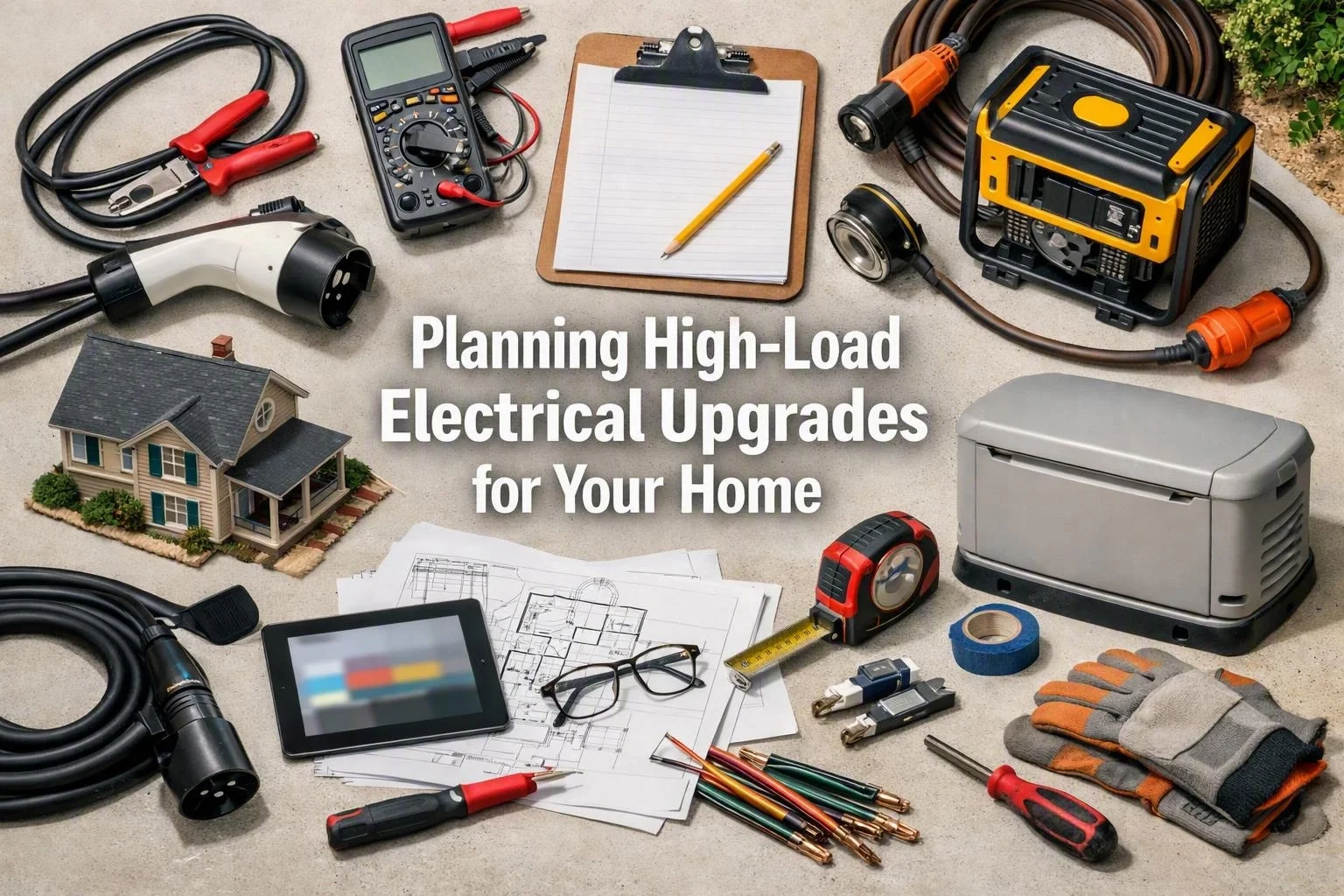
What Should You Check Before Planning a High-Load Upgrade?
Electrical service capacity determines whether a home can support new high-load equipment without a service, panel, or circuit upgrade.
We begin with a site assessment of the main electrical panel, service equipment, and existing circuits. We review the panel rating, breaker arrangement, conductor condition, and available capacity.
A load calculation compares the home’s current electrical load with the demand from the planned equipment. Electrician Pittsburgh also checks equipment specifications, including voltage, operating current, startup demand, and manufacturer requirements.
These checks show whether the existing system can support the project. They also help us identify a needed service upgrade, panel work, dedicated circuit, or changes to circuit routing before installation begins.
Which Home Electrical Upgrades Often Need Dedicated Circuits?
EV chargers, standby generators, hot tubs, pools, and other substantial outdoor equipment commonly require dedicated wiring and equipment-specific protection. The correct arrangement depends on the equipment specifications, location, and electrical load.
Our team matches each installation with the required disconnect, grounding, bonding, and protective devices. The table shows common planning points for each type of equipment.
| Equipment | Common planning needs | Items we verify |
|---|---|---|
| EV charger | Dedicated circuit and equipment-specific overcurrent protection | Charger requirements, panel capacity, wiring route, and disconnect needs |
| Standby generator | Transfer equipment, generator disconnect, and selected backup circuits | Generator compatibility, fuel arrangement, grounding, and panel connections |
| Hot tub | Dedicated circuit, disconnecting means, and ground-fault protection | Equipment location, outdoor exposure, wiring method, and bonding |
| Pool electrical wiring | Protective devices, bonding, grounding, and suitable disconnects | Pump and equipment requirements, conduit routing, and weather exposure |
| Outdoor equipment | Weather-resistant installation and accessible disconnecting means | Receptacle location, ground-fault protection, conduit, and equipment instructions |
When Do EV Chargers and Generators Need to Be Planned Together?
EV chargers and standby generators need coordinated planning when backup power must serve both vehicle charging and essential household loads.
Our team reviews backup power priorities before selecting the transfer arrangement or charger connection. These situations commonly require joint planning:
We use the load calculation to determine whether the charger can operate during an outage. The final plan identifies which loads receive backup power and how the equipment will interact.
How Do These Electrical Upgrades Work Together?
High-load upgrades work together through coordinated load planning, compatible equipment, correct installation sequencing, and a unified scope that identifies cost drivers before work begins.
We coordinate the work in a sequence that limits duplicated labor and avoids incompatible circuits:
Project sequencing can affect the installation estimate because panel work, circuit routing, and equipment connections may depend on one another. Our scope explains those dependencies before work starts.
What Does Standby Generator Installation Require?
Standby generator installation requires a compatible generator, transfer equipment, correctly selected backup circuits, and safe connections to the home’s electrical system.
We connect the generator through an automatic transfer switch that manages the change between normal utility power and backup power. The transfer switch must match the generator, service arrangement, and selected essential circuits.
Our team reviews the fuel supply, generator location, generator disconnect, grounding, and electrical panel connections. We also confirm that the selected circuits do not place an unsuitable demand on the backup system.
Generator installation is part of a larger home electrical system. We coordinate the panel and transfer equipment so the system operates as planned during an outage.
What Electrical Planning Do Hot Tubs, Pools, and Outdoor Equipment Need?
Hot tubs, pools, and outdoor equipment need location-appropriate wiring, disconnecting means, grounding, bonding, and protection against electrical faults and outdoor exposure.
We plan hot tub and pool connections around the equipment location and the path back to the panel. Pool electrical wiring may serve pumps, controls, lighting, and related equipment, so each load needs clear identification.
Ground-fault protection helps reduce the risk of dangerous shock from fault current. We also verify grounding and bonding, including bonding jumpers and connections for equipment in and around water.
Outdoor receptacles and equipment require weather-resistant installation. Our crew selects suitable conduit, boxes, covers, disconnects, and wiring methods for the exposure and access conditions.
When Should Whole-Home Surge Protection Be Included?
Whole-home surge protection should be considered when adding sensitive equipment or backup power because a service-panel device can help limit damaging voltage transients.
We review the service panel, available space, grounding arrangement, and equipment requirements before selecting a surge protective device. The device must be compatible with the electrical system and installed according to its instructions.
Surge protection can be useful when a home includes sensitive electronics, an EV charger, or a standby generator. It is one part of a broader protection plan and does not replace correct grounding, bonding, or circuit protection.
How We Plan and Price a High-Load Electrical Upgrade
Electrician Pittsburgh prepares a project estimate from the site conditions, electrical requirements, and installation scope.
The estimate is based on the actual home electrical system and the selected equipment. We explain what the scope includes before installation begins.
What Changes the Cost of a High-Load Electrical Upgrade?
The cost of a high-load electrical upgrade depends on existing service capacity, equipment location, wiring route, panel work, protection requirements, and whether several upgrades are coordinated together.
A panel replacement or service upgrade can add work when the existing equipment cannot support the planned electrical load. We verify that need through the site assessment and load calculation.
Wire distance, conduit routing, trenching, and equipment access affect installation complexity. We include these physical conditions in the project estimate.
Transfer switches, surge protection, disconnects, grounding, and bonding can also change the installation scope. Coordinating several systems may reduce duplicated routing, but the final estimate depends on the home and equipment.
What Should Be Confirmed Before Installation Begins?
Before installation begins, the equipment, load requirements, circuit scope, protection, access, and inspection responsibilities should be confirmed.
We confirm equipment compatibility and review the load calculation against the selected devices. We also identify each circuit and document which loads connect to normal power or backup power.
The disconnect location must be accessible and suitable for the equipment. Our team confirms grounding and bonding, conduit routing, panel connections, and ground-fault protection where required.
Permit coordination and final inspection responsibilities should be clear before work starts. We also provide operating instructions for the installed equipment and explain the completed installation scope.
Questions About High-Load Home Electrical Upgrades
Can an existing electrical panel support an EV charger and a standby generator?
Electrician Pittsburgh determines whether an existing electrical panel can support both systems through a load calculation and equipment review. The result may call for load management, a dedicated circuit, transfer equipment, panel work, or a service upgrade.
What happens if a home does not have enough electrical service capacity for new equipment?
Insufficient electrical service capacity means the planned equipment may require a service upgrade, panel changes, load management, or a revised circuit plan. We identify the limiting part of the home electrical system before selecting the final installation method.
Why do outdoor electrical installations need grounding and bonding?
Outdoor electrical installations need grounding and bonding to help create a safe path for fault current and reduce shock risks around wet or exposed areas. We verify grounding conductors, bonding connections, protective devices, and weather-resistant installation details.
Can whole-home surge protection protect an EV charger or generator?
Whole-home surge protection can help limit damaging voltage transients that may affect connected equipment, including an EV charger or generator controls. We verify compatibility, service-panel space, grounding, and the proper installation location.
What should an electrical upgrade estimate include?
An electrical upgrade estimate should identify the load calculation, equipment connections, circuit routing, panel work, protective devices, permit coordination, and inspection scope. We explain the installation work and the conditions that drive the cost before the project begins.
Contact Electrician Pittsburgh to review your high-load home electrical upgrade, coordinate the equipment, and plan the work around your electrical system.
Request an electrical upgrade estimate