Partial Power Outage at Home: A Safe Troubleshooting Checklist
Partial power outages at home usually involve a tripped breaker, GFCI protection, a localized circuit problem, or a utility issue. You can safely check affected fixtures, GFCI outlets, and the electrical panel without removing covers. Stop resetting devices when they trip again, smell hot, spark, or show damage; Electrician Pittsburgh checks the circuit, identifies the fault, and explains the repair. Free Estimates Available.
Get a Free EstimateWhat Does a Partial Power Outage Mean?
A partial power outage means some rooms, outlets, or fixtures have lost power while other parts of the home still work.
An electrical circuit carries power from the breaker panel to connected outlets, switches, and light fixtures. A protective device can shut down one branch circuit while other circuits continue working.
A utility service problem can also affect part of a home, especially when power enters the home unevenly or a nearby utility fault affects the supply. We compare the affected areas with the breaker panel and utility symptoms before deciding where the fault begins.
Before You Troubleshoot, Make the Area Safe
Electrical safety comes first when you investigate a loss of power. Before touching a switch or outlet, look for conditions that make even a basic reset unsafe.
Safe observations can help identify the affected circuit without exposing you to live electrical parts. Our team uses those observations as a starting point, then checks the system with appropriate testing methods.
Why Is Power Out in Only One Room or Part of the House?
Power can fail in one room or part of a house when a protective device trips, a circuit develops a fault, or the utility supply has a localized interruption.
A tripped circuit breaker can disconnect an overloaded circuit or a circuit with an electrical fault. An overloaded circuit may occur when connected equipment draws more power than the circuit can safely carry.
A GFCI outlet can interrupt power after detecting a ground fault, and AFCI protection can trip when it detects hazardous arcing conditions. A loose connection in an outlet, switch, junction, or panel can also cause flickering lights, dead outlets, or intermittent power.
When half the house has no power, the cause may involve more than one branch circuit or the utility service. We trace the pattern of the outage instead of assuming that the nearest dead outlet is the source.
Check the Home Safely During a Partial Power Outage
Homeowners can check visible conditions and accessible reset devices without removing electrical covers. These steps help show whether the outage involves an affected outlet, light fixture, GFCI reset button, or breaker.
Outlets stopped working in one area can still be supplied through another device upstream. Our crew uses the pattern you record to narrow the affected circuit without asking you to open equipment.
Can a GFCI Outlet Cause a Partial Power Outage?
Yes, a GFCI outlet can interrupt power to itself and other downstream outlets when it detects a ground fault.
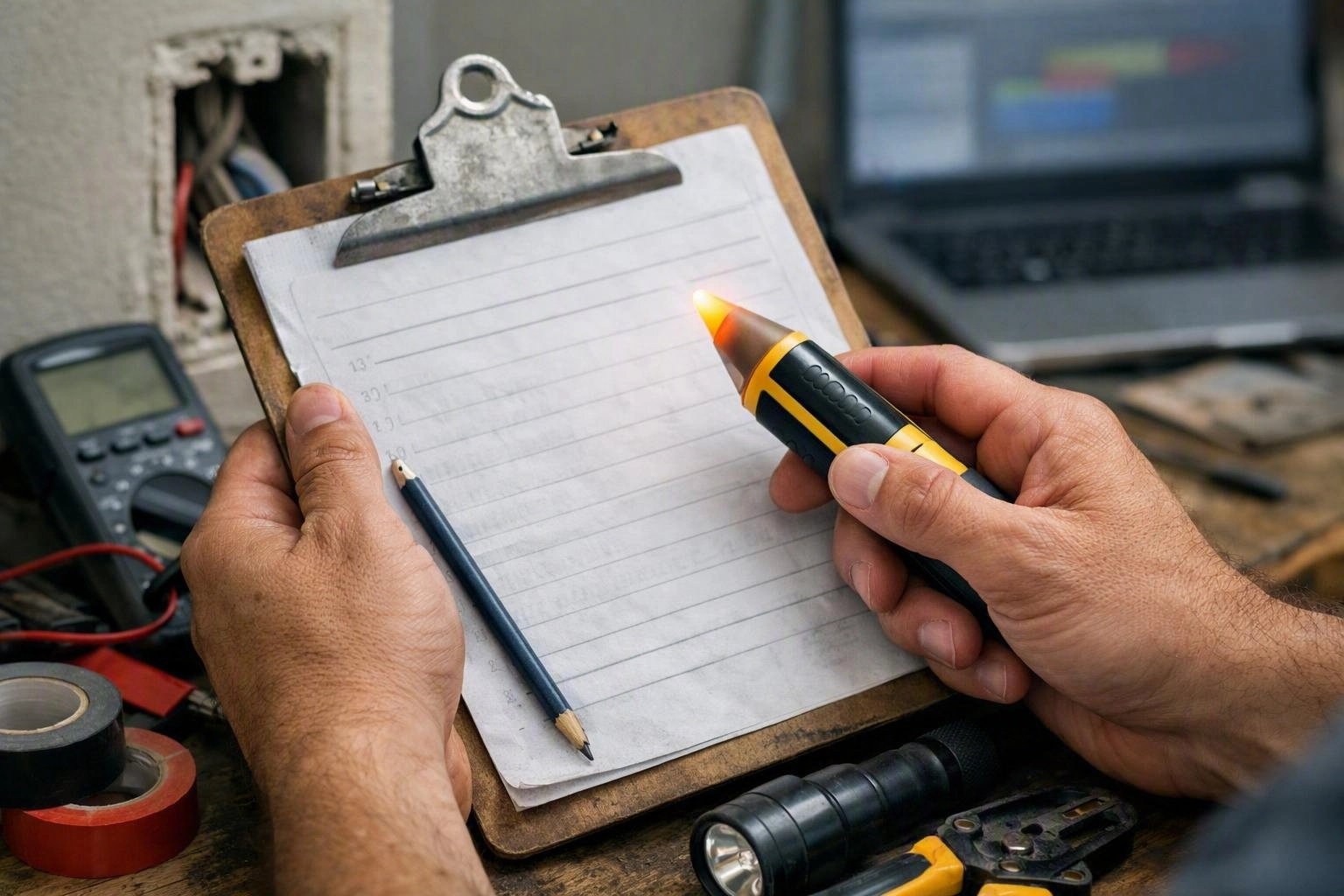
A downstream outlet receives power through an upstream GFCI device. One reset button can therefore control outlets that are not located directly beside the GFCI.
Moisture, damaged equipment, and wiring problems can cause a ground fault. If the GFCI will not reset, resets and trips again, or shows damage, we test the GFCI and the connected circuit to identify the cause.
Restore Power Carefully After the Cause Is Clear
Power should be restored only when the affected area is dry, undamaged, and free of obvious equipment faults. A reset is not a repair when the underlying problem remains.
Free Estimates Available for service that requires testing or repair. We explain what the quote covers, including the affected circuit, required testing, and any recommended correction.
Stop Troubleshooting When You See These Red Flags
These warning signs mean the problem may involve damaged electrical wiring or an unsafe electrical fault. Do not continue resetting a device when any of these conditions appear.
Turn off power only if you can reach the correct control without entering a dangerous area. Electrician Pittsburgh can take over when the warning sign points to equipment, wiring, or a panel problem.
When Should You Call Electrician Pittsburgh?
Call Electrician Pittsburgh when a breaker or GFCI trips again, power remains off after safe checks, wiring shows damage, or the fault cannot be isolated without opening electrical equipment.
Recurring breaker trips can point to an overloaded circuit, a short circuit, a loose connection, or a failing appliance. We perform Electrical Troubleshooting to trace the fault and determine whether the circuit needs repair, replacement, or additional protection.
Call us when AFCI protection trips repeatedly or when the system may need Electrical Code Corrections. We can also complete an electrical safety inspection when the outage reveals broader concerns.
How We Diagnose a Partial Power Outage
Circuit tracing helps us identify where power stops and whether the problem begins at the panel, a protective device, a connection, or a branch circuit. We begin with the reported symptoms and the pattern of working and nonworking fixtures.
Our team checks breaker operation, GFCI function, and AFCI protection while looking for signs of a loose electrical connection. We do not treat a reset as a completed repair when the circuit continues to show abnormal behavior.
Our electrical safety inspection can include accessible outlets, switches, light fixtures, panel connections, and visible wiring. If the system needs AFCI Protection Installation or another correction, we explain the reason and the work included in the quote.
Questions About Partial Power Outages at Home
Why did my outlets stop working but the lights still work?
Outlets can stop working while lights remain on when the outlets and lights use different circuits or when a GFCI device interrupts the outlet circuit. Electrician Pittsburgh checks the outlet pattern, nearby reset devices, and the breaker panel to locate the fault.
Why does my breaker trip again after I reset it?
A breaker that trips again after a reset usually indicates an active electrical fault, an overloaded circuit, a damaged appliance, or another condition that the breaker is protecting against. Stop resetting the breaker and have us test the affected circuit.
Is it safe to reset a breaker more than once?
Resetting a breaker again is not safe when the circuit trips repeatedly or shows heat, smoke, sparks, odor, or damage. Leave the circuit off and call us for Electrical Troubleshooting.
Why is one side of my house without power after a storm?
One side of a house can lose power after a storm because of a utility interruption, a tripped protective device, water exposure, or storm-related wiring damage. Avoid damaged equipment and contact us when safe checks do not restore power.
Partial power outages need a careful response because a simple trip and a wiring fault can look alike. We identify the affected circuit, test the protective devices, and explain the repair needed to restore safe operation.
Contact Electrician Pittsburgh for help when the outage returns, the circuit keeps tripping, or the electrical system shows warning signs.
Get a Free Estimate