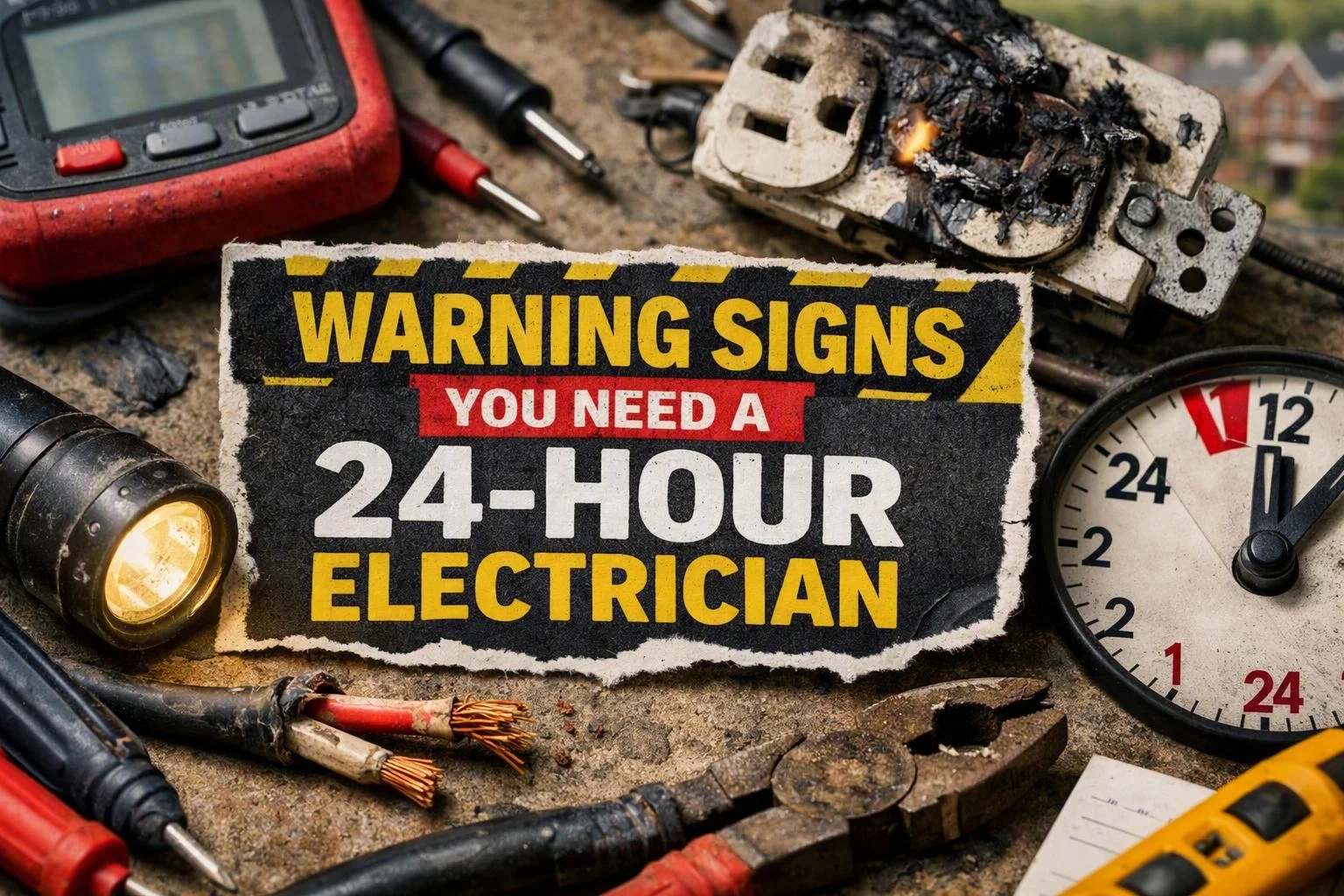
Warning Signs You Need a 24-Hour Electrician
Warning signs you need a 24-hour electrician include smoke, burning smells, hot outlets, sparks, electrical shocks, exposed wiring, and repeated breaker trips; Electrician Pittsburgh checks the hazard, identifies the cause, and completes the needed troubleshooting, safety inspection, or code correction.
Get a Free EstimateWhich Electrical Warning Signs Need Immediate Attention?
Electrical warning signs need immediate attention when they show heat, fire risk, shock risk, or a loss of safe circuit operation. Our team treats the source of the danger as an urgent electrical problem, not just a minor inconvenience.
Use the signs below as a hazard-first guide. Stop using affected equipment when any sign appears.
These signs should not wait until morning when smoke, heat, sparks, or shock is present. We can inspect the affected outlet, switch, circuit breaker, wiring, or electrical panel to locate the underlying fault.
What Should You Do When an Electrical Hazard Appears?
Electrical hazards require you to stop using the affected equipment, keep people away, and call for urgent electrical help when smoke, heat, sparks, or shock is present.
Electrical safety starts with distance from the hazard. Do not touch a smoking, sparking, or hot device, and do not use water near energized equipment.
If the circuit breaker can be reached without passing through danger, you can switch it off as part of a safe shutdown. Leave the breaker off if it trips again, and call us to perform electrical troubleshooting.
Smoke, sparks, and spreading heat can create a fire risk. Leave the area and contact emergency services if a fire has started or the area cannot be reached safely.
When Should You Call a 24-Hour Electrician?
You should call a 24-hour electrician when an electrical problem creates an active fire, shock, overheating, sparking, or exposed-wiring hazard that should not wait until morning.
An electrical emergency includes a burning odor, a sparking outlet, a hot receptacle, unsafe wiring, or power loss linked to a damaged circuit. We assess the danger, guide the safe next step, and identify whether the issue requires repair, inspection, or code correction.
Call for urgent electrical help when a circuit breaker keeps tripping after you reset it, when an outlet shows visible damage, or when an electrical panel produces heat, smoke, or unusual sounds. Our team can perform Electrical Troubleshooting to separate the immediate symptom from the underlying fault.
What Can You Do Yourself and What Should We Check?
DIY electrical safety is limited to low-risk actions that do not require opening equipment or touching damaged wiring. We handle testing, fault finding, repairs, and any work inside the electrical panel.
The table shows where safe homeowner actions end and our electrical troubleshooting begins. Stop if the hazard involves smoke, sparks, heat, water exposure, or electrical shock.
| Factor | What you can do yourself | What we do |
|---|---|---|
| Circuit breaker reset | Reset the breaker only when the area is dry and there is no smoke, heat, or visible damage. | We test the circuit and identify why the breaker tripped before restoring normal use. |
| Unplugging appliances | Unplug an appliance only when the plug and receptacle are cool, dry, and safe to reach. | We check the appliance connection, outlet, circuit, and signs of overheating. |
| Electrical troubleshooting | Observe the symptom and keep people away from the affected area. | We test outlets, switches, wiring, circuit protection, and the electrical panel. |
| Electrical safety inspection | Record what happened and which equipment was operating when the issue appeared. | We review the electrical system condition and look for hidden damage or unsafe wiring. |
| Electrical code corrections | Do not remove covers, alter wiring, or replace protective devices yourself. | We identify required code corrections and explain the repair scope. |
Safe actions can reduce exposure to a hazard, but they do not establish the cause. Our team completes the electrical safety inspection and repair work needed to make the system safe.
How We Diagnose an Urgent Electrical Problem
Electrical troubleshooting starts with the symptom, the affected circuit, and the conditions present when the problem occurred. We ask what happened, isolate the unsafe area, and test the circuit before deciding on the repair.
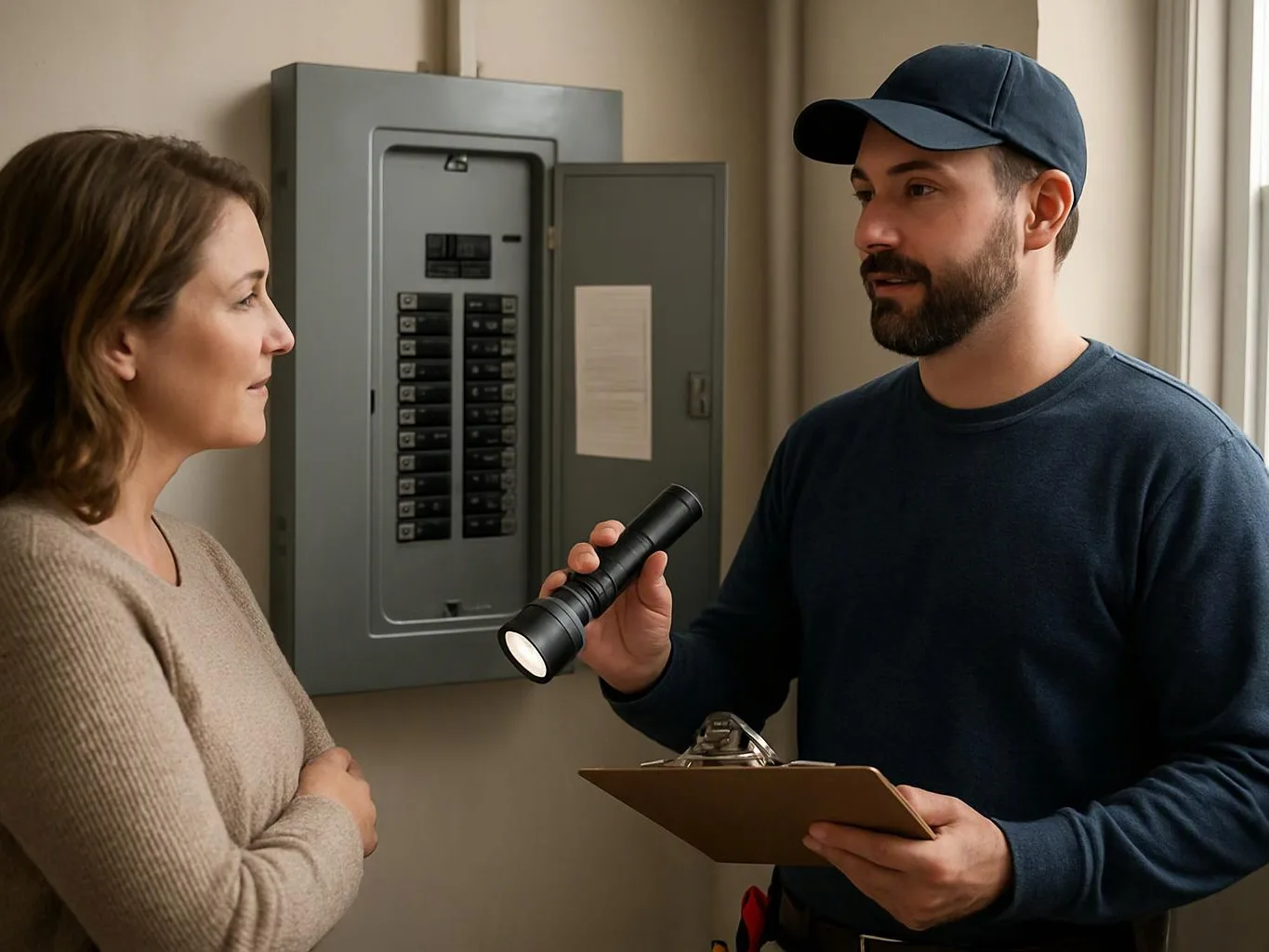
Our team checks the outlet, switch, wiring, circuit breaker, and electrical panel as connected parts of the same system. We use the test results to locate the fault instead of treating only the visible symptom.
Fault location also depends on whether the issue follows one outlet, several outlets, a lighting circuit, or a larger panel section. We explain what we find and which correction addresses the risk.
What Happens After We Find the Electrical Hazard?
An electrical safety inspection after fault location shows whether the hazard is limited to one component or affects the wider electrical system. We document the damaged wiring, faulty receptacle, or circuit protection issue we find.
Our team then explains the repair scope in clear terms. The work may involve correcting damaged wiring, replacing a faulty receptacle, improving circuit protection, or completing an electrical code correction.
We check the affected area after the repair so the original warning sign is not treated as the only problem. A broader electrical safety inspection may be appropriate when damage could be hidden.
How Does the Electrical Problem Affect the Quote?
The electrical problem affects the quote through the hazard type, fault location, access to the wiring, replacement needs, and required code corrections; we explain the work covered by our estimate.
An accessible faulty outlet may require a different repair scope from damaged wiring inside a wall or a problem involving the electrical panel. We inspect the conditions first so the quote reflects the work needed to correct the hazard.
Replacement components, circuit protection, access work, and code corrections can also change the scope. Free Estimates Available means we can discuss the findings and provide an estimate for the recommended work.
When Is an Electrical Safety Inspection the Right Next Step?
An electrical safety inspection is the right next step when warning signs have stopped but the cause remains unclear, damage may be hidden, or the electrical system needs a broader safety review.
Our team reviews the electrical system condition, checks for unsafe wiring and an overloaded circuit, and examines outlet safety. We use the findings to explain whether further troubleshooting or code correction is needed.
An inspection is also useful after repeated breaker trips, unexplained power loss, or an electrical event that left you unsure whether the system is safe. We focus on the source of the risk and the condition of the connected components.
Questions About Electrical Emergency Warning Signs
Is a burning smell from an outlet an emergency?
Yes, a burning smell from an outlet can be an electrical emergency because it may signal overheating or damaged wiring. Electrician Pittsburgh can inspect the outlet, circuit, and connected wiring after you stop using the area.
What should I do if an outlet is hot or sparking?
Stop using a hot or sparking outlet, keep people away, and shut off the circuit only if you can reach the breaker safely. Call for urgent electrical help if heat, sparks, smoke, or a shock hazard is present.
Can a tripped circuit breaker indicate a serious electrical problem?
Yes, a tripped circuit breaker can indicate a serious electrical problem when it trips repeatedly or when heat, smoke, sparks, or damaged wiring are also present. We test the circuit to identify whether the cause is an overload, short circuit, or faulty component.
Should I turn off the power before calling an emergency electrician?
Yes, turn off the affected circuit only when the breaker is safely reachable and there is no smoke, fire, water exposure, or immediate danger. Leave the area and contact emergency services when a fire is active or the panel cannot be reached safely.
Contact Electrician Pittsburgh for emergency service when smoke, burning odor, heat, sparks, shock, exposed wiring, or repeated breaker trips create an unsafe electrical condition. We can assess the hazard and explain the next repair, inspection, or code correction.
Get a Free Estimate