When a Circuit Breaker Needs Replacement
Circuit breaker replacement is appropriate when a breaker shows damage, will not reset, trips repeatedly, or cannot safely protect its circuit; Electrician Pittsburgh checks the breaker and related wiring, explains the repair, and offers Free Estimates Available.
Get a Free EstimateWhat Does a Circuit Breaker Do?
Circuit breaker is a safety device that interrupts electrical current when a circuit develops an unsafe condition. The breaker sits in the electrical panel and provides overcurrent protection for an electrical circuit.
When current rises because of an overload or electrical fault, the breaker trips to help limit damage. We inspect the breaker and the branch circuit when the protection does not operate as expected.
What Signs Mean a Circuit Breaker May Need Replacement?
A circuit breaker may need replacement when it repeatedly trips, will not reset, shows heat or damage, or produces signs of electrical arcing.
These warning signs can also point to a problem elsewhere in the circuit. We use electrical troubleshooting to identify the cause before deciding on breaker replacement.
What Causes a Circuit Breaker to Fail?
Circuit breaker failure can result from circuit faults, loose connections, excessive load, or damage within the breaker or electrical panel.
Our team checks the related wiring because replacing a breaker without correcting the electrical fault can leave the same danger in place.
When Is a Tripping Breaker a Circuit Problem Instead?
A tripping breaker may indicate a problem with the circuit or an appliance, so replacement should follow electrical troubleshooting rather than assume the breaker is defective.
An overloaded circuit can trip when several devices operate together. A short circuit, ground fault, appliance fault, or damaged branch circuit can also cause repeated trips.
We test the circuit and consider its connected equipment before selecting a replacement. This approach helps separate a failed circuit protection device from an electrical wiring problem.
How We Check Whether a Breaker Needs Replacement
Our electrical panel inspection follows a diagnostic process that checks the breaker, circuit, wiring, and panel design together.
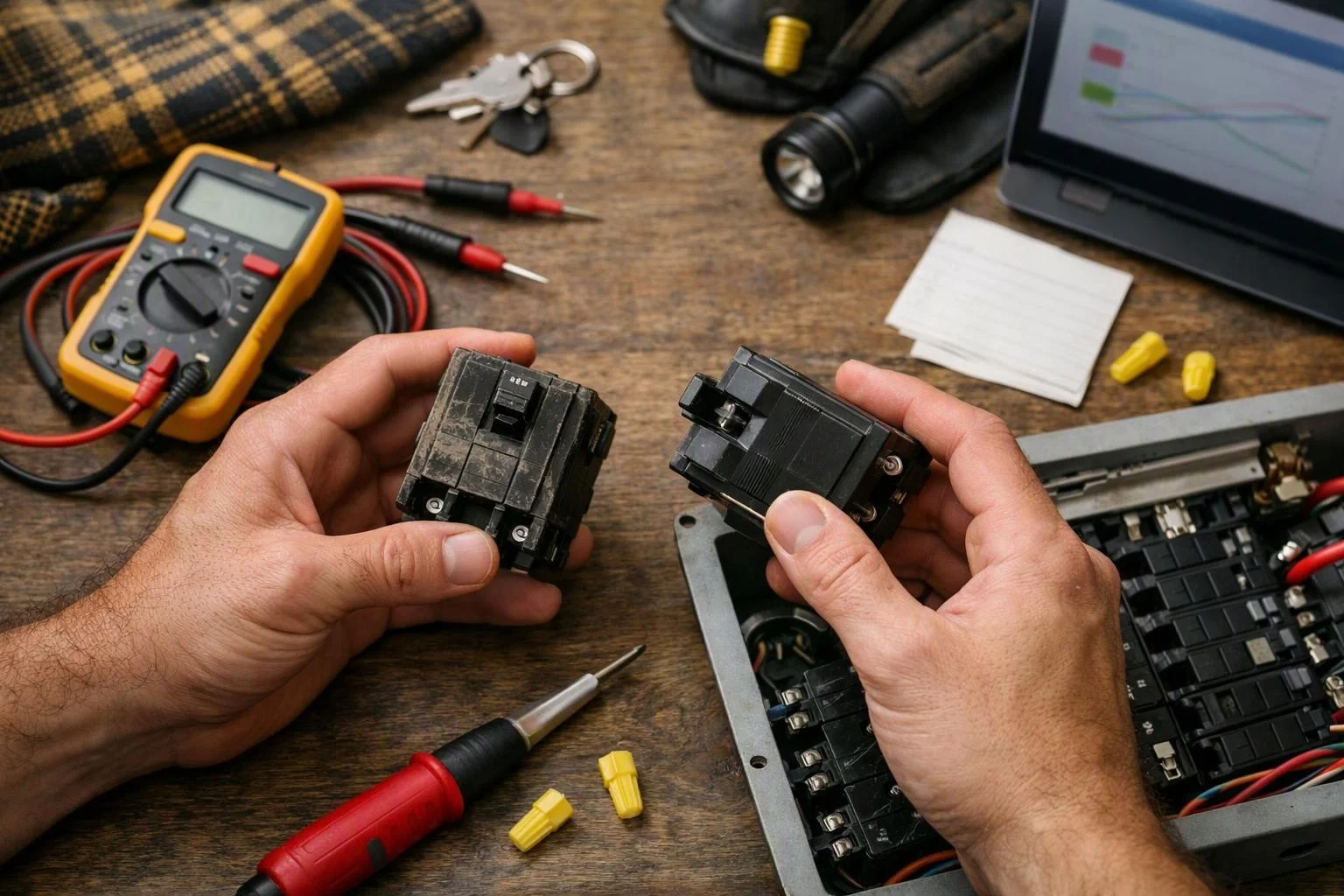
We explain the findings before work proceeds so the repair scope matches the actual fault.
What Should Homeowners Know Before Replacing a Breaker?
Homeowners should confirm that the replacement breaker matches the electrical panel and circuit design because an incorrect breaker can create a safety hazard.
Breaker compatibility includes the breaker type, panel compatibility, amperage, wire size, circuit rating, and manufacturer requirements. A single-pole breaker, double-pole breaker, GFCI breaker, or AFCI breaker serves a different purpose based on the circuit design.
Turn off power to affected equipment when it is safe to do so, but do not remove the panel cover. We handle circuit breaker replacement and verify the installation as part of the electrical diagnosis.
What Can Homeowners Do to Help Prevent Breaker Problems?
Homeowners can reduce breaker problems by managing circuit loads, addressing damaged cords and outlets, and arranging electrical troubleshooting when warning signs appear.
Simple safety habits can reduce strain on the electrical system. We can inspect the panel and related wiring when recurring issues need a closer review.
When Should You Stop Resetting a Circuit Breaker?
Homeowners should stop resetting a circuit breaker when the breaker trips again or when the panel shows heat, smoke, sparks, burning odor, or visible damage.
A breaker reset can restore power briefly while an electrical fault remains active. Turn off power to affected equipment when it is safe to do so, keep away from a hot or damaged electrical panel, and contact Electrician Pittsburgh for electrical troubleshooting.
How Electrician Pittsburgh Plans a Safe Circuit Breaker Replacement
Circuit breaker replacement starts with electrical diagnosis, panel inspection, and verification of the replacement component.
We confirm panel compatibility, identify the fault, and explain the repair scope before the project proceeds. Free Estimates Available helps homeowners understand the planned work before approving the replacement.
For help with a damaged or unreliable breaker, contact us through Circuit Breaker Replacement service. Our team can review the warning signs and outline the next safe step.
Questions About Circuit Breaker Replacement
Can a circuit breaker be replaced without replacing the electrical panel?
Yes, Electrician Pittsburgh can replace a circuit breaker without replacing the electrical panel when the panel is suitable and the correct compatible breaker is available. We inspect the panel, wiring, circuit rating, and breaker connection before confirming that scope.
Is a breaker that keeps tripping always bad?
No, a breaker that keeps tripping is not always bad because an overload, short circuit, ground fault, appliance fault, or wiring problem can cause the trip. We test the branch circuit before recommending breaker replacement.
Can a homeowner replace a circuit breaker themselves?
Homeowners should not remove the panel cover or replace a circuit breaker without the required electrical knowledge and safety controls. We verify the breaker type, panel compatibility, wire size, circuit rating, and underlying electrical fault as part of the replacement.
What should you do if a circuit breaker smells burnt?
Stop resetting the breaker, turn off power to affected equipment when safe, stay away from a hot or damaged panel, and contact us for electrical troubleshooting. A burning smell can indicate overheating, a loose connection, damaged wiring, or electrical arcing.
Related Resources
How Emergency Electrical Troubleshooting Works in Pittsburgh, PA
How Long It TakesHow Long Emergency Electrical Repairs Take in Pittsburgh, PA
What It CostsHow Much Does a 24-Hour Electrician Cost in Pittsburgh?
What It CostsElectrical Panel Upgrade Cost Factors: Size, Circuits, Equipment, and Labor