What to Do When Part of Your Home Loses Power
Partial power loss usually points to a tripped circuit breaker, GFCI outlet, damaged receptacle, or wiring problem. Electrician Pittsburgh can diagnose persistent outages, repeated trips, burning smells, sparks, heat, or damaged wiring. You can check accessible switches and reset devices safely when there are no signs of danger.
Get a Free EstimateWhat Should You Check First When Part of Your Home Loses Power?
Partial power loss is first checked at the affected outlets and lights, nearby rooms, the electrical panel, and GFCI outlets that may control multiple receptacles.
Start by confirming whether the problem affects one outlet, one room, or several nearby rooms. Check whether lights and other receptacles still work, since that can help identify the affected circuit.
How Can You Safely Check an Outlet That Does Not Work?
A dead outlet can be checked by confirming the appliance works elsewhere, checking the switch, and resetting an accessible GFCI outlet without removing covers or touching wiring.
Test the plug or appliance at a working receptacle so you do not mistake an appliance problem for an electrical outlet problem. Check whether a wall switch controls the receptacle, but do not force a switch that feels hot, loose, or damaged.
Press the GFCI reset button only when the device is dry and undamaged. A GFCI reset can restore power to other receptacles on the same branch circuit, so check nearby rooms after resetting it.
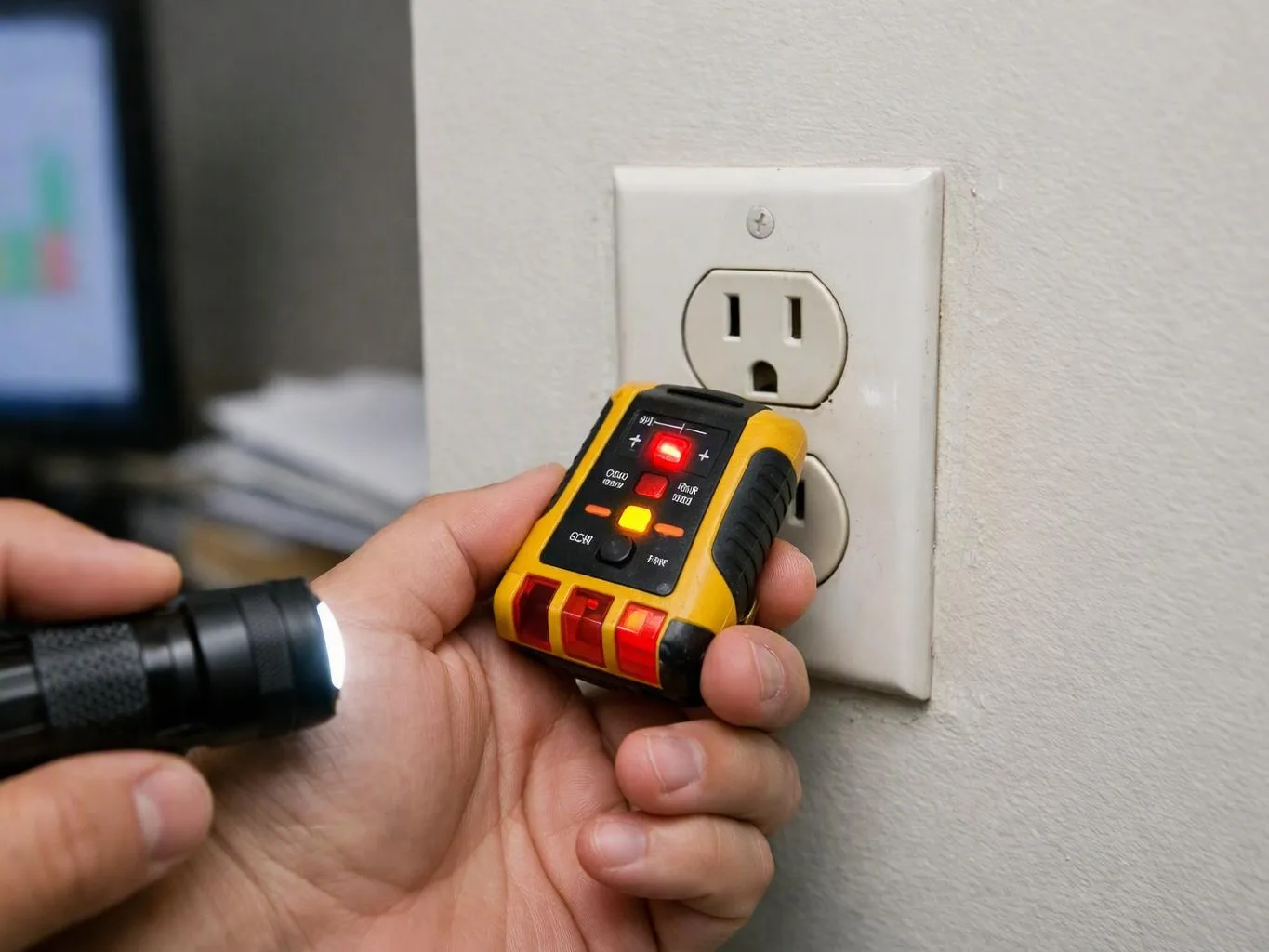
Our team uses Electrical Troubleshooting to trace a dead receptacle when safe homeowner checks do not restore power. We inspect the receptacle, circuit connections, protection devices, and wiring without asking you to handle live parts.
How Do You Check a Circuit Breaker That Has Tripped?
A tripped circuit breaker can be reset once by moving it fully to the off position and then back on, but repeated tripping requires electrical troubleshooting.
Stand to the side of the breaker panel and use only the breaker handle. Do not remove the panel cover or touch any other part of the electrical panel.
A breaker may trip because of an overload, short circuit, or another electrical fault. We identify the cause before recommending repair or Circuit Breaker Replacement.
Why Does a Breaker Keep Tripping After You Reset It?
A breaker that keeps tripping signals an unresolved overloaded circuit, short circuit, ground fault, faulty appliance, or wiring problem.
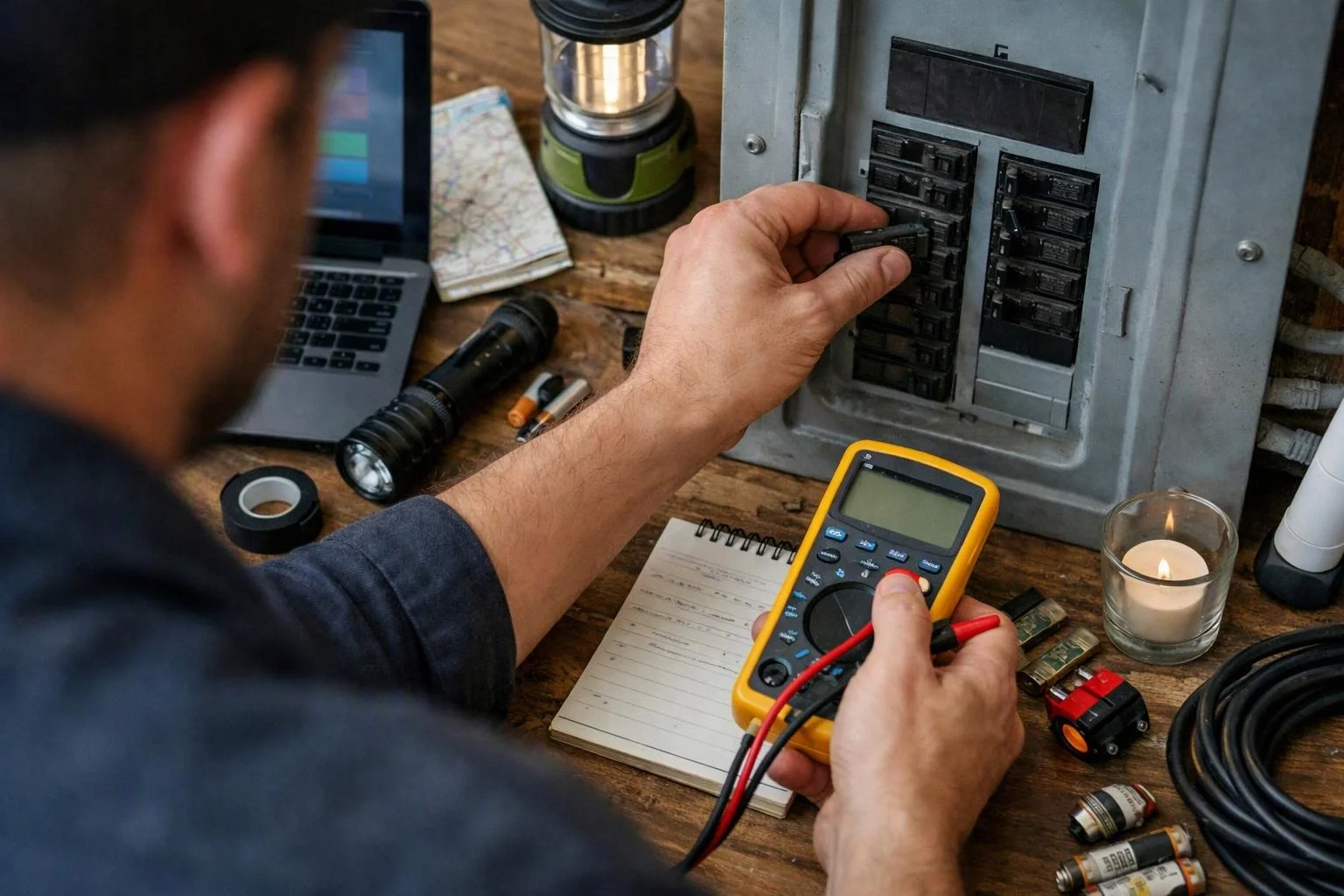
An overloaded circuit can trip when connected equipment draws more power than the circuit can safely carry. A faulty appliance can also create a condition that trips the breaker when it operates.
A short circuit or ground fault can create a dangerous path for electrical current. Damaged electrical wiring, loose connections, or moisture can contribute to these faults.
We isolate the circuit and test the connected devices, receptacles, protection devices, and wiring. Repeatedly resetting the breaker can hide the cause and increase the risk of overheating or damage.
When Is Partial Power Loss an Electrical Emergency?
Partial power loss becomes an urgent safety concern when the home has smoke, sparks, burning odors, hot outlets, scorch marks, buzzing, exposed wiring, or shock risk.
Leave the affected area and call for help when you see or smell signs of overheating. If there is smoke or fire, leave the home and contact emergency services.
Do not touch damaged equipment or attempt a safety shutoff if reaching the panel would expose you to water, heat, smoke, or live parts. Our crew can assess the electrical fault and recommend a safe repair path.
Which Troubleshooting Steps Should Homeowners Avoid?
Homeowners should not remove electrical panel covers, handle exposed wiring, bypass a breaker, repeatedly reset a tripping circuit, or work on equipment exposed to water.
Safe troubleshooting stops at accessible switches, appliance checks, breaker handles, and GFCI reset buttons. Electrical safety requires you to avoid any task that exposes wiring or requires work inside electrical equipment.
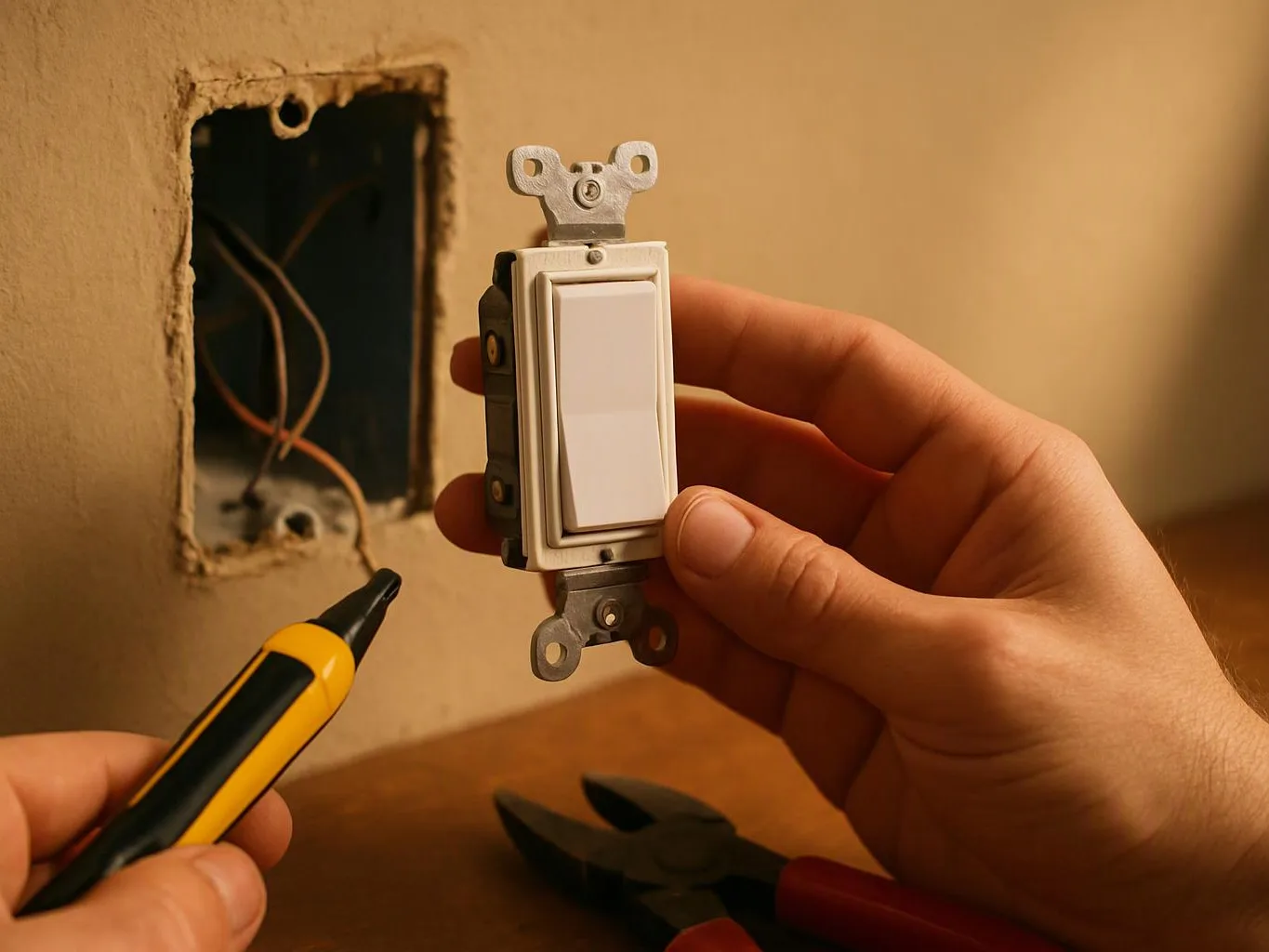
Do not replace an outlet or breaker based only on appearance. A damaged receptacle may be a symptom of a deeper circuit problem, and the wrong replacement can create a shock or fire hazard.
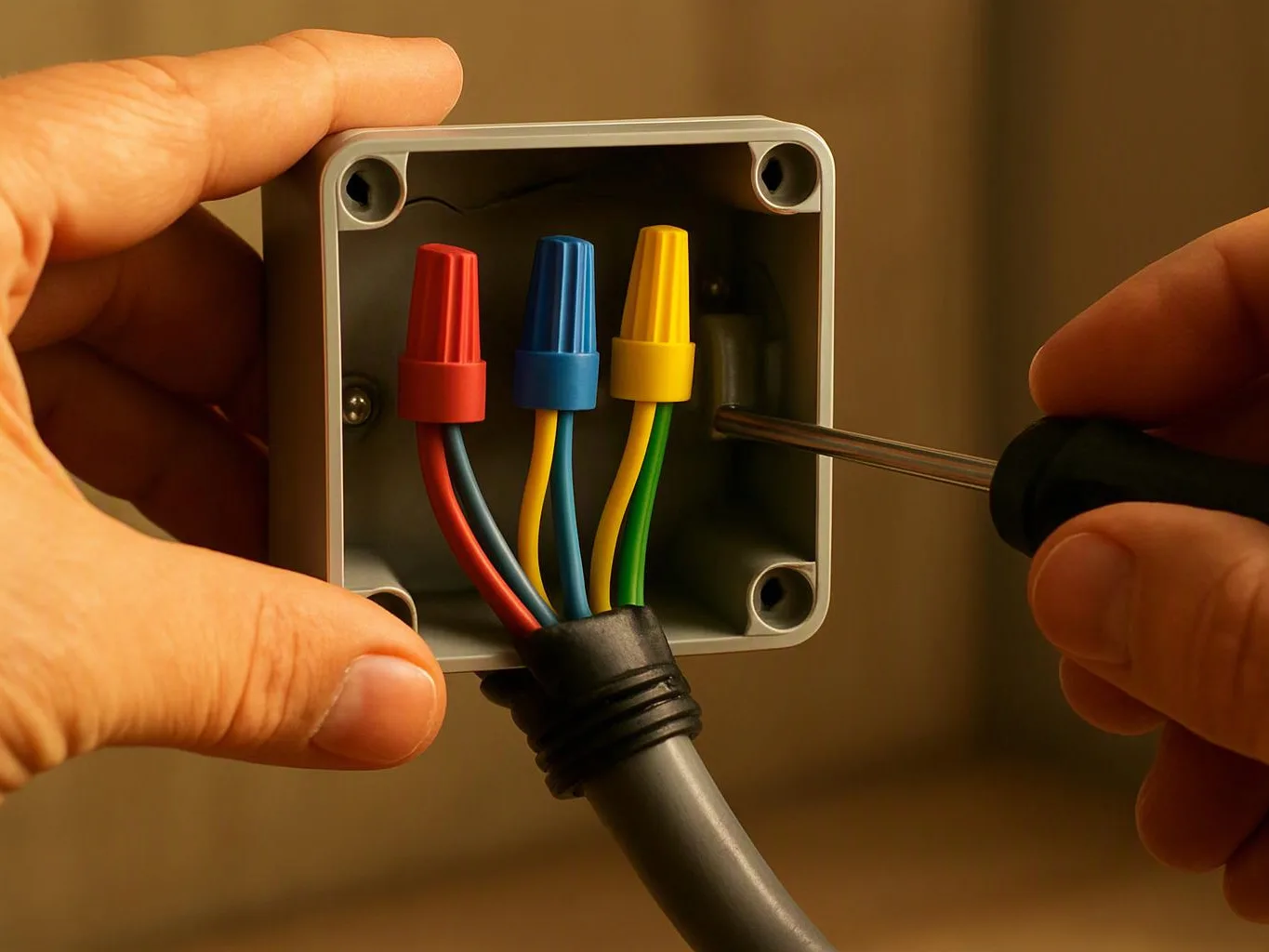
Do not use an extension cord as a permanent solution for an outlet without power. We inspect the circuit and complete Electrical Wiring Repair when testing shows damaged connections or conductors.
How Electrician Pittsburgh Diagnoses Persistent Power Loss
Electrician Pittsburgh traces persistent partial power loss from the affected device or outlet through the circuit, breaker, and wiring to identify the fault before recommending repair.
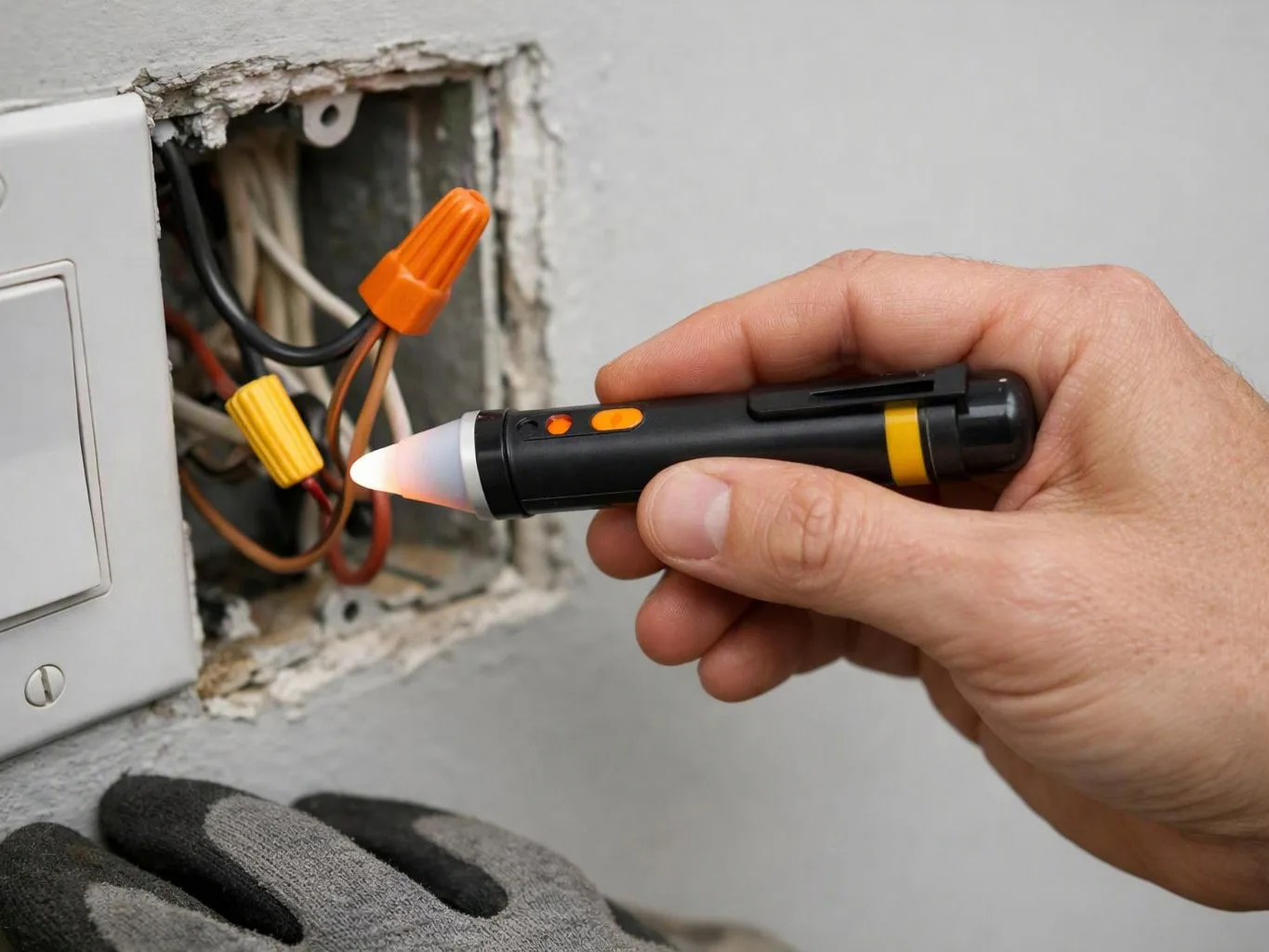
Our team begins with a visual electrical inspection and asks which outlets, lights, and rooms lost power. We then use circuit testing and voltage testing to locate where power is present and where it stops.
Fault isolation helps us separate an appliance issue from a failed receptacle, GFCI problem, breaker fault, or damaged branch circuit. We explain the repair recommendation after identifying the source of the outage.
The repair may involve a receptacle, protective device, breaker, or electrical wiring, depending on the test results. We provide Free Estimates Available when you contact us for the work identified during the assessment.
Questions About Losing Power in Part of Your Home
Can one room lose power while the rest of the house still works?
Yes, one room can lose power while the rest of the house still works when the affected branch circuit has a tripped breaker, GFCI interruption, damaged receptacle, or wiring fault. Electrician Pittsburgh traces the affected circuit to identify the cause.
Why does an outlet stop working when the breaker is not visibly tripped?
An outlet can stop working when the breaker is not visibly tripped because a GFCI device interrupted power, the receptacle failed, or a connection or wire has a fault. Reset accessible GFCI protection once when the area is dry and safe, then stop if power does not return.
Can a GFCI outlet control other outlets in the home?
Yes, a GFCI outlet can control other outlets downstream on the same circuit. Resetting the accessible GFCI device may restore power to receptacles in nearby rooms.
Should you reset a breaker that keeps tripping?
No, you should not repeatedly reset a breaker that keeps tripping. Repeated trips can point to an overload, short circuit, ground fault, faulty appliance, or wiring problem that requires testing.
Can a faulty appliance cause part of a house to lose power?
Yes, a faulty appliance can trip a circuit breaker or GFCI device and cause part of a house to lose power. Unplug the appliance if it is safe to do so, and stop using it when it shows heat, smoke, sparks, or damage.
Persistent partial power loss needs a safe diagnosis before any repair or replacement. Contact Electrician Pittsburgh so our team can test the circuit, explain the fault, and recommend the appropriate repair.
Related Resources
How Emergency Electrical Troubleshooting Works in Pittsburgh, PA
How Long It TakesHow Long Emergency Electrical Repairs Take in Pittsburgh, PA
What It CostsHow Much Does a 24-Hour Electrician Cost in Pittsburgh?
What It CostsElectrical Panel Upgrade Cost Factors: Size, Circuits, Equipment, and Labor