
What Is Bonding?
Bonding is the intentional connection of conductive metal parts so they remain at the same electrical potential. This connection creates a controlled path for fault current and helps protective devices respond when energized wiring contacts metal equipment, enclosures, piping, or other conductive parts. Bonding works with grounding but serves a different purpose.
Quick Facts About Bonding
Category
Electrical safety practice
Used for
Controlling fault-current paths
Common confusion
Bonding is not the same as grounding
Also called
Equipotential bonding
Often discussed with
Electrical Safety Inspection, Electrical Code Corrections
Key Takeaways About Bonding
- Bonding joins conductive metal parts into one electrical system.
- Grounding connects the system to earth, while bonding connects metal parts.
- A bonding connection is not the same as a grounding electrode.
How Bonding Works
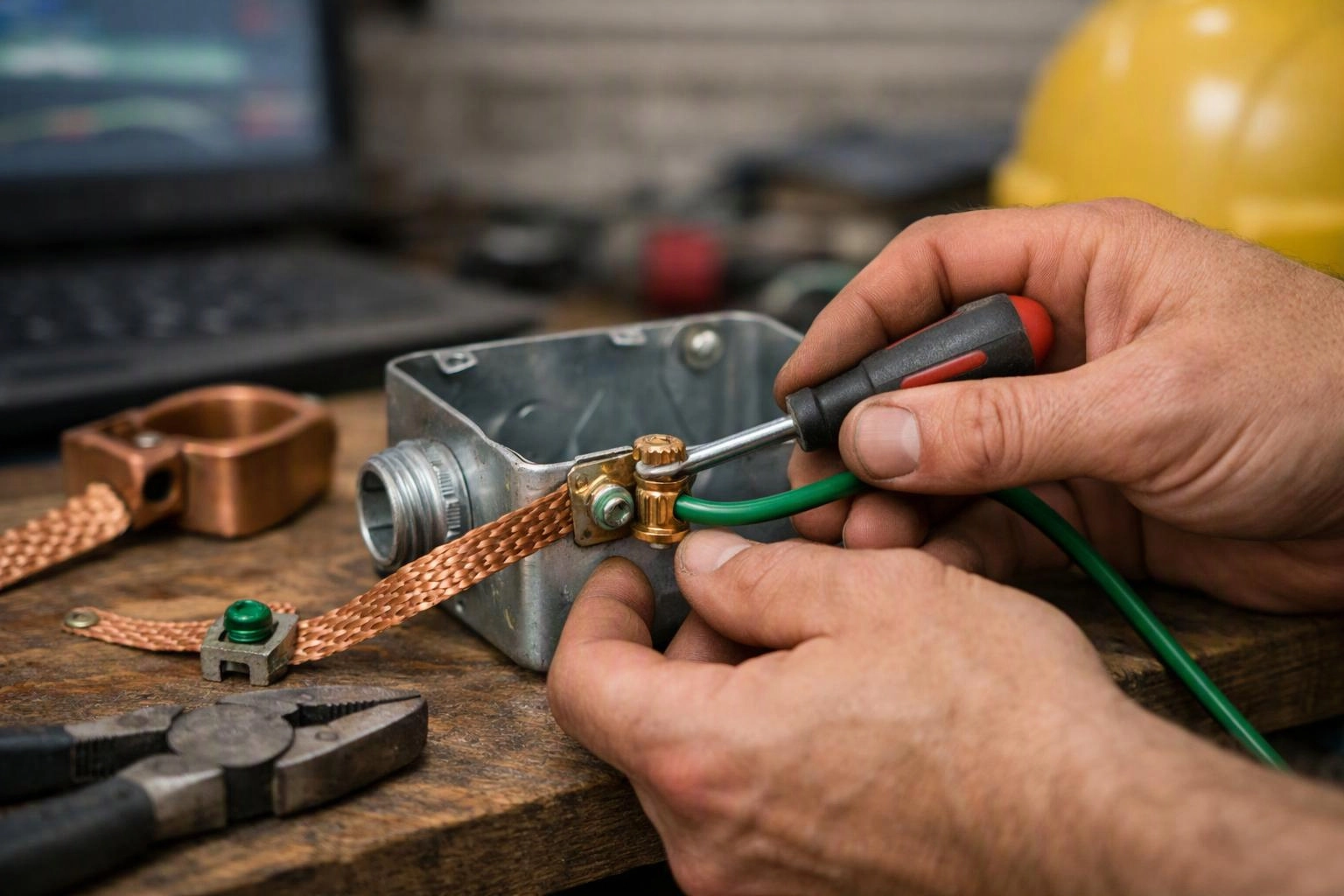
Bonding connects exposed conductive parts with approved conductors or other suitable conductive paths. These parts may include metal enclosures, equipment frames, raceways, and certain metal piping. The connections keep the bonded parts at a similar electrical potential during normal operation and during a fault.
Related glossary terms: Electrical Grounding, Pool Bonding, Busbar.
A fault can place voltage on a metal enclosure when insulation fails or a conductor comes loose. The bonding path carries fault current back toward the source, which supports operation of an overcurrent device. A bonding connection must remain continuous, secure, and electrically conductive. Paint, corrosion, loose hardware, or an unsuitable connection can interrupt that path.
Bonding and Grounding
Electrical Grounding connects an electrical system to earth through grounding electrodes and related conductors. Bonding connects conductive parts together. Both functions appear in a safe electrical system, but they address different electrical conditions. A grounding electrode alone does not replace bonding between metal parts.
From the Electrician Pittsburgh team
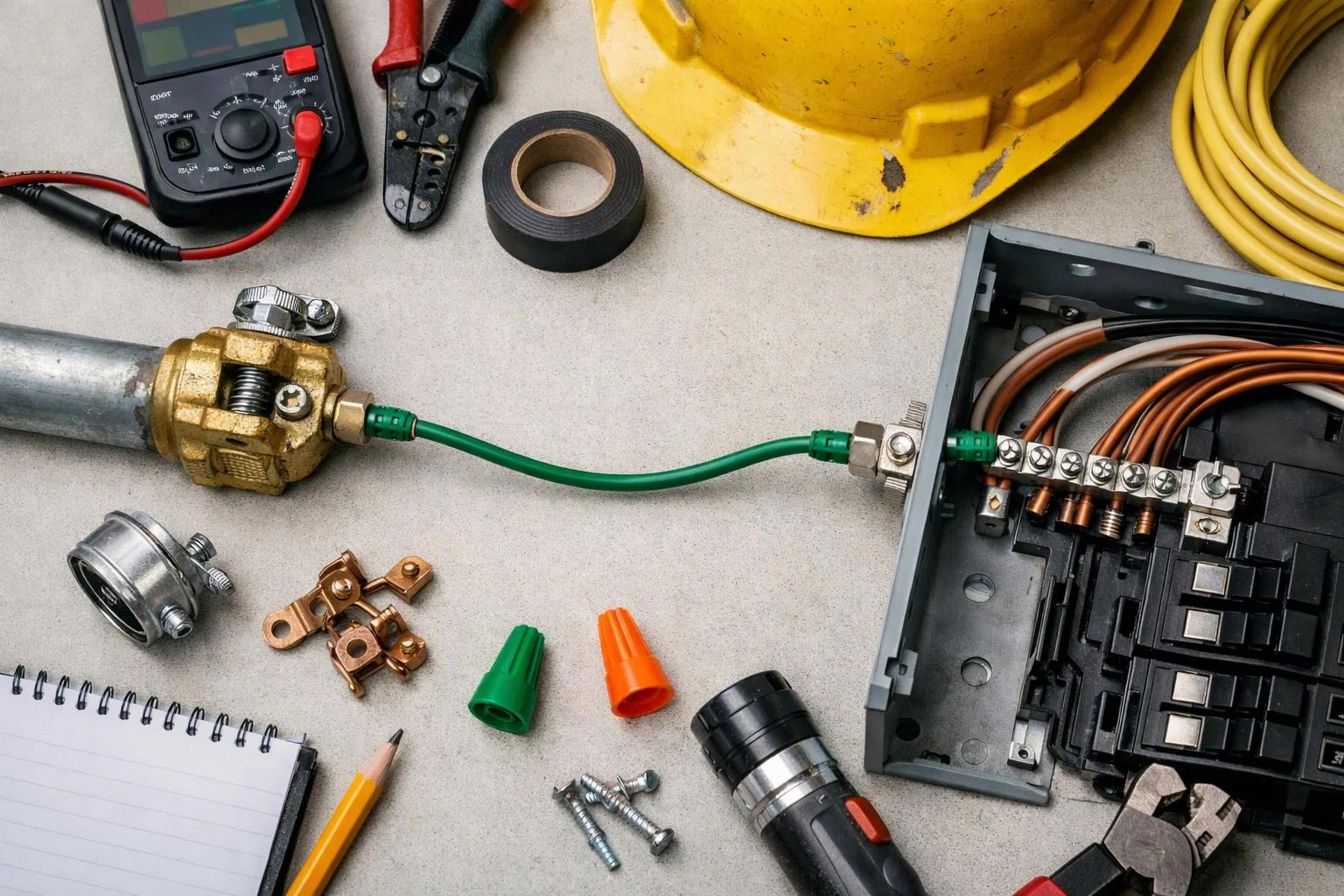
When we inspect an electrical system, we trace bonding paths between equipment, enclosures, raceways, and other conductive parts. We check connection points for looseness, corrosion, damaged conductors, and improper terminations. We also distinguish bonding problems from grounding problems so the inspection record identifies the actual condition.
Bonding in Practice: A Real-World Example
During an electrical safety inspection, a metal panel enclosure may be checked for a secure connection to the system bonding path. If a loose or corroded connection interrupts that path, the condition is documented for correction.
Related Terms
Electrical Grounding
Electrical Grounding is a protective connection between an electrical system and the earth or another conductive…
Pool Bonding
Pool Bonding is an electrical connection between conductive parts of a pool system that helps keep…
Busbar
Busbar is a conductive metal bar or strip that distributes electrical power among circuits inside equipment…
Conduit
Conduit is a protective pathway that houses and routes electrical conductors through walls, ceilings, floors, and…
Electrician Pittsburgh
Have Questions About Bonding?
Contact Electrician Pittsburgh for practical guidance on Bonding and related 24 hour electrician work in Pittsburgh.