
What Is a Capacitor?
A capacitor is an electrical component that stores and releases energy within a circuit. In a ceiling fan, the capacitor helps create the phase shift needed for the motor to start, run, and change speed. Its capacitance is measured in farads, while its voltage rating shows the electrical stress it can withstand.
Quick Facts About Capacitor
Category
Electrical component
Used for
Motor starting and speed control
Common confusion
Often mistaken for a battery or switch
Also called
Motor capacitor, Fan capacitor
Often discussed with
Ceiling Fan Repair, Electrical Troubleshooting
Key Takeaways About Capacitor
- A capacitor stores electrical energy for controlled release.
- Ceiling fans use capacitors to support motor starting and speed control.
- A capacitor is not the same component as a circuit breaker.
How Capacitor Works
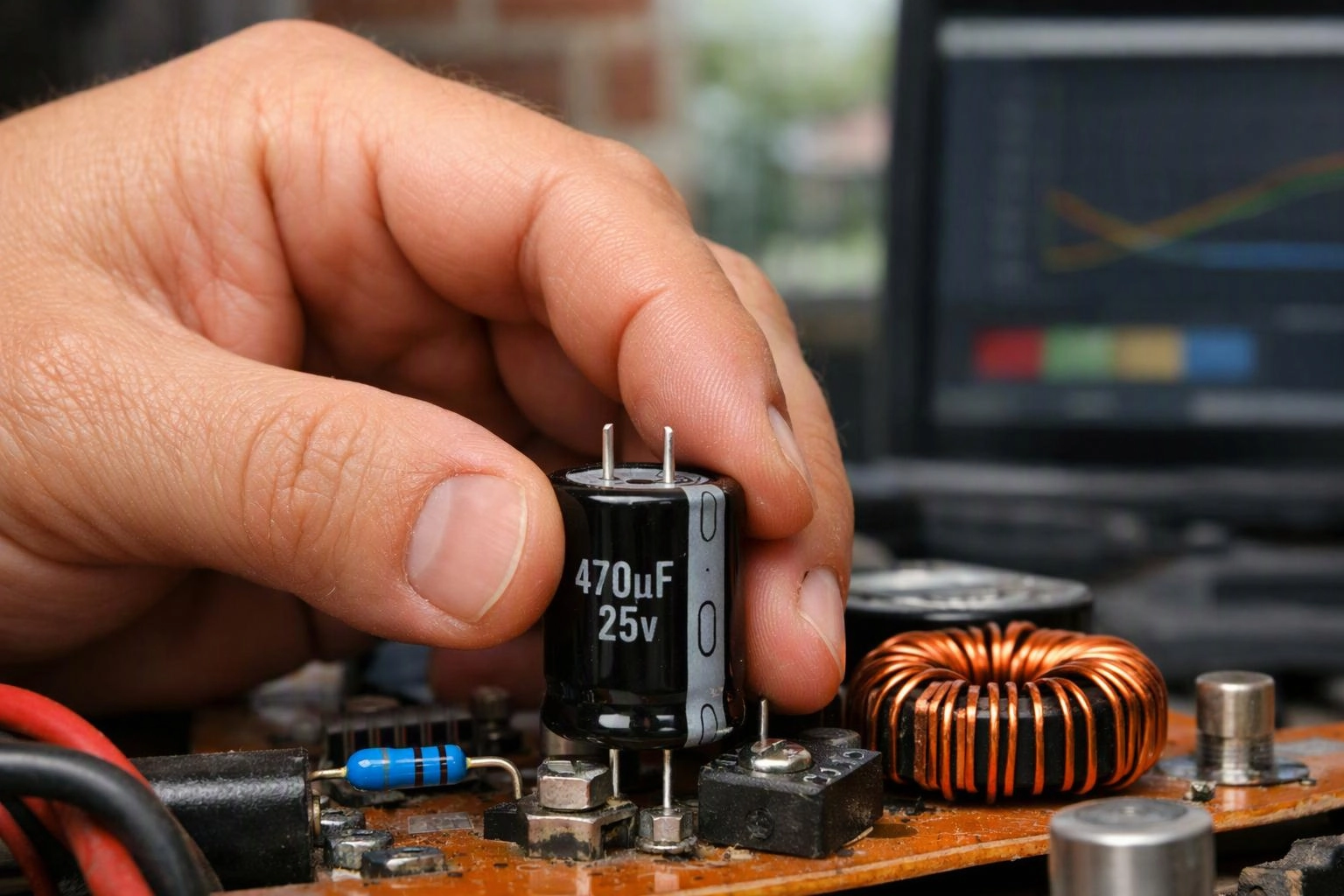
A capacitor stores electrical charge between conductive surfaces separated by an insulating material. The component releases that stored energy as the circuit requires it. Capacitance describes how much charge the component can hold, while the voltage rating identifies the electrical pressure the component is designed to handle.
Related glossary terms: Voltage Drop, Wire Size, Electrical Grounding.
Ceiling fan motors use a capacitor to shift the timing of current through the motor windings. That shift creates the rotating magnetic field that supports starting and continued operation. Different capacitor values can produce different fan speeds, so the correct replacement must match the motor's design. A failed capacitor may leave the fan humming, turning slowly, or unable to start, even when power reaches the fan.

From the Electrician Pittsburgh team
When we inspect a ceiling fan, we check the capacitor's condition, connections, and markings before judging the motor. We compare the installed component with the fan's wiring and controls. A matching replacement must suit the motor and the selected speed settings.
Capacitor in Practice: A Real-World Example
A ceiling fan may receive power and still fail to start because its capacitor no longer provides the needed phase shift. Replacing the correctly matched capacitor can restore starting and normal speed control when the motor and wiring remain functional.
Related Services
Related Terms
Voltage Drop
Voltage Drop is the reduction in electrical pressure that occurs as current travels through a conductor…
Wire Size
Wire Size is the classification of a conductor’s diameter and current-carrying capacity. The selected size depends…
Electrical Grounding
Electrical Grounding is a protective connection between an electrical system and the earth or another conductive…
Electrician Pittsburgh
Have Questions About Capacitor?
Contact Electrician Pittsburgh for practical guidance on Capacitor and related 24 hour electrician work in Pittsburgh.