
What Is a Main Breaker?
A main breaker is a protective switch that controls power to an electrical panel. It can shut off power to the panel's branch circuits and trips when current exceeds its rated limit. You can also use its handle to switch off power to those circuits manually.
Quick Facts About Main Breaker
- Category
- Panel protection device
- Used for
- Panel power control
- Common confusion
- Main breaker versus branch breaker
- Also called
- Main Circuit Breaker
- Often discussed with
- Electrical Panel Repair, Circuit Breaker Replacement
Key Takeaways About Main Breaker
- Branch breakers protect individual circuits.
- The handle has an off position.
- A tripped main breaker isn't always a faulty breaker.
How Main Breaker Works
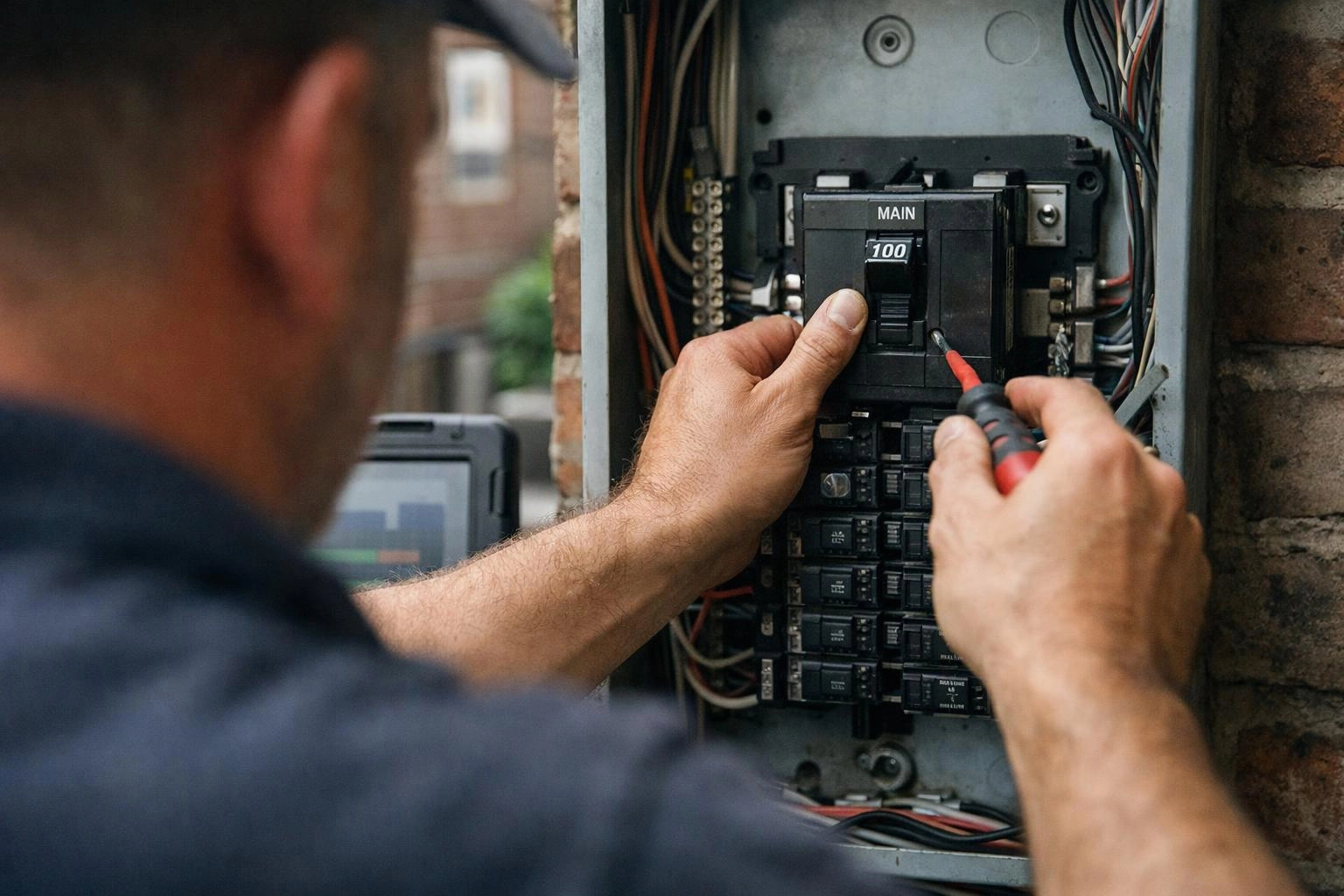
A main breaker carries current from the incoming supply to the panel's distribution system. Its internal mechanism senses excess current and releases a latch when a trip occurs. The contacts inside the breaker then open and stop current from reaching the circuits fed by the panel. Related service: Electrical Panel Repair.
Related glossary terms: Circuit Breaker, Branch Circuit, Load Center.
The breaker's rating describes the current it is designed to carry. A branch circuit breaker has its own rating and controls a separate circuit. A branch breaker can trip while the main breaker stays on, leaving other circuits powered.
The main breaker handle also lets you disconnect the panel's branch circuits. Incoming connections may still be energized after the main breaker is off. Some properties have a separate main disconnect outside the panel, so the layout isn't the same everywhere.
From the Electrician Pittsburgh team
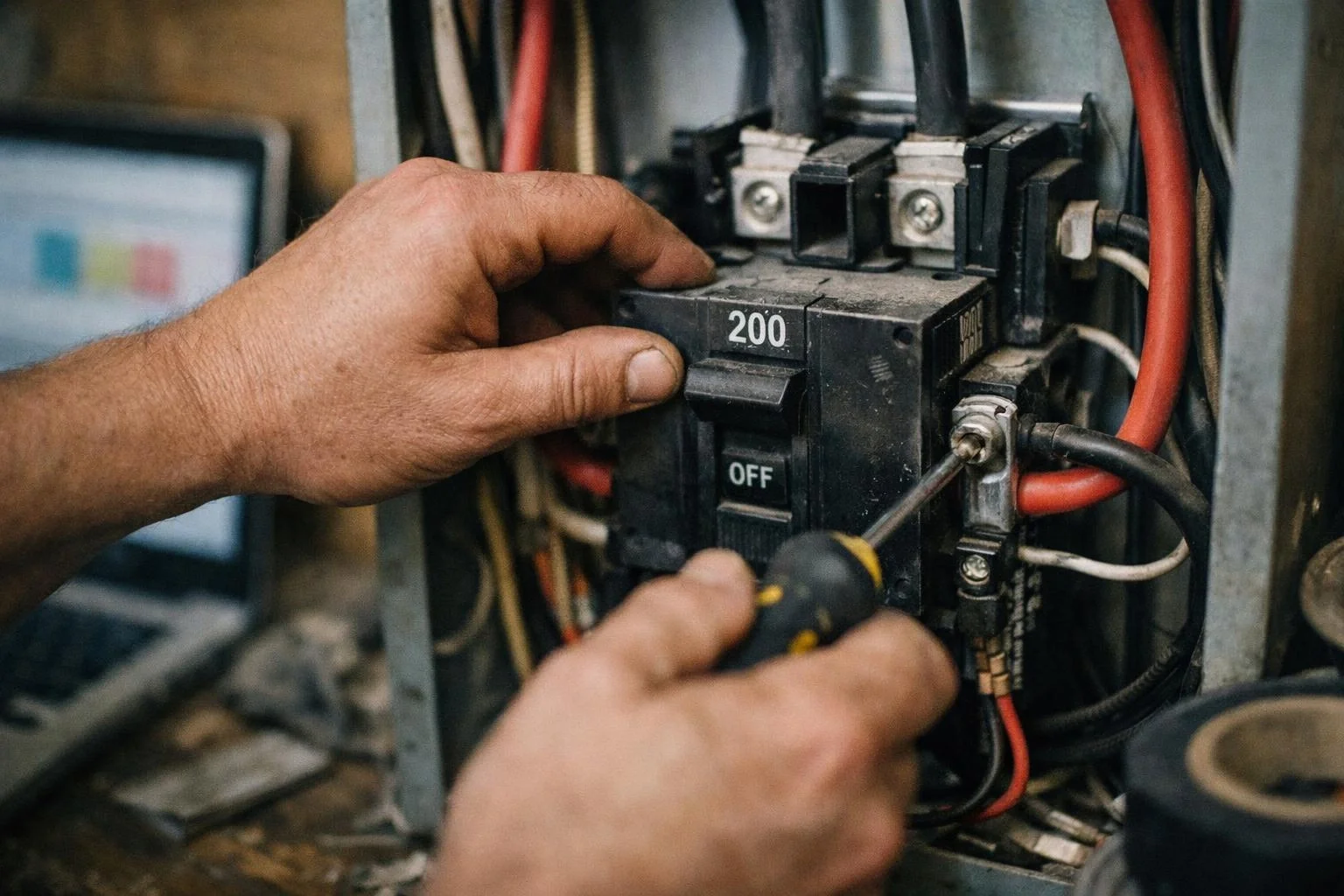
When we assess a main breaker during panel repair, we look at the breaker and its connections. We also consider what was running when the problem appeared. That context helps us distinguish a breaker problem from a problem elsewhere in the electrical system.
Main Breaker in Practice: A Real-World Example
A homeowner notices that the main breaker has tripped and the panel's circuits have lost power. During panel repair, an electrician checks the breaker and investigates the conditions that led to the trip.
Related Terms
Circuit Breaker
A circuit breaker is an electrical protection device that stops current when a circuit draws too much power or develops a short.
Branch Circuit
A branch circuit is an electrical path that carries power from a final circuit breaker or fuse to outlets and equipment.
Load Center
A load center is an electrical panel that distributes power to circuits throughout a building.
Circuit Overload
A circuit overload is a condition that occurs when electrical devices draw more current than a circuit is designed to carry.
Electrician Pittsburgh
Have Questions About Main Breaker?
Contact Electrician Pittsburgh for practical guidance on Main Breaker and related 24 hour electrician work in Pittsburgh.