Does Your Home Need Rewiring? Warning Signs to Look For
Residential electrical wiring shows warning signs that may require evaluation or replacement. Electrician Pittsburgh can inspect the system and identify needed rewiring or code corrections when you notice recurring flickering, burning odors, warm or discolored outlets, damaged wiring, frequent breaker trips, or outdated electrical components.
Get a Free EstimateWhat Are the Warning Signs Your House Needs Rewiring?
Warning signs your house needs rewiring include recurring electrical faults, heat, burning odors, visible wire damage, and outlets or switches that show unsafe behavior. Our team connects each sign to the condition of the circuit, protective device, or wiring.
One warning sign can point to a localized repair, while several signs across the home may indicate broader residential rewiring needs.
How Can You Tell If Old House Wiring Is Unsafe?
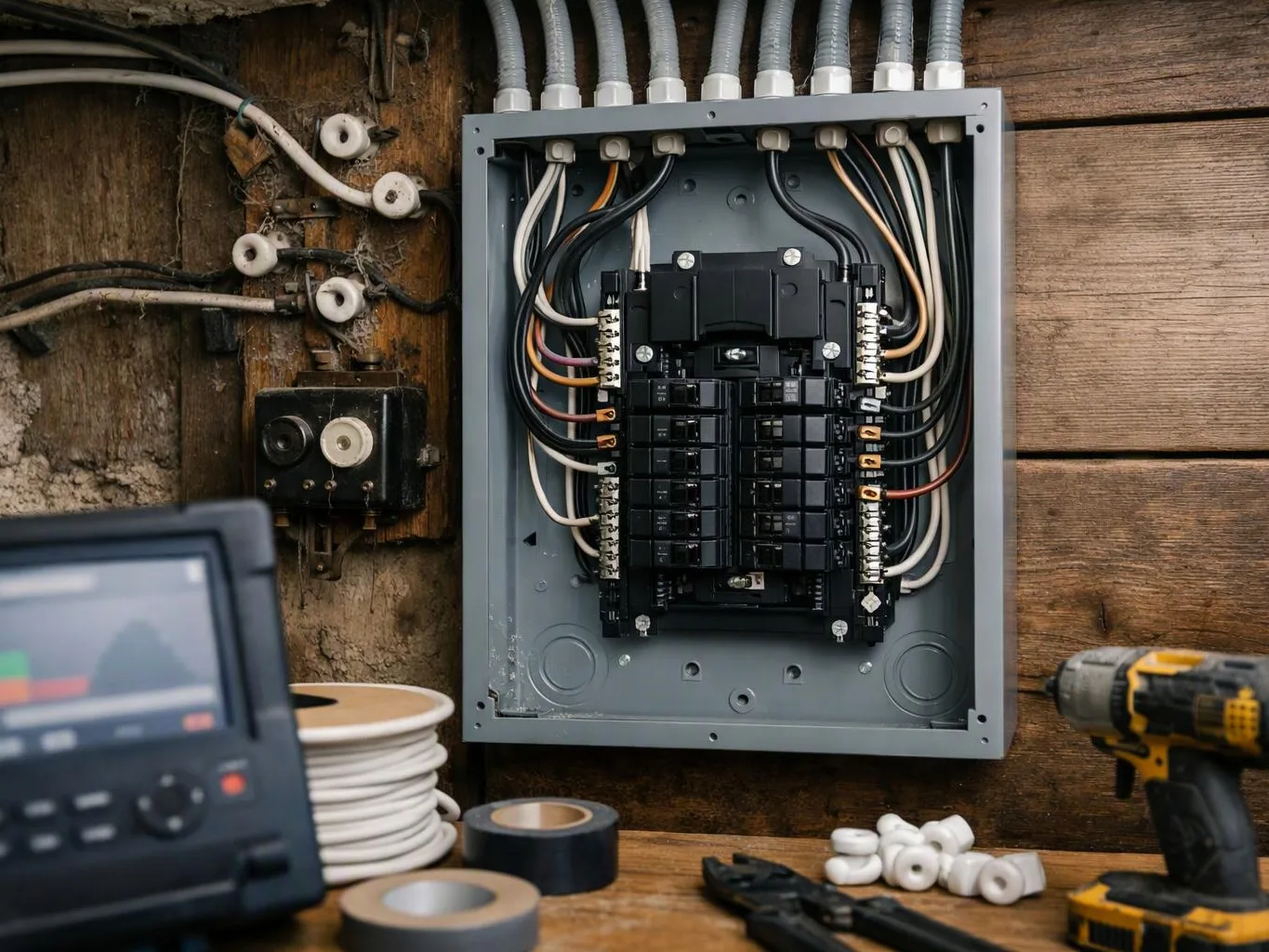
Old house wiring may be unsafe when insulation has deteriorated, circuits lack proper grounding, or the electrical system cannot safely support the home's current demand. Old house wiring can include knob-and-tube wiring, aluminum wiring, or other systems that need careful evaluation.
Electrical insulation can become brittle, cracked, or damaged over time. We inspect accessible wiring and connections without assuming that every older system needs full replacement.
A missing grounding conductor can leave fault current without a reliable path back to the electrical panel. We check grounding, circuit protection, and panel condition to identify the right safety correction.
Do Two-Prong Outlets Mean a House Needs Rewiring?
Two-prong outlets do not automatically prove that a whole house needs rewiring, but they can indicate ungrounded circuits that require inspection and possible correction.
Two-prong receptacles may be connected to older wiring without a grounding conductor. We trace the circuit and assess whether a grounded outlet, another approved correction, or residential rewiring is appropriate.
Replacing a receptacle without addressing the circuit can leave the underlying safety issue unresolved. Our team checks grounding and electrical code corrections before recommending receptacle replacement.
When Is Residential Rewiring Necessary?
Residential rewiring is necessary when wiring is damaged, unsafe, improperly grounded, overloaded, or unable to support required circuit protection and electrical demand.
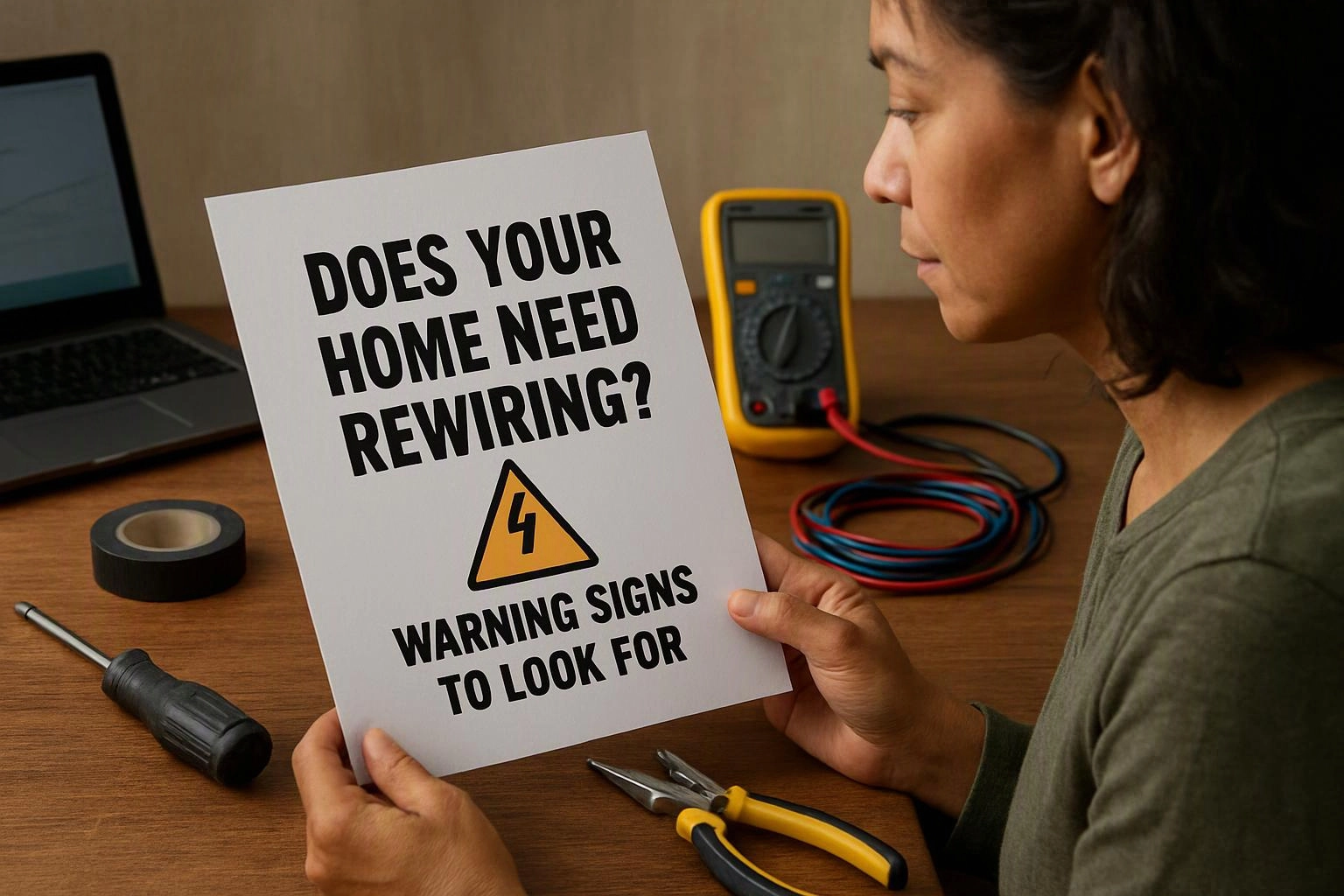
Rewiring may involve partial rewiring, circuit rewiring, or full rewiring when problems affect several areas of the home. We review circuit capacity, wiring condition, and electrical safety before defining the scope.
Electrical code compliance can require corrections when existing wiring lacks suitable protection for the way the home is used. We evaluate AFCI protection, grounding, panel equipment, and other protective devices as part of the safety plan.
Rewiring can also be necessary when an overloaded circuit creates heat or repeated breaker trips. We correct the cause so the circuit can support its intended electrical demand safely.
How We Confirm Whether Rewiring Is Needed
Electrician Pittsburgh confirms rewiring needs by inspecting accessible wiring, testing circuits, reviewing the panel and protective devices, and separating urgent hazards from localized repairs.
Our electrical safety inspection begins with visible conditions around outlets, switches, fixtures, and the electrical panel. We then use circuit testing to check for faults, poor connections, grounding concerns, and unsafe voltage conditions.
We map affected circuits and compare their condition with the home's current electrical demand. This process helps us identify whether a single outlet or switch needs attention or whether the wiring problem extends through a circuit.
Our wiring assessment also considers code corrections and AFCI protection where the existing system needs added protection. We explain the safety concern and the work required before starting repairs.
What You Can Check Yourself and What We Handle
Homeowners can observe visible warning signs and stop using affected devices, while we perform electrical testing, rewiring, code corrections, and AFCI protection installation. A visual check can reveal a problem, but it cannot confirm the condition of concealed wiring.
Do not remove panel covers, handle exposed wires, or continue using an outlet that is hot, sparking, or producing a burning odor. Our crew handles circuit testing and repairs when the condition points to an electrical hazard.
| Factor | What you can do yourself | What we do |
|---|---|---|
| Visible warning signs | Look for heat, discoloration, burning odors, sparks, buzzing, crackling, or damaged insulation. | Trace the condition and assess the related outlet, switch, circuit, and wiring. |
| Electrical safety | Stop using an affected device when safe and keep clear of exposed wires. | Isolate unsafe circuits and identify the source of the hazard. |
| Circuit testing | Reset a breaker only when there is no sign of heat, smoke, burning, or repeated failure. | Test circuits, protective devices, grounding, and circuit capacity. |
| Residential rewiring | Record which outlets, switches, lights, or breakers show problems. | Complete partial rewiring, circuit rewiring, or broader wiring correction when needed. |
| Protection and code corrections | Avoid modifying outlets, switches, breakers, or panel equipment. | Install AFCI protection and complete electrical code corrections suited to the circuit. |
What Does a Rewiring Assessment Include?
A rewiring assessment identifies the affected circuits, documents safety concerns, defines the necessary work, and explains what the estimate includes; Free Estimates Available.
Our assessment separates urgent electrical hazards from work that can be planned. The findings also show whether the home needs localized correction, partial rewiring, or a broader replacement of electrical wiring.
What Should You Do When Your Home Shows Rewiring Warning Signs?
When a home shows rewiring warning signs, stop using the affected circuit when safe to do so and contact Electrician Pittsburgh for an electrical safety inspection.
Do not touch exposed wires, warm outlets, or sparking switches. If you notice smoke or an active electrical fire hazard, leave the area and contact emergency services before contacting us.
We inspect the condition, isolate the unsafe circuit when needed, and explain whether the solution involves a repair, code correction, or residential rewiring. You can contact our team to arrange an assessment and request a quote for the identified work.
Questions About Home Rewiring Warning Signs
Can flickering lights mean a house needs rewiring?
Yes, flickering lights can mean a house needs rewiring when the cause is damaged wiring, loose connections, an overloaded circuit, or a broader electrical fault. Electrician Pittsburgh tests the affected circuit to separate a localized fixture issue from a wider wiring problem.
Is rewiring necessary if only one outlet is damaged?
No, one damaged outlet does not automatically require whole-house rewiring. We inspect the outlet, connections, grounding, and circuit to determine whether the needed work is a receptacle repair, a circuit correction, or broader rewiring.
Can old wiring cause a circuit breaker to keep tripping?
Yes, old wiring can cause a circuit breaker to keep tripping when insulation has deteriorated, connections are loose, the circuit is overloaded, or a fault is present. We test the circuit and breaker to identify the condition causing the repeated trips.
Should I stop using an outlet that smells like burning?
Yes, stop using an outlet that smells like burning when you can do so safely, and keep clear if the outlet is hot, smoking, or sparking. We inspect the outlet and circuit to locate overheating, damaged insulation, or a failing connection.