Residential Rewiring Cost and Timeline: What Pittsburgh Homeowners Should Expect
Residential rewiring cost and timeline depend on the home's wiring condition, project scope, access, wall repairs, and required electrical corrections; Electrician Pittsburgh evaluates those factors and provides a project-specific estimate.
Get a Free EstimateWhat Determines the Cost of Residential Rewiring?
Residential rewiring cost is determined by the existing wiring condition, the amount of wiring to replace, access to finished areas, circuit requirements, panel work, and related safety corrections.
Our team reviews these factors together because one issue can affect several parts of the home electrical system. The table shows what we examine before preparing an accurate quote.
| Factor | Why it changes the cost | What to prepare |
|---|---|---|
| Electrical wiring condition | Damaged, brittle, or outdated electrical wiring may require broader replacement and additional safety corrections. | Share known wiring problems and any past electrical repairs. |
| Home size and layout | Larger or more complex layouts can require more cable routing, branch circuits, and access planning. | Provide plans for additions, room changes, or renovations. |
| Electrical panel | The panel may need assessment, circuit changes, or an electrical panel upgrade to support the planned system. | Tell us about trips, fuse use, unusual heat, or limited circuit capacity. |
| Circuit requirements | New or dedicated circuits may be needed for present electrical loads and planned equipment. | List major appliances, heating equipment, and planned electrical loads. |
| Wall access | Finished walls and limited service-space access can increase routing difficulty and finish repair needs. | Identify accessible attic, basement, crawlspace, and utility areas. |
| Electrical code corrections | Related safety corrections can expand the project beyond wiring replacement alone. | Share inspection notes or concerns about outlets, switches, grounding, and protection. |
Which Rewiring Projects Usually Require More Work?
Whole-house rewiring requires more work when the home has widespread outdated wiring, limited circuit capacity, difficult access, or additional electrical safety corrections.
Whole-house rewiring can involve many rooms, branch circuits, outlets, switches, junction boxes, and grounding conductors. Older homes with knob-and-tube wiring or aluminum wiring may also need targeted replacement and careful circuit evaluation.
A fuse box may not provide the circuit arrangement needed for current household loads. We include an electrical panel assessment and explain whether panel work, AFCI protection, or other electrical code corrections belong in the project scope.
What Changes the Rewiring Timeline?
Residential rewiring time changes with the size of the rewiring area, the home's accessibility, the condition of existing circuits, required testing, and finish repair coordination.
The project scope is the main starting point. Rewiring one section has different planning needs from a whole-home wiring replacement, especially when the electrical load or panel arrangement also changes.
Home occupancy can affect how rooms are accessed and how circuits are managed during the work. Our crew coordinates circuit testing, electrical inspection needs, and repair work around the home's usable areas.
Does Residential Rewiring Require Opening Walls?
Residential rewiring may require limited wall or ceiling access when existing routes cannot be used, while accessible attics, basements, and service spaces can reduce disruption.
Wall access depends on the cable route, the framing, and the location of finished walls. We first look for practical paths through attic access, basement access, crawlspace access, closets, and other service areas.
Finished walls may still need careful openings when cables cannot reach the required outlets, switches, or junction boxes. We explain access and finish repair considerations as part of the rewiring quote.
Five Ways to Control Rewiring Costs
Homeowners can control rewiring costs by making the project scope clear before work begins. Early planning also helps our team route cable efficiently and identify safety corrections during the assessment.
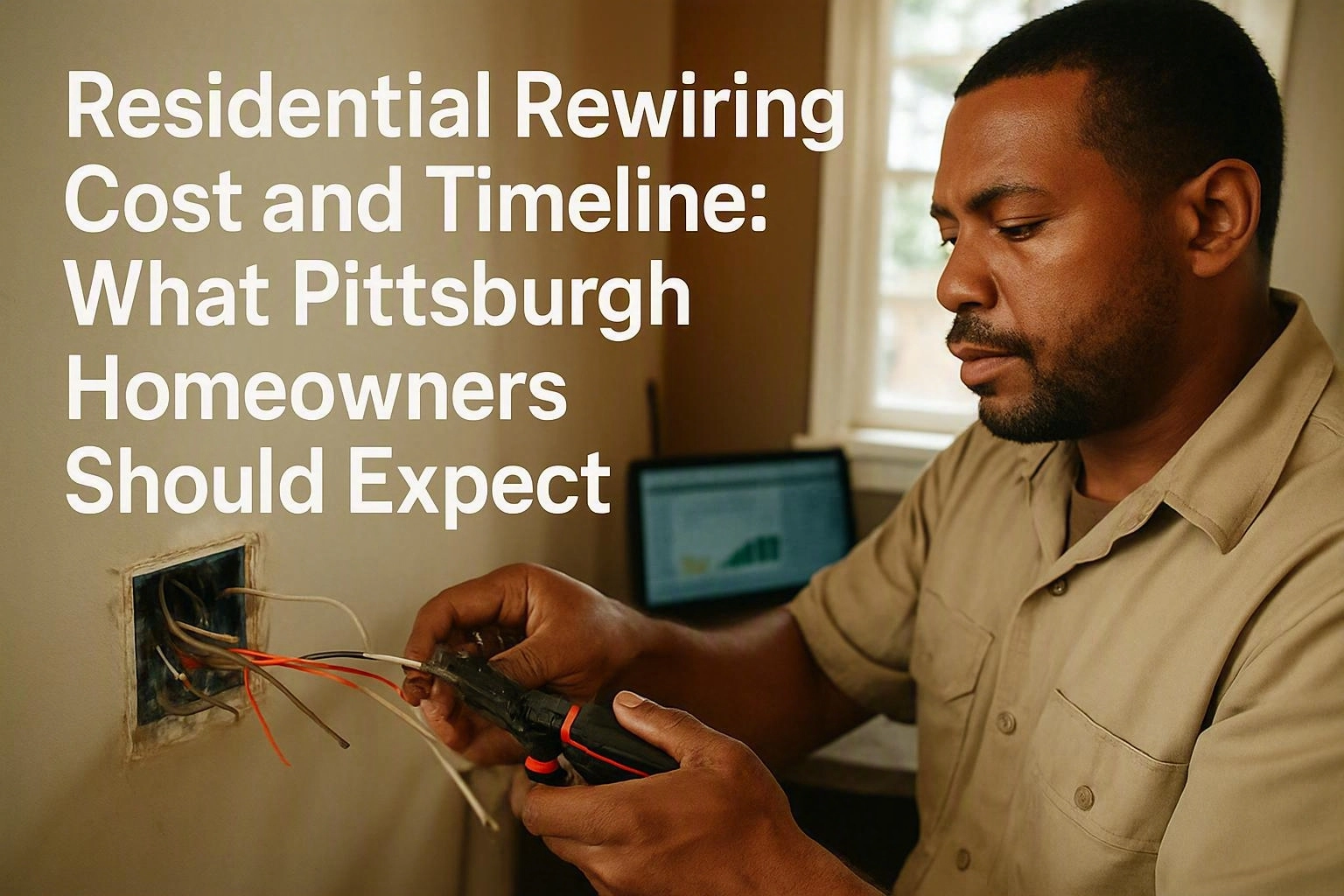
How Electrician Pittsburgh Builds an Accurate Rewiring Quote
Electrician Pittsburgh builds an accurate rewiring quote by inspecting the existing system, defining the required scope, identifying safety corrections, and explaining the work included; Free Estimates Available.
Our process connects the home's condition with the work plan, so the quote reflects the wiring replacement and related electrical services that the project needs.
How to Prepare for an Accurate Rewiring Quote
Homeowners can prepare for an accurate rewiring quote by gathering the home's electrical history and explaining how the electrical system is used. Clear information helps us focus the assessment on the home's actual needs.
What Our Residential Rewiring Quote Includes
Our residential rewiring quote explains the planned wiring work, affected circuits, required safety corrections, testing, access considerations, and any related electrical services included in the project.
The quote identifies the residential rewiring scope and the electrical materials needed for the work. It also explains circuit work, panel work, electrical testing, and any AFCI protection installation included in the plan.
Access and finish considerations are addressed before work begins. When electrical code corrections are needed, we describe those corrections clearly so you can understand how they affect the project.
For a direct review of the service, see Residential Rewiring.
When Should Pittsburgh Homeowners Request a Rewiring Assessment?
Pittsburgh homeowners should request a rewiring assessment when the home's wiring condition, circuit performance, or planned renovation raises electrical safety concerns.
An electrical safety inspection can help clarify whether outdated wiring, circuit overload, flickering lights, or damaged electrical outlets point to a larger wiring replacement need. We assess the system and connect the findings to practical electrical code corrections.
Homeowners should also request an assessment before major renovations or when an old house wiring system cannot support the planned electrical load. Our team can review the affected areas and prepare an accurate quote based on the actual project scope.
Questions About Residential Rewiring Cost and Timeline
Can a home be rewired one section at a time?
Yes, a home can be rewired one section at a time when the circuit plan, access, and safety needs support phased work. Electrician Pittsburgh reviews the existing system and explains how each section connects to the rest of the home.
Should an electrical panel be evaluated during a house rewiring project?
Yes, an electrical panel should be evaluated during a house rewiring project because circuit capacity, breaker arrangement, and planned electrical loads affect the wiring plan. We include a panel assessment when the project scope requires it.
What should homeowners have ready before requesting a rewiring quote?
Homeowners should have their electrical history, known wiring problems, planned renovations, major electrical loads, and access to electrical equipment ready before requesting a rewiring quote. This information helps our team define the project scope and prepare an accurate quote.
Electrician Pittsburgh can review your home's wiring condition, access, circuits, panel, and safety corrections before preparing a project-specific rewiring quote.
Get a Free Estimate