
What Is a Standby Generator?
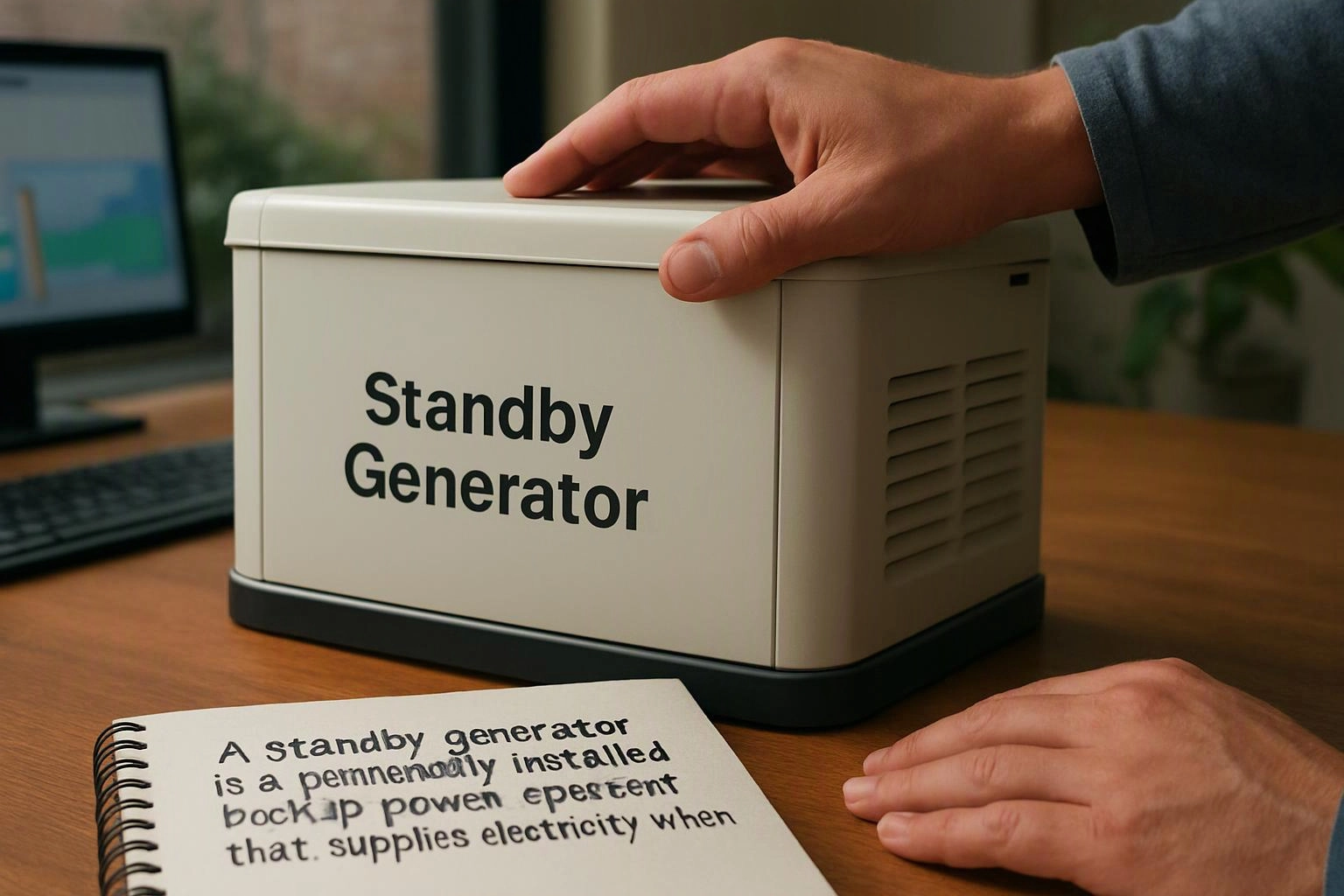
A standby generator is a permanently installed backup power system that supplies electricity when utility service fails. The unit connects to selected building circuits through a transfer switch. It starts automatically after detecting an outage, then stops when utility power returns. Standby generators commonly support essential loads such as heating equipment, refrigeration, lighting, and communication devices. For more detail, see How Standby Generator Installation Works in Pittsburgh, PA.
Quick Facts About Standby Generator
Category
Backup power equipment
Used for
Essential building circuits
Common confusion
Portable generator
Also called
Whole-house generator, Automatic standby generator
Often discussed with
Generator Installation
Key Takeaways About Standby Generator
- A standby generator starts automatically during a utility outage.
- A transfer switch separates generator power from utility power.
- A portable generator is not the same as a permanently installed standby system.
How Standby Generator Works
A standby generator monitors the incoming utility supply through its control system. When the supply fails, the generator engine starts and reaches operating speed. A transfer switch then moves selected circuits from utility power to generator power. This process keeps the generator from sending electricity back into utility lines.
Related glossary terms: Generator Interlock, Transfer Switch, Load Calculation.
When utility service returns and remains stable, the transfer switch reconnects the building to utility power. The generator then runs through its shutdown sequence and returns to standby mode. The system does not usually power every circuit automatically. An electrician determines which loads fit the generator capacity and connects those circuits through the distribution equipment.
Practical Distinction
A standby generator remains installed at the property and works with an automatic transfer switch. A portable generator requires manual placement, connection, and operation. A generator interlock can provide another method of switching a panel between sources, but it does not describe the generator itself.
From the Electrician Pittsburgh team
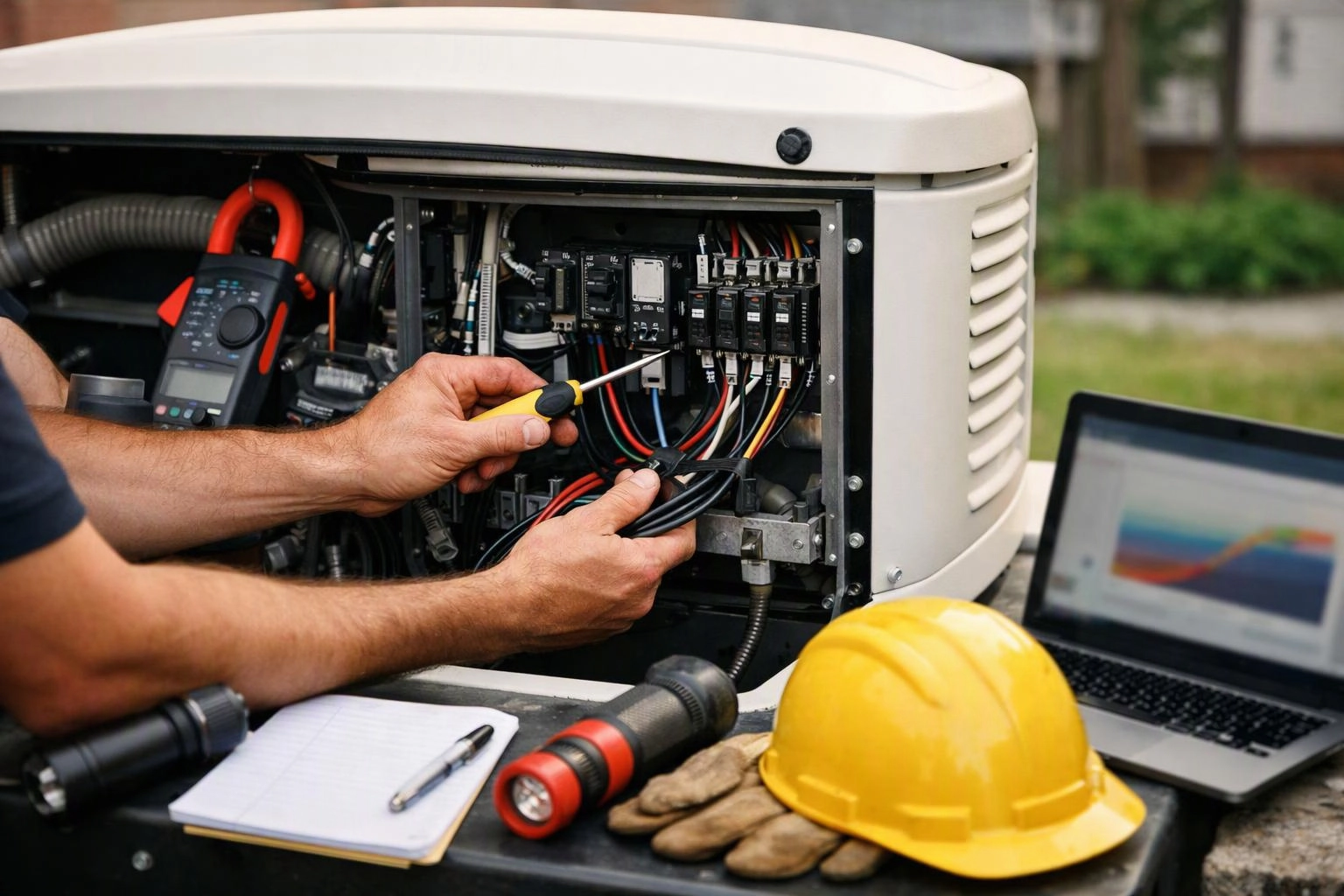
When we handle a standby generator installation, we review the service equipment, selected circuits, transfer equipment, and grounding connections. We also check that the generator starts correctly and that the connected loads operate as intended. Our team treats fuel, ventilation, clearances, and electrical connections as parts of one coordinated system.
Standby Generator in Practice: A Real-World Example
A Pittsburgh homeowner may connect a standby generator to the furnace, refrigerator, sump pump, and selected lighting circuits. During an outage, the transfer switch moves those circuits to generator power without requiring the homeowner to connect a cable manually.
Related Services
Related Terms
Generator Interlock
A generator interlock is a mechanical device installed on an electrical panel that prevents the main…
Transfer Switch
Transfer Switch is a device that moves selected electrical loads between a utility supply and a…
Load Calculation
Load Calculation is a method for estimating the electrical demand a property places on its service…
Electrical Grounding
Electrical Grounding is a protective connection between an electrical system and the earth or another conductive…
Electrician Pittsburgh
Have Questions About Standby Generator?
Contact Electrician Pittsburgh for practical guidance on Standby Generator and related 24 hour electrician work in Pittsburgh.