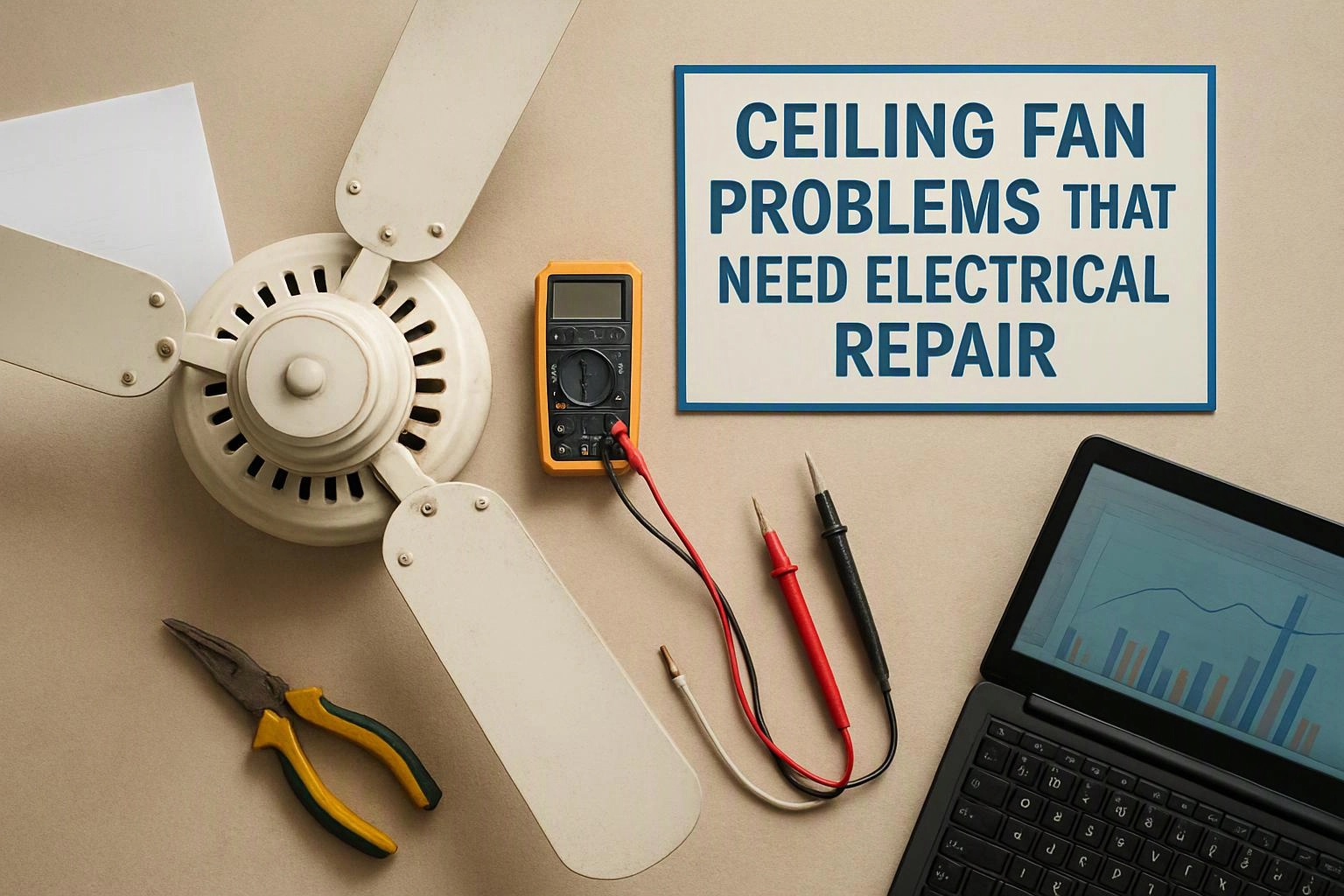
Ceiling Fan Problems That Need Electrical Repair
Ceiling fan problems such as flickering lights, intermittent operation, humming, burning smells, loose connections, and sudden shutdowns may require electrical repair; Electrician Pittsburgh checks the fan, switch, wiring, controls, and mounting connections to identify the fault.
Get a Free EstimateWhich Ceiling Fan Problems May Need Electrical Repair?
Ceiling fan problems may need electrical repair when the fan shows unsafe, inconsistent, or unexplained electrical behavior. We trace the fault through the fan motor, wiring, wall switch, light kit, remote control, and circuit connection.
Flickering or Dimming Fan Lights
A flickering or dimming ceiling fan light can result from a failing light bulb, loose light socket, or loose connection. Wiring problems can also interrupt power at the light kit. We inspect the socket, light kit, and wiring to separate a simple bulb issue from an electrical repair.
A Fan That Hums, Buzzes, or Makes Electrical Noise
A humming ceiling fan can have a motor, capacitor, wiring connection, or wall switch problem. Motor noise may also occur when the fan is receiving unstable power. We test the controls and electrical connections before deciding whether the fault is in the capacitor, motor, or circuit.
Intermittent Operation or Sudden Shutdowns
Intermittent operation or a sudden shutdown can mean the ceiling fan is losing power through the switch, remote receiver, circuit connection, or motor. Loose wiring can interrupt power when the fan vibrates. We check the power path and motor controls to locate the point where operation stops.
Burning Smells, Heat, or Visible Scorching
A burning smell, overheating, or scorch marks are warning signs of an electrical fault. Damaged electrical wiring, a failing fan motor, or a poor connection can create heat. We treat these signs as an electrical safety concern and inspect the fan and its connections before restoring use.
A Fan or Light That Stops Responding to Controls
A fan or light that does not respond can have a wall control, pull chain, remote control, receiver, or switch wiring problem. Remote batteries may also prevent a command from reaching the fan. We test the controls and receiver, then inspect switch wiring when the control path is not working.
Sparking, Tripped Breakers, or Repeated Power Loss
Sparking or a tripped circuit breaker can indicate a short circuit, overloaded circuit, or damaged ceiling fan wiring. Repeated power loss means the protective device may be responding to a fault. We inspect the circuit connection and fan wiring before resetting power.
What Should You Do When a Ceiling Fan Shows These Signs?
Turn off the fan and its power source when a ceiling fan smells hot, sparks, trips a breaker, or shows damaged wiring, then contact Electrician Pittsburgh for an electrical inspection. Use the power switch first, and turn off the circuit breaker if the fan remains energized or the problem involves heat, smoke, or visible damage.
Do not open the fan canopy, pull on loose wiring, or repeatedly reset a tripped breaker. Our team checks the ceiling fan, circuit, controls, and connections to identify the unsafe condition.
What Can You Check Yourself, and When Should You Call Us?
Simple ceiling fan troubleshooting can cover the bulb, remote battery, control settings, and circuit breaker position. Wiring, switches, connections, motor faults, and electrical repair require our team because testing those parts involves energized equipment.
| Factor | What you can do yourself | What we do |
|---|---|---|
| Light bulb | Turn off power and replace a compatible bulb if the socket looks safe. | We test the light socket, light kit, and wiring when the new bulb does not solve the problem. |
| Remote battery | Replace the battery and confirm the remote is set to control the fan. | We test the remote receiver and its electrical connections. |
| Circuit breaker | Check whether the breaker is fully on when there are no signs of heat, sparks, or damage. | We investigate repeated trips, short circuits, and circuit conditions. |
| Fan wiring | Do not open electrical connections or handle loose wires. | We inspect and repair ceiling fan wiring, switch wiring, and electrical connections. |
| Electrical repair | Stop using the fan when it sparks, overheats, or smells burned. | We identify the fault and explain the repair needed for the fan, controls, circuit, or mounting connection. |
How We Diagnose a Ceiling Fan Electrical Problem
Our electrical inspection follows the fan’s power path from the circuit to the controls, wiring, motor, and light kit. We explain the fault before repair work begins.
What Changes the Cost of Ceiling Fan Electrical Repair?
Ceiling fan repair cost depends on the failed component, wiring access, circuit condition, mounting connection, and whether the repair involves the fan, controls, lighting, or surrounding electrical system. A switch replacement may involve different work from a motor fault or a circuit issue.
We also consider the light kit, mounting box, ceiling fan wiring, and the access needed to reach each connection. Our repair estimate explains the fault, recommended work, and scope before we proceed.
How Do You Request an Estimate for Ceiling Fan Repair?
You can request a ceiling fan repair estimate from Electrician Pittsburgh so our team can assess the fault and explain the recommended work; Free Estimates Available.
Share the symptoms, such as a flickering light, humming noise, burning smell, sudden shutdown, or tripped breaker. We use that information to prepare for the electrical inspection and define the scope of work.
Ceiling Fan Repair starts with a clear review of the fan, controls, wiring, circuit, and mounting connection.
Questions About Ceiling Fan Electrical Problems
Why is my ceiling fan light flickering?
Electrician Pittsburgh checks a flickering ceiling fan light for a loose bulb, light socket, light kit connection, or wiring fault. We test the light circuit when replacing the bulb does not correct the problem.
Why does my ceiling fan hum but not spin?
A ceiling fan that hums but does not spin can have a capacitor, motor, switch, or wiring connection fault. We test the motor and power path to identify the cause.
Why does my ceiling fan keep turning off?
A ceiling fan that keeps turning off can have intermittent power, a failing remote receiver, a loose circuit connection, or a motor fault. We trace the power and control path to find where operation stops.
Can a bad wall switch affect a ceiling fan?
Yes, a bad wall switch can affect ceiling fan power, speed control, or lighting. We inspect the switch and switch wiring when the fan responds inconsistently.
What should I do if my ceiling fan trips the breaker?
Turn off the fan and leave the circuit breaker off if the breaker trips again or the fan shows heat, sparks, or damaged wiring. We inspect for a short circuit, overloaded circuit, or ceiling fan wiring fault.
Can ceiling fan wiring cause a burning smell?
Yes, damaged or loose ceiling fan wiring can create heat and a burning smell. Stop using the fan and contact us for an electrical inspection before power is restored.
Ceiling fan electrical problems can involve the light kit, fan motor, controls, wiring, circuit breaker, or mounting box. Contact Electrician Pittsburgh for an inspection and a clear repair estimate.
Get a Free EstimateRelated Resources
Warning Signs You Need a 24-Hour Electrician
When You Need ItWhy Your Circuit Breaker Keeps Tripping — and When to Call an Electrician
When You Need ItFlickering or Dimming Lights: When Is It an Electrical Emergency?
When You Need ItDoes Your Home Need Rewiring? Warning Signs to Look For