
What is Residential Electrical Code?
Residential Electrical Code is the set of safety rules that governs electrical wiring, equipment, circuits, and installations in homes. The rules address conductor sizing, grounding, overcurrent protection, receptacles, lighting, and required protective devices. Local authorities enforce the adopted code through permits and inspections. While the National Electrical Code provides the primary technical model.
Quick Facts About Residential Electrical Code
Category
Electrical safety regulation
Used for
Designing, installing, altering, and inspecting home electrical systems
Relevant standard
NFPA 70, National Electrical Code
Common confusion
The NEC model code is not itself the local law until adopted by an authority.
Also called
Residential Electrical Code Requirements, Home Electrical Code
Often discussed with
Electrical Code Corrections, Electrical Safety Inspections
Key Takeaways About Residential Electrical Code
- The National Electrical Code supplies the main technical rules for residential electrical installations.
- Local governments may adopt, amend, and enforce electrical requirements through permits and inspections.
- Code rules cover wiring methods, circuit capacity, grounding, bonding, and protective devices.
- Existing wiring may follow older rules unless new work, hazards, or local requirements trigger updates.
Understanding Residential Electrical Code
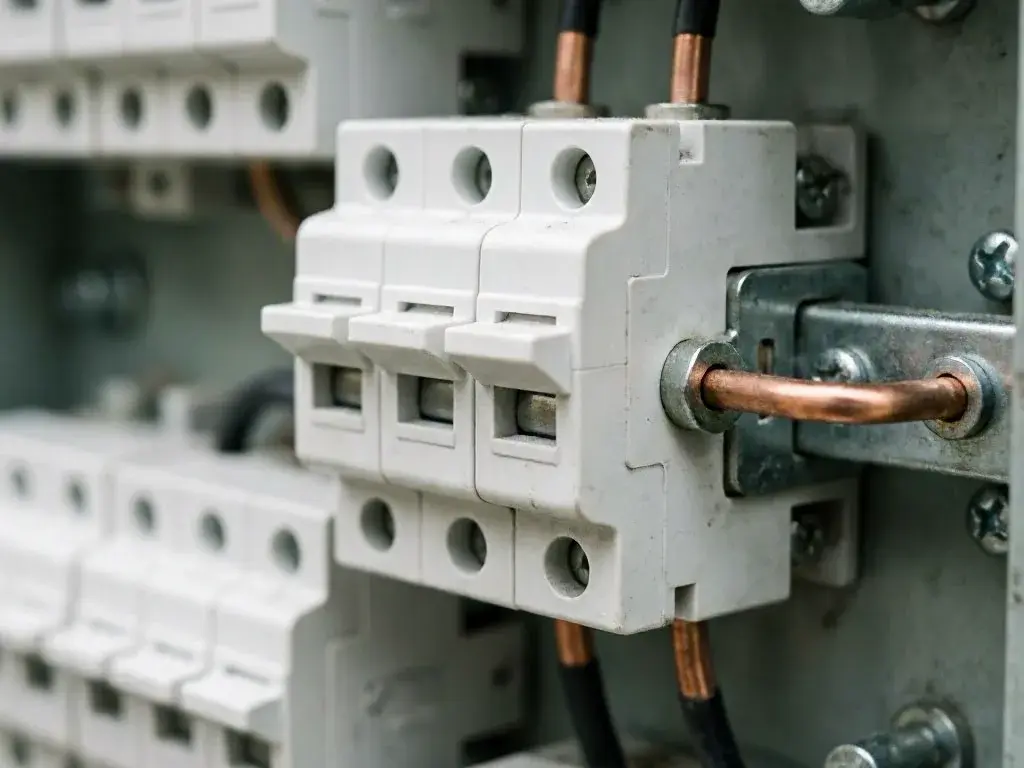
Residential Electrical Code describes rules for safer home electrical systems. These rules guide design, installation, inspection, and maintenance. These requirements cover branch circuits, wiring methods, outlet placement, grounding, and bonding. They also protect against overloads and shock. The National Electrical Code, also called NFPA 70, serves as the main technical model. Many jurisdictions use this model.
Related glossary terms: Electrical Permit, Electrical Grounding, Overcurrent Protection.
The code isn't one rulebook that applies unchanged everywhere. A state, county, or city adopts a code edition. It may also add local amendments. In Pennsylvania, the Uniform Construction Code provides the statewide framework. Local code officials handle permits and inspections. Older installations may remain lawful under rules in effect when installed. New work usually must meet current requirements.
How Residential Electrical Code Works, Is Measured, or Is Used?
Electrical code turns design choices into measurable requirements. A circuit needs conductors sized for the expected load. It also needs an overcurrent device that protects those conductors. Equipment must match the system voltage and environment. A load calculation helps determine whether a service or panel supports planned equipment. Examples include an electric range, heat pump, or electric vehicle charger.
During a project, the installer identifies the work and selects compliant materials. The installer completes the installation and requests an inspection when required. An inspector checks accessible wiring, grounding and bonding, boxes, connections, clearances, and protective devices. Common checks include GFCI protection in areas exposed to moisture. They also include AFCI protection in many living areas. Exact requirements depend on the code edition, project scope, and local amendments.
Why Residential Electrical Code Matters?

Code compliance reduces predictable hazards, including overheated conductors, electric shock, arcing, and fire. Correct overcurrent protection stops a circuit from carrying too much current. It protects wiring from unsafe loads. Proper receptacles, grounding paths, and protective devices help equipment work as intended. They also give fault current a safer path.
Code compliance also affects permits, inspections, insurance questions, resale work, and future repairs. A panel that appears functional may still have undersized conductors, missing bonding, or outdated protection. Passing an inspection doesn't prove every part meets current standards. This is especially true for older systems. Records and a clear work description still matter.
When Residential Electrical Code Matters Most?
These rules matter during a remodel, service change, panel replacement, basement finish, kitchen upgrade, or addition. New high-demand equipment can change the calculated load. It may require a dedicated circuit, larger conductors, or new disconnecting means. Work in wet areas, garages, outdoors, and places with limited access often needs added protection. These locations may also have added installation requirements.
Code review also matters after repeated breaker trips, warm outlets, flickering lights, damaged wiring, or an electrical fault. A repair should address the cause. It shouldn't simply replace a breaker with a larger one. In Pittsburgh, PA, permit and inspection rules can affect emergency repairs. They can also affect later renovations. The project record should identify the changes and governing rules.
How to Evaluate Residential Electrical Code?
- Confirm which NEC edition and local amendments apply to the project location and permit date.
- Check that circuit breaker ratings match conductor ampacity and the equipment load.
- Verify required AFCI, GFCI, grounding, bonding, and disconnecting provisions for the work area.
- Ask whether a permit and inspection are required before concealed wiring or service work begins.
- Look for warm devices, damaged insulation, repeated trips, open grounds, or unexplained voltage readings.
Related Concepts Compared
Residential Electrical Code vs. National Electrical Code
The National Electrical Code is the technical model published by NFPA.
Residential Electrical Code vs. Electrical Permit
An electrical permit is an official approval to perform specified work. The permit process uses applicable code rules, but a permit is not the code itself.
Residential Electrical Code vs. Electrical Inspection
An electrical inspection is a review of installed work by an authorized inspector. The Residential Electrical Code supplies many of the criteria used during that review.
Residential Electrical Code vs. Electrical Safety Inspection
An electrical safety inspection evaluates an existing system for hazards and defects. It may identify code concerns, but it is different from the permit inspection for new or altered work.
Expert Note
A code-compliant repair may not bring every older part of a house up to the latest edition. The key question is whether the new work, altered portion, and related hazards meet the rules adopted for that permit and jurisdiction.
Common Mistakes or Myths About Residential Electrical Code
- Treating the NEC model as local law without checking the jurisdiction's adopted edition and amendments.
- Replacing a tripping breaker with a larger breaker without confirming conductor size and circuit load.
- Assuming a permit is unnecessary because the repair is inside a private home.
- Closing walls before required wiring inspections are complete.
- Confusing a grounded receptacle appearance with a verified equipment grounding path.
Residential Electrical Code in Practice: A Real-World Example
A homeowner adds a basement bedroom and installs new receptacles and lighting. The electrician calculates the added load, routes approved cable, installs required AFCI protection, bonds the equipment grounding path, and schedules the required inspection before the walls are closed.
Related Terms
Electrical Permit
Electrical Permit is official approval from a local building department to install, alter, repair, or extend…
Electrical Grounding
Electrical Grounding is the intentional connection of an electrical system or equipment to earth through a…
Overcurrent Protection
Overcurrent Protection is a safety method that limits electrical current when a circuit carries more amperage…
Load Calculation
Load Calculation is a method for determining how much electrical power a building, panel, or circuit…
Electrician Pittsburgh
Have Questions About Residential Electrical Code?
Contact Electrician Pittsburgh for practical guidance on Residential Electrical Code and related 24 hour electrician work in Pittsburgh.