What is Surge Protector?
Surge Protector is a device that limits short-duration voltage spikes on an electrical circuit. The device redirects or absorbs excess energy before the energy reaches connected equipment. Common forms include plug-in power strips with surge protection and whole-house surge protective devices installed at an electrical panel. Protection speed depends on design, ratings, grounding, and condition.
Quick Facts About Surge Protector
Category
Electrical protection device
Used for
Limiting transient voltage spikes
Common confusion
A surge protector is not a circuit breaker
Also called
Surge Suppressor, Surge Protective Device
Often discussed with
Surge Protection Installation, Electrical Safety Inspections
Key Takeaways About Surge Protector
- A surge protector limits brief voltage spikes that can damage sensitive electronic equipment.
- A circuit breaker protects wiring from sustained overcurrent, not every fast voltage surge.
- Check the device rating, grounding status, indicator light, and replacement condition.
- Whole-house devices protect more circuits than a plug-in strip at one receptacle.
- No surge protector can correct faulty wiring, lost grounding, or every utility disturbance.
Understanding Surge Protector

Surge Protector is a device designed to limit a brief rise in voltage. This rise happens on an electrical circuit. A voltage surge may come from a utility switching event. It may also come from a nearby lightning strike. Equipment can also release stored electrical energy when it stops. The protector diverts or absorbs part of that energy. Connected devices then receive a lower, shorter disturbance. Common examples include plug-in power strips and panel-mounted surge protective devices.
Related glossary terms: Electrical Grounding, Overcurrent Protection, Circuit Breaker.
A surge protector differs from ordinary power strips and circuit breakers. A basic power strip adds outlets but may provide no surge protection. A circuit breaker opens a circuit when current stays too high. Surge protection responds to a fast voltage increase. Effective protection also depends on a working grounding system. It also needs correct installation and a suitable device rating. The rating must suit the electrical system.
How Surge Protector Works, Is Measured, or Is Used?
Many surge protectors use metal-oxide varistors, often called MOVs, to control excess voltage. Under normal conditions, a MOV carries very little current. During a voltage spike, its electrical resistance drops. This creates a path for surge energy away from sensitive equipment. The MOV can degrade after repeated events. This can happen even when connected equipment continues to operate.
Product labels commonly list clamping voltage, joule rating, and response time. They sometimes list a maximum surge current rating. Clamping voltage describes the approximate voltage level at which the device limits a spike. A joule rating describes the energy the device can absorb over its service life. These numbers support comparison. They don't guarantee protection against a direct lightning strike or serious wiring fault.
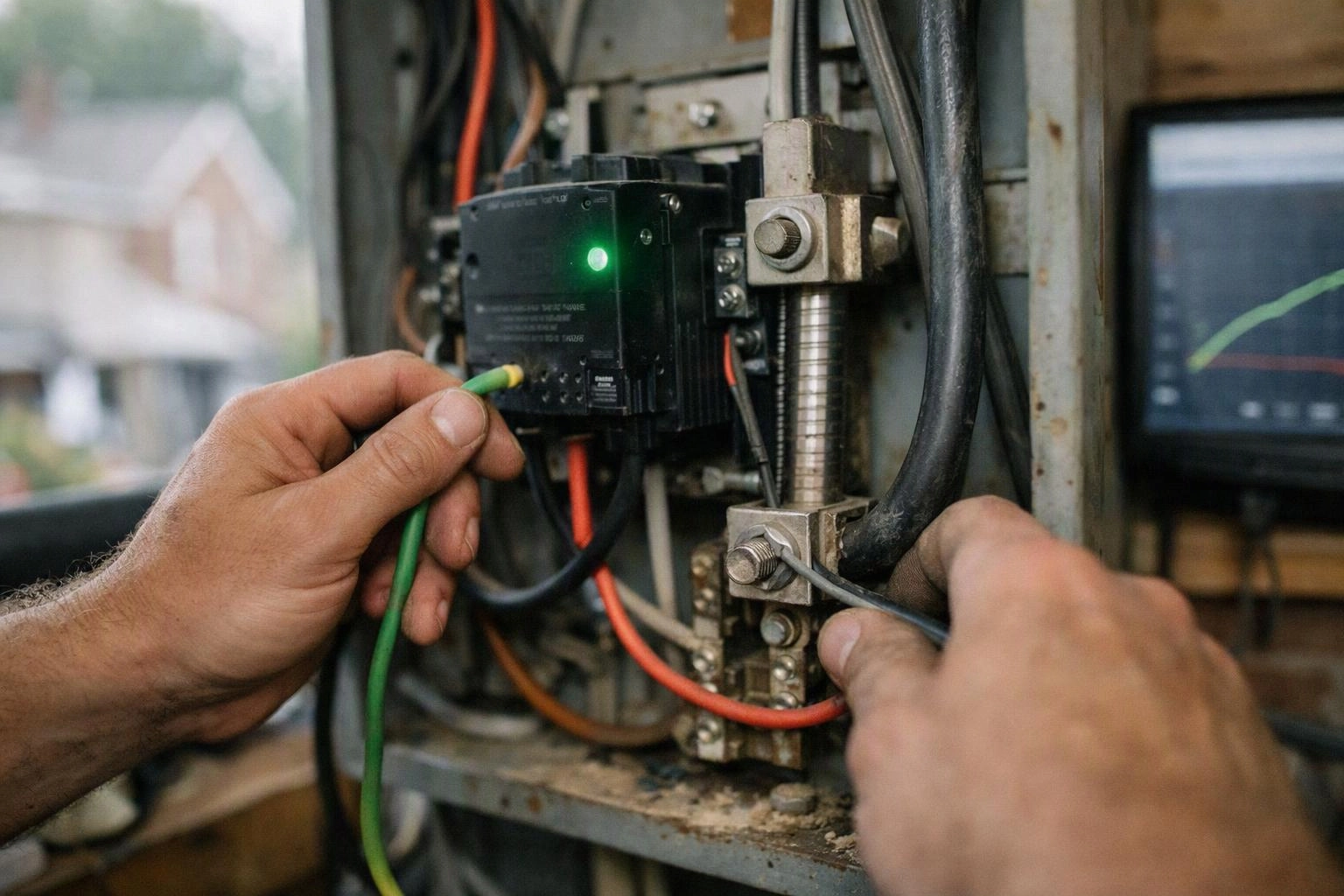
Plug-in models work at a specific receptacle. They protect equipment connected through that device. A panel-mounted unit connects near the service equipment. It can reduce surges entering several branch circuits. Installation requires correct conductor connections and suitable overcurrent protection. It also needs a grounding and bonding system that meets the applicable electrical code. A qualified inspection should verify those conditions before relying on panel protection.
Why Surge Protector Matters?

A voltage surge can stress or damage computers, televisions, network equipment, appliances, and control boards. Damage may appear immediately. A component may also fail later after repeated electrical stress. A surge protector gives equipment another layer of defense. This matters where replacement or data loss would create a serious problem. Protection works best as part of a broader electrical safety plan.
The device doesn't make an unsafe electrical system safe. It can't repair loose connections, reverse polarity, missing grounding, overloaded circuits, or damaged wiring. A protector with a warning light may show failed internal protection. However, the light cannot confirm every part of the electrical installation. Periodic inspection remains useful after major storms, repeated outages, or equipment failures.
When Surge Protector Matters Most?
Surge protection deserves attention where a building has sensitive electronics or overhead utility lines. It also helps with frequent utility interruptions or equipment with high replacement costs. It matters during renovations, service-panel work, and systems with electronic controls. A whole-house device may reduce risk at the service entrance. Point-of-use protection adds a closer layer for computers and communications equipment.
Choose a product listed by a recognized testing organization. Match the product to the system voltage and installation location. Look for a clear status indicator and suitable enclosure. Check that instructions identify replacement conditions. Have an electrician review the electrical panel, grounding, bonding, and available space before panel installation. In Pittsburgh, weather-related outages and older electrical installations can make this review especially useful. Local conditions don't change the device's basic operating limits.
How to Evaluate Surge Protector?
- Confirm the product is listed by a recognized testing organization, such as UL, for its intended use.
- Compare clamping voltage, joule rating, response time, and maximum surge current when product data is available.
- Check whether the protector matches the system voltage, wiring method, enclosure location, and available panel space.
- Inspect the status indicator after major storms, outages, or suspected equipment damage.
- Verify that grounding, bonding, receptacle wiring, and overcurrent protection are correct before installation.
Related Concepts Compared
Surge Protector vs. Power Strip
A power strip provides extra receptacles and may include a switch. A surge protector adds components intended to limit transient voltage.
Surge Protector vs. Circuit Breaker
A circuit breaker interrupts excessive current to protect conductors from overheating. A surge protector responds to brief voltage spikes. Which may not create enough current to trip a breaker.
Surge Protector vs. Whole-House Surge Protective Device
A whole-house surge protective device mounts at the service equipment or distribution panel. A plug-in surge protector protects equipment connected at one location.
Surge Protector vs. Voltage Regulator
A voltage regulator corrects or stabilizes longer changes in supply voltage. A surge protector mainly limits short transient events.
Expert Note
A protector can fail without interrupting power to connected equipment. Check its status indicator, but do not treat the indicator as proof of a sound grounding system. Panel-mounted protection also needs short, properly routed conductors because installation length affects speed during a fast surge.
Common Mistakes or Myths About Surge Protector
- Assuming every power strip includes surge protection.
- Treating a circuit breaker as protection against all voltage surges.
- Using a surge protector with damaged cords, melted outlets, or a failed status light.
- Ignoring missing grounding or incorrect receptacle wiring.
- Keeping a protector indefinitely after repeated major surge events.
Surge Protector in Practice: A Real-World Example
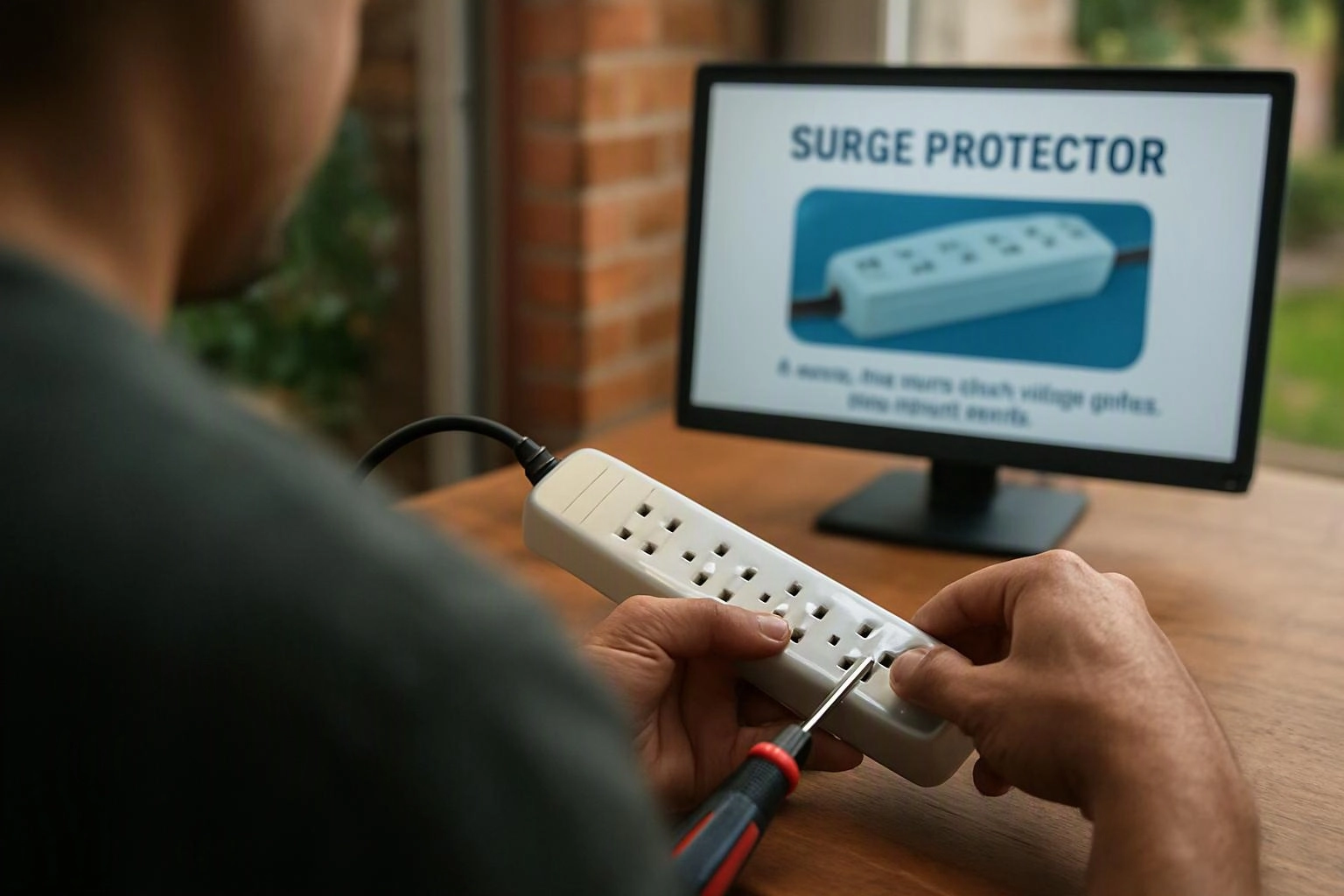
A home office has a computer, monitor, router, and external drive connected to a listed plug-in surge protector. A utility switching event creates a brief voltage spike, and the protector limits part of the spike. After a later storm, the indicator shows failure, so the device is replaced and the receptacle grounding is checked.
Sources & Further Reading on Surge Protector
- Electrical Safety Foundation International, Surge Protective Devices
Related Terms
Electrical Grounding
Electrical Grounding is the intentional connection of an electrical system or equipment to earth through a…
Overcurrent Protection
Overcurrent Protection is a safety method that limits electrical current when a circuit carries more amperage…
Circuit Breaker
Circuit Breaker is an automatic electrical switching device that stops current when a circuit draws too…
Receptacle
Receptacle is a wiring device that provides contact points for a plug and connects electrical equipment…
Electrician Pittsburgh
Have Questions About Surge Protector?
Contact Electrician Pittsburgh for practical guidance on Surge Protector and related 24 hour electrician work in Pittsburgh.