What to Do About a Burning Smell From an Electrical Outlet
A burning smell from an electrical outlet may signal a wiring fault, overload, loose connection, damaged receptacle, or hot device. Stop using the outlet. Move away from smoke or sparks. Turn off the circuit breaker only if you can do so safely. Never touch a hot, melted, wet, or sparking outlet. Call 911 for active fire, heavy smoke, flames, or danger to people. Otherwise, call an electrician and keep the outlet unused until repairs are complete.
Get a Free EstimateBefore the Electrician Arrives: Stop Using the Outlet
An electrical outlet with a burning smell may be unsafe. Stop using it and keep people away. Unplug devices only when the plug and outlet feel cool and look safe.
Watch for smoke, sparks, heat, or flames. Don’t remove the cover or try to fix the outlet. A burning smell from a receptacle can point to danger behind the wall.
Before an electrician arrives:
High-load devices need extra care. Space heaters, kitchen tools, power strips, and extension cords can overheat. Several devices may overload one branch circuit. Renters should tell the property manager in writing. Homeowners should arrange service. Older homes may have missing ground wires or other wiring problems.
Should You Turn off the Breaker?
A circuit breaker should be turned off when you can identify the right circuit safely. Don’t pass through smoke, water, or flames to reach the panel. Stay away if the panel feels hot or shows sparks.
Turning off a breaker can shut down one branch circuit. It doesn’t make damaged equipment safe to touch. The wrong breaker may leave the outlet powered.
If the area is calm, stand on a dry surface. Use the panel label to find the circuit. Turn it off once, then leave it off. Don’t guess if you can’t confirm the circuit. Water, sparks, or visible damage require expert help.
Our team can provide Electrical Troubleshooting in Pittsburgh when a fault needs testing. A 24 Hour Electrician may help with urgent danger after normal hours.
Can You Use the Outlet After It Smells Like Burning?
A receptacle that smells like burning shouldn’t be used again. A qualified electrician must find and fix the cause first. The outlet may look normal while damage remains behind the wall.
Leave a damaged receptacle unused, even when the smell stops. A loose wire can heat up under a heavy load. This heat may damage the insulation or melt the outlet.
Don’t test the outlet with another device. Don’t replace the faceplate or outlet yourself. An inspection should check the receptacle, box, circuit, load, grounding, and breaker. A simple visit often takes 30–90 minutes. Hidden damage may take longer to repair.
What Happens During the Electrician’s Visit?
An electrician first makes the circuit safe. Then the electrician checks the outlet, wiring, breaker, devices, and signs of heat. Testing can show if the problem comes from the outlet, circuit, appliance, or wiring.
During electrical troubleshooting, the electrician may check nearby outlets and the service panel. The goal is to find where the heat or poor connection began.
The electrician may find a bad appliance or unsafe power strip. Repairs may also correct wiring, grounding, box, or safety problems.
What Causes a Burning Plastic Smell from an Outlet?
A burning plastic smelloften comes from hot electrical parts. Causes include loose terminals, worn outlets, overloaded circuits, damaged insulation, or bad plugs. Heat can melt plastic and create an arc fault (an unsafe electrical spark).
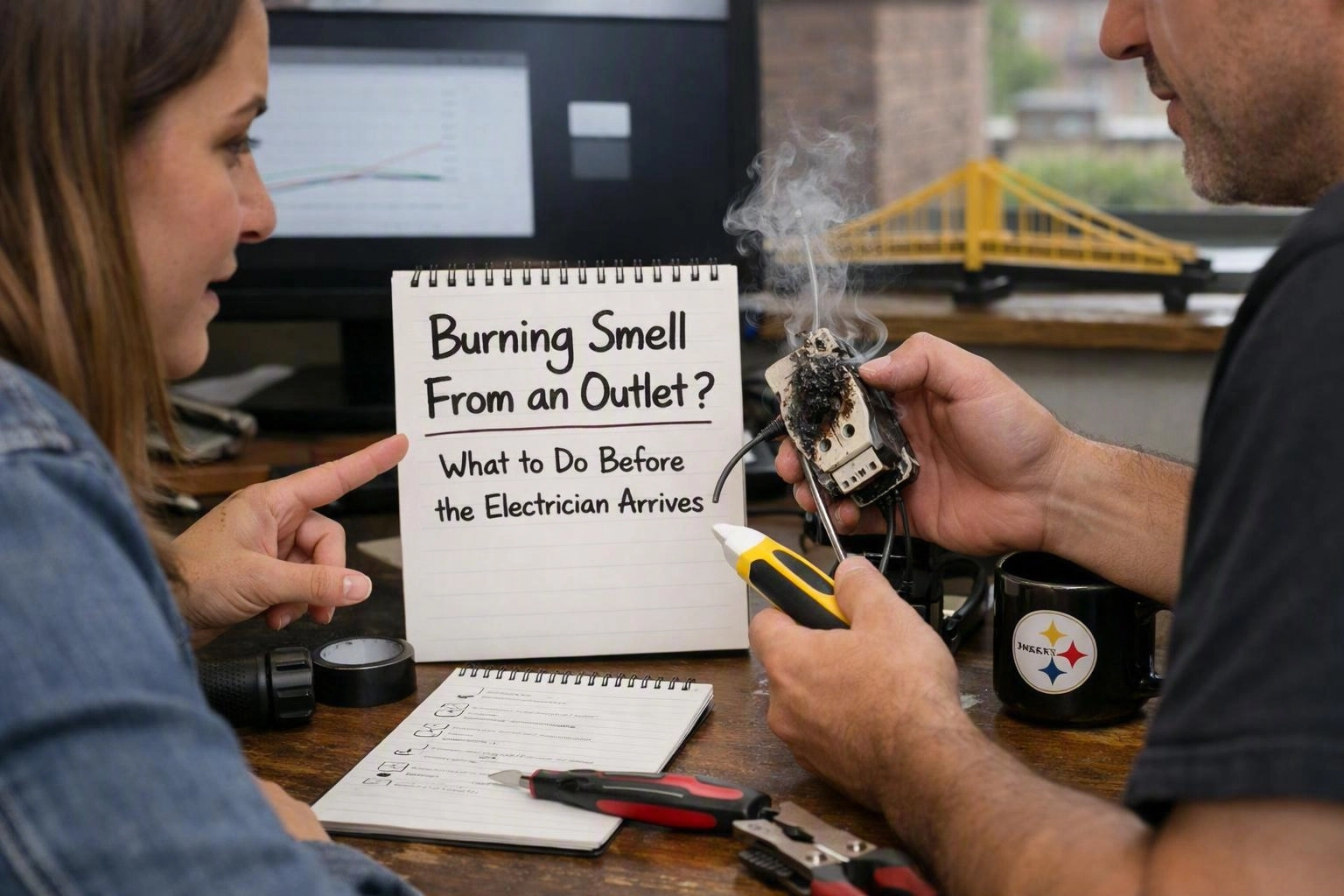
A loose connection creates a narrow path for electricity. That point can heat up when a high-load device runs. You may notice a hot outlet, dark cover, buzzing, or smoke smell.
Common causes include these conditions:
Don’t assume the device caused the issue. Electrical troubleshooting should check both the device and wiring. Repeated heat can damage parts inside the wall and raise fire risk.
When Should You Call 911 for an Electrical Outlet?
Call 911 for flames, heavy smoke, active sparks, a spreading fire, explosions, or immediate danger. Leave the building. Never use water on live electrical equipment. If there’s only a smell, keep the circuit off and call an electrician promptly.
Don’t delay leaving to find the breaker. Close doors behind you if you can do so safely. Never pass through smoke or flames. Tell the dispatcher what happened and follow instructions.
Red flags include:
Never use water on live equipment. Keep the circuit off after the emergency ends. A qualified electrician must inspect and repair it.
What Information Should You Give the Electrician?
Tell the electrician when the smell began. Share if the outlet felt hot and what devices were connected. Mention trips, buzzing, smoke, sparks, or dark marks. Share safe photos and recent outlet or wiring changes.
Don’t touch the outlet to gather more details. Your notes can help the electrician find the cause faster.
Record these details if you can do so safely:
After the Repair: Confirm the Outlet Is Safe
After the repair, the electrician should test the connections, polarity, grounding, and breaker. The electrician should also check GFCI or AFCI protection where needed. Keep the outlet off until testing ends.
Watch for a new smell, warmth, buzzing, dark marks, or breaker trips. Ask what failed and what the electrician fixed. Ask if other outlets or devices need attention.
After the work:
Electrical code correction may improve grounding, box support, or wire connections. Use the outlet only after testing is complete. Follow any limits on appliance loads.
Questions About 24 Hour Electrician
What Should I Do if I Smell Burning from an Electrical Outlet?
Stop using the outlet and keep people away. Unplug a device only if the plug and outlet are cool and safe. Look for smoke, sparks, heat, or flames. Turn off the right breaker only if you can reach it safely. Then arrange an inspection.
Should I Turn off the Breaker if an Outlet Smells Burnt?
Yes, if you can identify the right breaker safely. Don’t pass through smoke, water, or flames. Don’t approach a hot or sparking panel. Don’t guess or reset a tripped breaker.
Can I Use an Outlet After It Smells Like Burning?
No. Keep it unused until a qualified electrician finds and repairs the cause. Hidden heat damage, loose wires, overloads, or damaged insulation may remain.
What Causes a Burning Plastic Smell from an Outlet?
Common causes include loose terminals, bad receptacles, overloaded circuits, damaged insulation, and failing plugs or devices. These issues can cause heat and sparks.
When Should I Call 911 for an Electrical Outlet?
Leave the building. Never use water on live equipment. For an odor without danger signs, keep the circuit off and call an electrician.
For safe help with an affected receptacle, contact our team.
Related Resources
How Emergency Electrical Troubleshooting Works in Pittsburgh, PA
how does emergency electrical troubleshooting work pittsburgh
How It WorksResidential Rewiring Process: What to Expect in Pittsburgh, PA
residential rewiring process what to expect pittsburgh
What It CostsHow Much Does a 24-Hour Electrician Cost in Pittsburgh?
24 hour electrician cost Pittsburgh
What It CostsResidential Rewiring Cost and Timeline: What Pittsburgh Homeowners Should Expect
residential electrical rewiring cost and time Pittsburgh