
What is an Ampere?
Ampere is the SI unit of electric current. It measures how much electric charge passes a point in a circuit each second. Electricians write the unit as A or amp. A circuit rated at 15 amperes can safely carry a specified current when its wiring, devices, and overcurrent protection match the design.
Quick Facts About Ampere
Category
SI unit of electric current
Symbol
A
Formula
Current equals charge divided by time
Used for
Sizing circuits, conductors, breakers, and electrical equipment
Common confusion
Amperes measure current, while volts measure electrical potential
Also called
amp, amps
Key Takeaways About Ampere
- An ampere measures electric current, not electrical pressure or energy use.
- The symbol for ampere is A, while amp commonly appears in everyday electrical work.
- A circuit's ampere rating must match its wire size and overcurrent protection.
- Higher current can produce more heat when wiring or connections are undersized.
- Electricians measure current with a clamp meter or multimeter.
Understanding Ampere
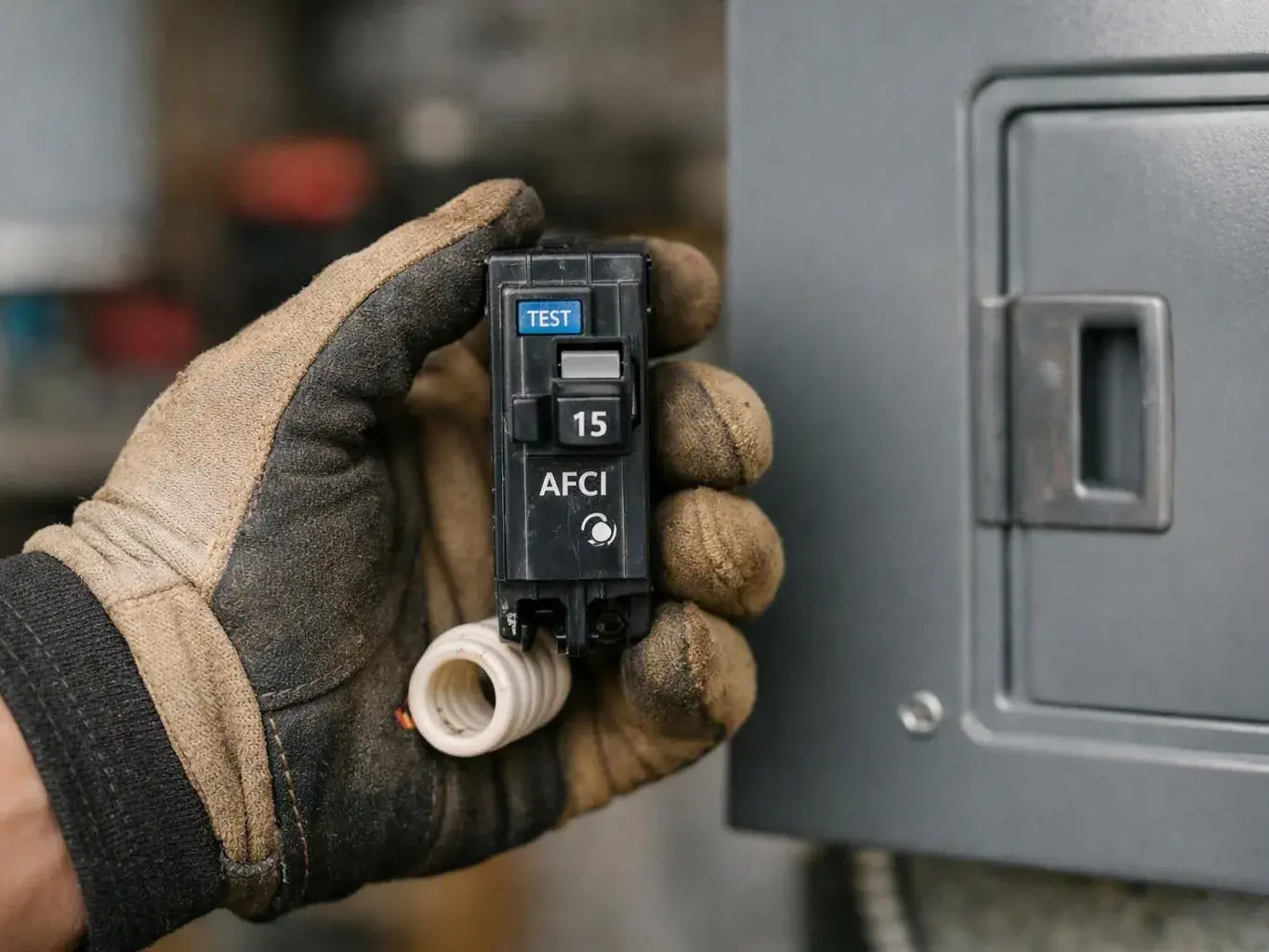
Ampere is the SI unit used to measure electric current. Current describes the movement of electric charge through a conductor, such as a copper wire. One ampere means one coulomb of electric charge passes a point in one second. The unit takes its name from André-Marie Ampère, a French physicist who studied electromagnetism.
Related glossary terms: Circuit Breaker, Load Calculation, Overcurrent Protection.
Electrical drawings and equipment labels usually show amperes with the capital letter A. People often say amp or amps in ordinary conversation. An ampere doesn't measure voltage, power, or energy. A 20 ampere circuit may have the same voltage as a 15 ampere circuit. The larger circuit's designed to carry more current. Its conductors and protection must have proper ratings.
How Ampere Works, Is Measured, or Is Used?
Current follows a basic relationship. Current equals charge divided by time. Electrical workers also use Ohm's law, written as I = V ÷ R. In this formula, I is current, V is voltage, and R is resistance. For example, a 120-volt load with 24 ohms of resistance draws 5 amperes. Real equipment may draw different current during startup, operation, or changing loads.
A technician measures current with a clamp meter around one conductor. They can also use a properly connected multimeter. A clamp meter senses the magnetic field created by current. It often allows a reading without disconnecting the wire. Equipment nameplates state running current, starting current, or a recommended circuit rating. These values help determine the required wire gauge, breaker size, and disconnecting means.
Electrical design treats current as a circuit load. The total load includes fixed equipment and connected devices. These devices may operate at the same time. A circuit breaker opens the circuit when current exceeds its permitted level. It acts when the condition lasts long enough to become dangerous. The breaker alone doesn't make an undersized conductor safe. The entire circuit must be designed as one system.
Why Ampere Matters?
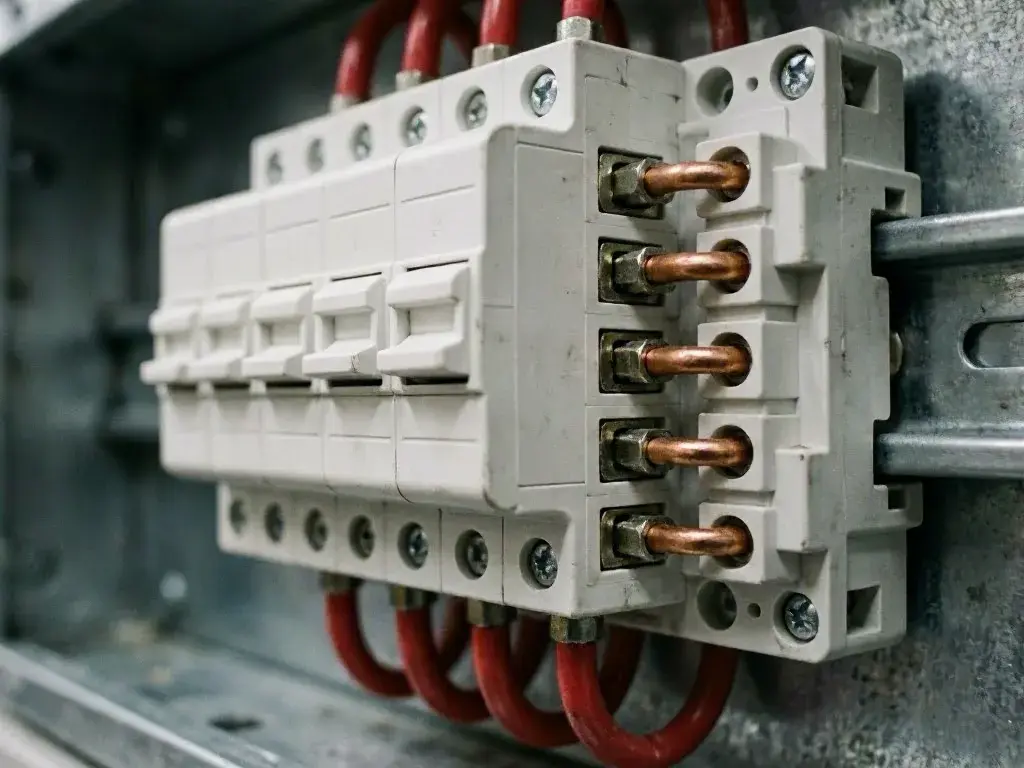
Current creates heat in conductors and connections. The heating effect rises sharply as current increases. This is why a loose terminal or undersized wire can become a fire hazard. Correct ampere ratings help protect conductors, receptacles, switches, motors, and other equipment from overheating. They also help prevent nuisance tripping. This can happen when a load exceeds the circuit design.
Amperes support decisions about service capacity and equipment selection. A household appliance may need a dedicated circuit. Its operating current may leave little capacity for other loads. A large motor or electric vehicle charger may also draw substantial current. It may require specific conductors, protection, and installation methods. The nameplate rating is a starting point. It isn't a substitute for a complete load calculation.
When Ampere Matters Most?
Ampere values matter whenever you add equipment, replace a panel, or troubleshoot a tripping breaker. They also matter when you inspect older wiring. Compare the measured current with the equipment nameplate and circuit rating. A breaker that trips repeatedly may indicate overload, a short circuit, or a ground fault. It may also indicate a failing device. Resetting it again and again can leave the hazard unresolved.
Current also matters during code checks and safety inspections. The conductor, breaker, receptacle, disconnect, and equipment must work together. They must meet the required rating. Watch for warm outlets, discoloration, buzzing, burning odors, flickering lights, or unexpected voltage changes. These signs can point to excessive current or a loose connection. They may also point to another electrical fault needing prompt investigation.
How to Evaluate Ampere?
- Check whether the equipment nameplate lists running current, starting current, or a required circuit rating.
- Compare the circuit ampere rating with the conductor size and breaker rating.
- Measure current under normal operation and during equipment startup when appropriate.
- Look for warm receptacles, discoloration, buzzing, or repeated breaker trips.
- Confirm that the total calculated load fits the available service and circuit capacity.
Related Concepts Compared
Ampere vs. Volt
A volt measures electrical potential difference, often described as electrical pressure. An ampere measures the current flowing through the circuit.
Ampere vs. Watt
A watt measures electrical power. In a simple direct-current circuit, watts equal volts multiplied by amperes.
Ampere vs. Coulomb
A coulomb measures a quantity of electric charge. An ampere describes the rate at which that charge moves.
Ampere vs. Ampacity
Ampacity is the maximum current a conductor can carry continuously under stated conditions. An ampere is the unit used to express that current.
Expert Note
A nameplate ampere value may describe normal running current rather than startup demand. Motors, compressors, and transformers can draw a short surge, so circuit selection should account for equipment instructions and applicable electrical code requirements.
Common Mistakes or Myths About Ampere
- Treating amperes as a measure of voltage or electrical power.
- Installing a larger breaker without confirming the conductor's ampacity.
- Assuming a breaker rating shows the current that a circuit normally uses.
- Ignoring startup current from motors, compressors, or transformers.
- Resetting a repeatedly tripping breaker without finding the cause.
Ampere in Practice: A Real-World Example
A 1,200-watt heater operating on a 120-volt circuit draws about 10 amperes. A 15-ampere circuit may support that load only when other connected loads keep the total within its permitted capacity.
Sources & Further Reading on Ampere
- Bureau International des Poids et Mesures, The International System of Units
Related Terms
Circuit Breaker
Circuit Breaker is an automatic electrical switching device that stops current when a circuit draws too…
Load Calculation
Load Calculation is a method for determining how much electrical power a building, panel, or circuit…
Overcurrent Protection
Overcurrent Protection is a safety method that limits electrical current when a circuit carries more amperage…
Wire Gauge
Wire Gauge is a standardized measurement of a conductor’s diameter and electrical capacity. The American Wire…
Electrician Pittsburgh
Have Questions About Ampere?
Contact Electrician Pittsburgh for practical guidance on Ampere and related 24 hour electrician work in Pittsburgh.