
What is Breaker Panel?
Breaker Panel is the enclosure that receives electricity from a utility service and distributes it through individual branch circuits. The panel contains circuit breakers that open when current exceeds a circuit’s safe rating. A breaker panel also provides connection points for neutral and grounding conductors, helping protect wiring, equipment, and people from electrical faults.
Quick Facts About Breaker Panel
Category
Electrical distribution equipment
Used for
Distributing and disconnecting branch circuits
Common confusion
A breaker panel is not the same as a circuit breaker.
Also called
Electrical panel, Breaker box
Often discussed with
Electrical Troubleshooting, Electrical Code Corrections
Key Takeaways About Breaker Panel
- Circuit breakers protect branch-circuit wiring from overloads and short circuits.
- The panel separates a building’s electrical load into labeled circuits.
- Panel capacity depends on service rating, bus design, breaker compatibility, and load calculations.
- Repeated trips, heat, buzzing, or burning odors require prompt electrical evaluation.
Understanding Breaker Panel
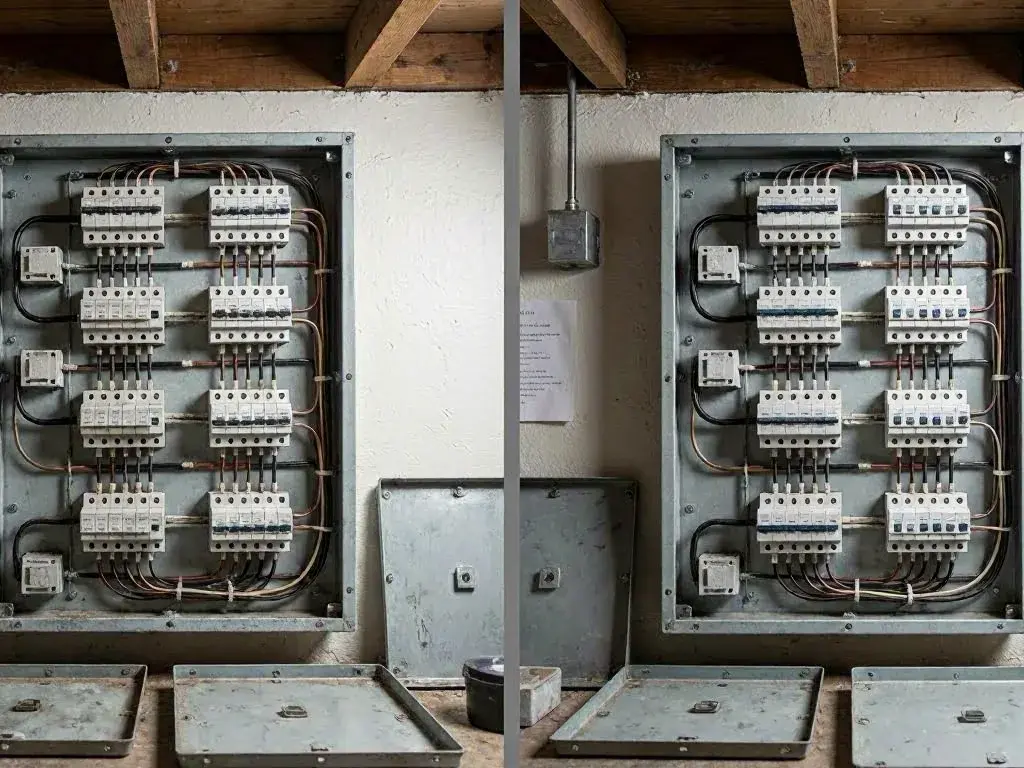
Breaker Panel is a metal or approved nonmetallic enclosure. It houses the main disconnect, branch-circuit breakers, bus bars, neutral connections, and grounding connections. It receives power from the utility service or another upstream source. It then sends power to lighting, receptacles, appliances, heating equipment, and other loads. A residential panel may serve a small apartment or single-family home. It may also serve a larger dwelling with several subpanels.
Related glossary terms: Circuit Breaker, Electrical Panel, Load Calculation.
The panel doesn't create electricity. It doesn't make a circuit safe under every condition. Its circuit breakers match the ampere rating of connected conductors and equipment. A breaker trips when excessive current heats its internal mechanism. A fault can also cause a magnetic trip on many breaker types. Proper labeling, clear working space, secure terminations, and compatible equipment help the panel operate as designed.
How Breaker Panel Works, Is Measured, or Is Used?
Breaker Panel operation begins at the incoming service conductors. Power reaches the main breaker or service disconnect. It then flows across energized bus bars to individual circuit breakers. Each breaker sends power through a branch circuit. The neutral conductor carries normal return current. The grounding path carries fault current toward the source.
Electricians evaluate a panel by its service rating, bus rating, and available circuit spaces. They also check the breaker type and calculated demand. A 200-amp service rating describes the maximum service capacity. This rating follows the applicable installation rules. It doesn't mean every connected appliance can run at 200 amps continuously. A load calculation considers expected demand from heating, cooling, cooking, and water heating. It also considers motors, receptacles, and other equipment. Electricians check this demand before adding circuits or large loads.
Panels also differ by function. A main panel usually contains the service disconnect. It also contains the bonding arrangement allowed at the service location. A subpanel receives power from an upstream panel. It normally keeps neutral and equipment grounding conductors separated. An AFCI or ground fault circuit interrupter function may be built into a breaker. The circuit location and equipment may require that protection.
Why Breaker Panel Matters?
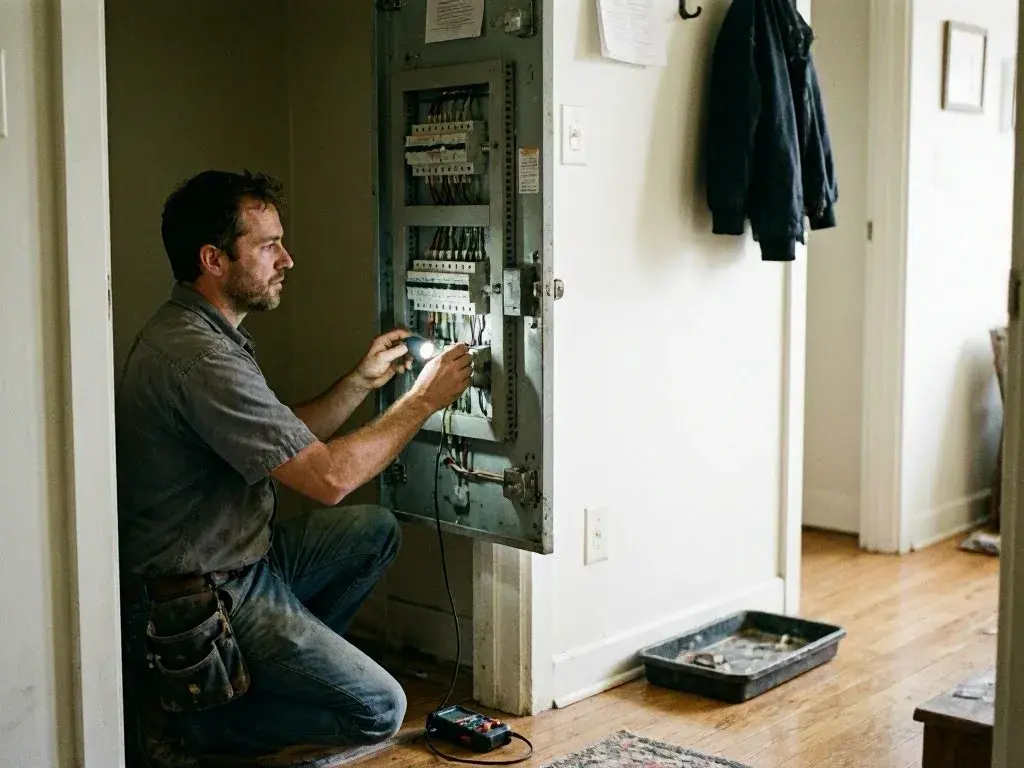
Breaker Panel condition affects electrical safety, reliability, and future capacity. Loose terminations can create heat. Corrosion can increase resistance at connections. An overloaded panel may trip often. A breaker that never trips can't protect a circuit. This can happen with the wrong rating or incompatible device.
A well-organized panel makes troubleshooting faster. It also reduces the chance of disconnecting the wrong circuit. Accurate labels help during emergencies, maintenance, generator connection, and equipment installation. Scorch marks, melted insulation, or crackling sounds need prompt attention. Repeated trips or a persistent burning smell also need prompt attention.
When Breaker Panel Matters Most?
Breaker Panel capacity becomes important before installing an electric vehicle charger, heat pump, or hot tub. It also matters before installing an air conditioner, electric range, or standby generator. The equipment may need a dedicated circuit or a larger feeder. It may also need a revised load calculation. Adding breakers without checking the service rating can create an unsafe installation. Adding breakers without checking available spaces can also create danger.
Panel evaluation also matters during home renovations and property purchases. It matters during insurance reviews and electrical code corrections. Older fuse boxes, damaged enclosures, and double-tapped terminals can signal needed repairs. Missing knockouts and obsolete breaker types can also signal a need for replacement. A replacement panel must match the service conductors and grounding system. It must also match the enclosure location and local authority requirements.
How to Evaluate Breaker Panel?
- Check the service rating and compare it with a current load calculation.
- Confirm that each breaker matches the panel manufacturer, circuit conductor, and permitted ampere rating.
- Look for heat damage, corrosion, loose covers, missing spaces, and exposed openings.
- Verify that circuit labels identify the actual rooms, equipment, or receptacles served.
- Ask whether recent additions require AFCI, GFCI, grounding, or permit compliance checks.
Related Concepts Compared
Breaker Panel vs. Circuit Breaker
A circuit breaker is one protective switching device inside a breaker panel. The panel is the complete enclosure and distribution assembly.
Breaker Panel vs. Electrical Panel
Electrical panel is a broader term that can describe breaker panels, fuse panels, and other distribution enclosures. A breaker panel specifically uses circuit breakers.
Breaker Panel vs. Fuse Box
A fuse box protects circuits with one-time-use fuses. A breaker panel uses resettable circuit breakers. Although a tripped breaker still requires investigation when trips repeat.
Breaker Panel vs. Panel Upgrade
A panel upgrade is a project that replaces or changes distribution equipment to add capacity, improve protection, or correct unsafe conditions. It is not another name for the panel itself.
Expert Note
A higher ampere rating does not automatically create more usable capacity. The service conductors, meter equipment, bus bars, grounding system, and calculated demand must all support the proposed load.
Common Mistakes or Myths About Breaker Panel
- Assuming unused breaker spaces prove that the service has spare capacity.
- Installing a larger breaker to stop trips without checking conductor size.
- Mixing breakers from different manufacturers without confirming panel compatibility.
- Treating a warm or buzzing panel as normal operating noise.
- Using a subpanel as if it were the service disconnect.
Breaker Panel in Practice: A Real-World Example
A homeowner wants to install a 48-amp electric vehicle charger. The existing breaker panel has open spaces, but the service load calculation shows limited capacity. An electrician may recommend load management, a dedicated circuit with approved protection, or a panel upgrade after checking the service equipment.
Sources & Further Reading on Breaker Panel
Related Terms
Circuit Breaker
Circuit Breaker is an automatic electrical switching device that stops current when a circuit draws too…
Electrical Panel
Electrical Panel is the enclosure that receives electricity from a service utility and distributes it through…
Load Calculation
Load Calculation is a method for determining how much electrical power a building, panel, or circuit…
Overcurrent Protection
Overcurrent Protection is a safety method that limits electrical current when a circuit carries more amperage…
Electrician Pittsburgh
Have Questions About Breaker Panel?
Contact Electrician Pittsburgh for practical guidance on Breaker Panel and related 24 hour electrician work in Pittsburgh.