
What is Electrical Panel?
Electrical Panel is the enclosure that receives electricity from a service utility and distributes it through branch circuits. The panel contains circuit breakers or fuses, bus bars, neutral connections, and grounding connections. Each protective device limits current to help prevent wire damage, overheating, fire, and electric shock during electrical faults.
Quick Facts About Electrical Panel
Category
Electrical distribution and overcurrent protection
Used for
Distributing power to branch circuits
Measured by
Service amperage, voltage, and circuit capacity
Common confusion
A panel is not the same as a single circuit breaker.
Also called
Breaker panel, Service panel
Often discussed with
Electrical Troubleshooting, Electrical Code Corrections
Key Takeaways About Electrical Panel
- The panel routes utility power to lighting, receptacle, appliance, and equipment circuits.
- Circuit breakers trip when current exceeds a circuit’s safe rating.
- Panel capacity depends on service rating, breaker spaces, and the calculated electrical load.
- Warmth, burning odors, buzzing, corrosion, or repeated trips require prompt evaluation.
- Panel work often requires a permit and must follow the adopted electrical code.
Understanding Electrical Panel
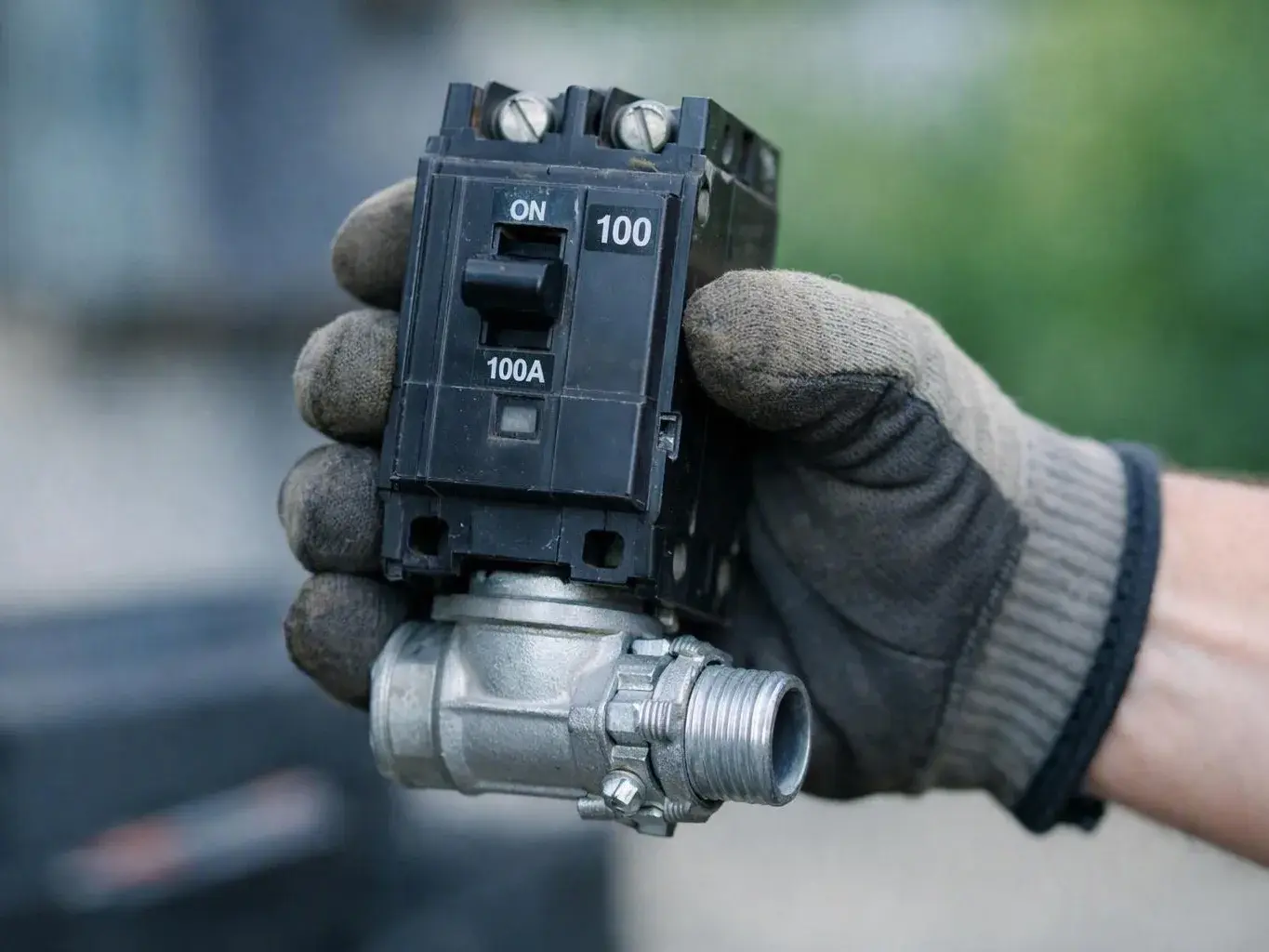
An Electrical Panel is a metal or approved nonmetal enclosure. It organizes a building’s electrical distribution. Power enters from the utility service through the service disconnect. It reaches the panel’s bus bars. Individual circuit breakers send power to branch circuits. These circuits serve lights, receptacles, appliances, and fixed equipment.
Related glossary terms: Breaker Panel, Circuit Breaker, Load Calculation.
Most panels contain a main breaker, branch breakers, neutral terminals, and grounding terminals. The main breaker can disconnect power to the panel. Service equipment may have separate disconnecting means. A panelboard protects conductors from excessive current. It doesn't correct every electrical problem. A breaker may trip because of an overload, short circuit, ground fault, or failing equipment.
How Electrical Panel Works, Is Measured, or Is Used?
Electricians identify a panel by its service rating, voltage, number of spaces, and listed breaker types. A residential service may be rated at 100, 150, or 200 amperes. The correct rating depends on a load calculation. That calculation considers fixed equipment, heating, cooling, cooking appliances, general lighting, receptacles, and future demand. Panel voltage and available fault current also affect equipment selection.
During normal operation, current travels from the energized bus bar through a breaker. It then enters a branch-circuit conductor. The circuit returns through a neutral conductor when the load requires one. The grounding path carries fault current back to the source. The protective device can then open quickly. An electrician may inspect breaker compatibility, conductor size, torque, labeling, and clearances. They may also inspect neutral and grounding conductor separation.
- A breaker rating must match the circuit conductors and equipment requirements.
- Unused spaces don't automatically mean the service has spare capacity.
- Two-pole breakers commonly supply 240-volt loads. Single-pole breakers commonly supply 120-volt loads.
Why Electrical Panel Matters?

The panel affects safety, reliability, and the ability to add electrical equipment. An overloaded service can cause nuisance trips, voltage problems, or excessive heating at connections. A damaged enclosure, loose termination, corrosion, or incorrect breaker can increase arcing and fire risks. Correct labeling helps people disconnect the right circuit during maintenance or an emergency.
Panel condition matters during renovations, property purchases, insurance reviews, and equipment additions. A new heat pump, electric range, workshop, or electric vehicle charger may require a load review. It may not need a simple breaker replacement. Replacing a panel with a larger model doesn't increase utility service capacity. The service entrance and approved equipment must also support the change.
When Electrical Panel Matters Most?
Panel evaluation becomes urgent after repeated breaker trips, flickering lights, burning smells, crackling sounds, visible heat damage, water entry, or a breaker that won't reset. Fuse boxes, obsolete equipment, recalled equipment, and panels with signs of corrosion may need special review. Don't remove the dead front or touch exposed parts. Energized components can remain live even when a branch breaker is off.
Panel work also matters before adding high-demand loads or correcting code issues. The electrician should confirm the service rating, calculate demand, inspect grounding and bonding, and verify breaker listings. The electrician should also obtain required permits. In Pittsburgh, PA, local permitting and inspection requirements can affect panel replacements, service changes, and other alterations. Records should match the completed installation.
How to Evaluate Electrical Panel?
- Read the service rating on the panel label and compare it with the calculated load.
- Check for repeated trips, heat marks, corrosion, buzzing, odors, or damaged breaker handles.
- Confirm every breaker and conductor has the correct rating and approved compatibility.
- Verify circuit labels identify the areas and equipment each breaker controls.
- Ask whether the proposed work requires a permit, inspection, or utility service change.
Related Concepts Compared
Electrical Panel vs. Breaker Panel
Breaker panel is a common name for an electrical panel that uses circuit breakers. Electrical panel is the broader term and can also describe equipment that includes fuses or other distribution components.
Electrical Panel vs. Fuse Box
A fuse box protects circuits with one-time fuses that melt when current becomes excessive. An electrical panel commonly uses resettable circuit breakers, although some older panels contain fuses.
Electrical Panel vs. Service Disconnect
The service disconnect is the device that disconnects power from the building’s service equipment. An electrical panel may contain the disconnect, but a separate disconnect can also serve that purpose.
Expert Note
A larger panel does not automatically provide more usable power. Before adding breakers, verify the service rating, load calculation, feeder size, grounding, and equipment listing. Space for a breaker and capacity for its load are separate questions.
Common Mistakes or Myths About Electrical Panel
- Assuming open breaker spaces prove that the panel can support another large load.
- Replacing a tripping breaker with one that has a higher ampere rating.
- Mixing breakers that are not listed for the panel.
- Treating repeated trips as a nuisance instead of a warning.
- Removing the panel cover without confirming that all internal parts are de-energized.
Electrical Panel in Practice: A Real-World Example
A homeowner plans to add an electric range and a 240-volt workshop heater. The existing panel has two open spaces, but an electrician still checks the service rating and load calculation before adding circuits. The review may show that a service upgrade is necessary instead of a simple breaker installation.
Sources & Further Reading on Electrical Panel
Related Terms
Breaker Panel
Breaker Panel is the enclosure that receives electricity from a utility service and distributes it through…
Circuit Breaker
Circuit Breaker is an automatic electrical switching device that stops current when a circuit draws too…
Load Calculation
Load Calculation is a method for determining how much electrical power a building, panel, or circuit…
Overcurrent Protection
Overcurrent Protection is a safety method that limits electrical current when a circuit carries more amperage…
Electrician Pittsburgh
Have Questions About Electrical Panel?
Contact Electrician Pittsburgh for practical guidance on Electrical Panel and related 24 hour electrician work in Pittsburgh.