
What is Fuse Box?
Fuse Box is an electrical enclosure that holds fuses protecting branch circuits from excessive current. Each fuse contains a metal element that melts when current exceeds its rating, opening the circuit and stopping power flow. Fuse boxes were common in older homes before circuit breaker panels became the usual choice for residential electrical systems.
Quick Facts About Fuse Box
Category
Overcurrent protection equipment
Used for
Protecting electrical branch circuits
Common confusion
A fuse box is not the same as a breaker panel
Also called
Fuse panel, Fused electrical panel
Often discussed with
Electrical Troubleshooting, Electrical Safety Inspections
Key Takeaways About Fuse Box
- A fuse opens a circuit by melting when current exceeds its rated limit.
- Fuse ratings must match the circuit wiring and equipment requirements.
- Replacing a blown fuse does not correct the overload or short circuit.
- Many older fuse boxes lack the capacity and features expected in modern homes.
Understanding Fuse Box
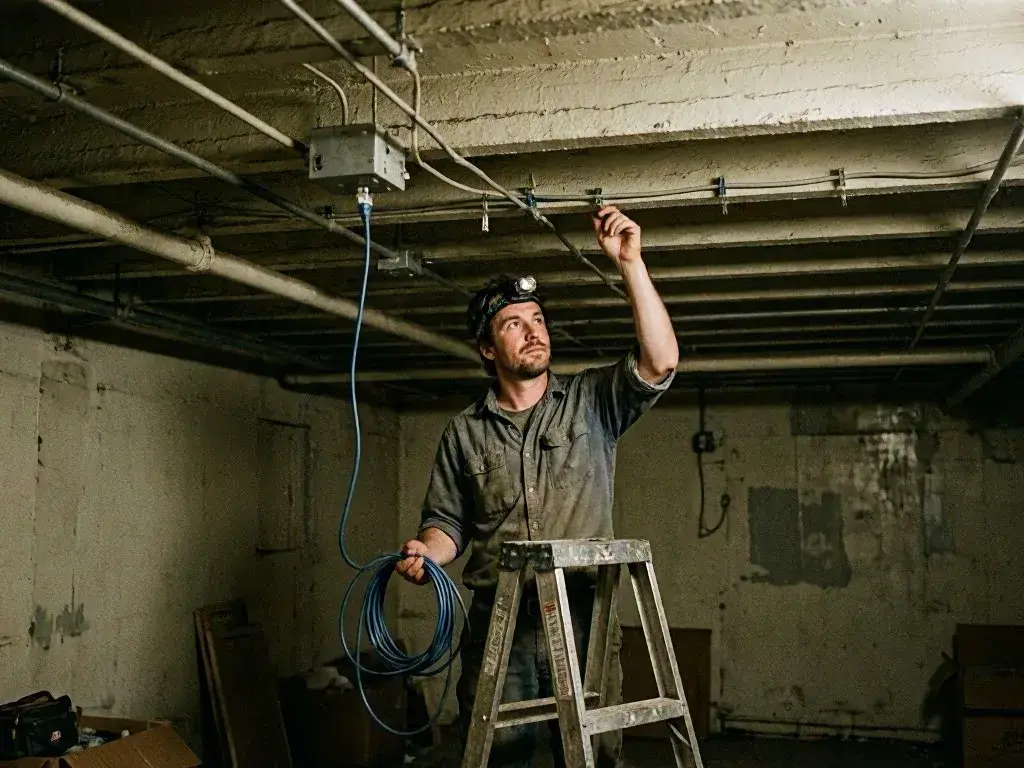
Fuse Box is an enclosure that contains fuses for electrical circuits. A fuse protects conductors by opening the circuit when current gets too high. Older homes often placed the box near an entry, basement, or utility area. One fuse served each branch circuit.
Related glossary terms: Breaker Panel, Circuit Breaker, Overcurrent Protection.
A fuse contains a metal strip or link. The link has a set rating. Excess current heats the link until it melts. This stops electricity from reaching the connected wiring. The fuse then needs replacement. A circuit breaker can usually be reset after fixing the problem.
Fuse boxes vary by design, age, and rating. Common types include screw-in plug fuses for lights and receptacles. Cartridge fuses serve larger loads. Time-delay fuses serve equipment with a brief starting surge. The enclosure may also contain a neutral bar. It may include grounding connections and service conductors.
How Fuse Box Works, Is Measured, or Is Used?
Each fuse has an ampere rating. This states the current it can carry before opening. A 15-ampere fuse isn't interchangeable with a 20-ampere fuse. The larger fuse might prevent repeated outages. The circuit wires, terminals, and equipment must support the selected rating.
Fuse operation depends on current, resistance, and heat. A circuit creates extra heat when it carries too much current. This heat affects the fuse element and wiring. A fuse may open because of an overload. Too many high-wattage devices can cause an overload. A short circuit creates a very low-resistance path.
Safe use requires a direct replacement with the same type and rating. First, disconnect the equipment. Then identify the opened fuse and inspect for damage. Install the specified replacement only after finding the cause. An oversized fuse defeats overcurrent protection. Improvised wire or a penny can also defeat protection. These actions can start a fire.
Why Fuse Box Matters?
A working fuse box limits damage when a circuit draws unsafe current. It protects building wiring from overheating. This helps reduce insulation damage and electrical fire risks. It also gives you useful information. A blown fuse identifies a circuit that needs attention.
Older fuse systems can limit modern electrical loads. Air conditioners, electric ranges, heat pumps, computers, and electric vehicle chargers may need more capacity. An older service might not provide enough capacity. A load calculation checks the total electrical demand. A conductor inspection checks the wiring. A review of the service rating helps guide the next step. Repairs, rewiring, or a panel upgrade may be needed.
When Fuse Box Matters Most?
Pay close attention when a fuse opens repeatedly. Also watch for heat, burnt smells, or socket discoloration. Flickering lights, warm receptacles, buzzing, and damaged insulation signal electrical trouble. These signs can come from an overloaded circuit. They can also come from a loose connection or failing fuse holder. A short circuit can cause these signs too.
Fuse box condition matters during remodeling, property purchase, insurance review, and code corrections. A replacement decision should consider available space and service capacity. It should also consider grounding and conductor condition. Required protection may include GFCI or AFCI devices. A licensed electrician can test the system. They can identify work that needs a permit under local rules.
How to Evaluate Fuse Box?
- Verify every fuse rating against the circuit conductor size and equipment load.
- Look for heat damage, loose fuse sockets, corrosion, burning odors, or cracked insulation.
- Check whether the service rating supports major loads added after the original installation.
- Confirm that grounding and neutral connections are present, secure, and correctly arranged.
- Ask whether local code requires GFCI, AFCI, or other protection during alterations.
Related Concepts Compared
Fuse Box vs. Breaker Panel
A breaker panel uses resettable circuit breakers instead of replaceable fuses. Both devices protect circuits from excessive current, but their designs and maintenance steps differ.
Fuse Box vs. Circuit Breaker
A circuit breaker is an individual resettable overcurrent device. A fuse is a one-time device that opens when its internal element melts.
Fuse Box vs. Electrical Panel
Electrical panel is a broad term for an enclosure that distributes power and houses protective devices. A fuse box is one older type of electrical panel.
Expert Note
Do not judge a fuse box by appearance alone. A clean enclosure may still have an undersized service, poor grounding, or damaged fuse contacts. Repeated fuse failures usually point to a circuit problem, not a need for a larger fuse.
Common Mistakes or Myths About Fuse Box
- Installing a fuse with a higher ampere rating to stop repeated outages.
- Replacing a blown fuse without finding the overload or short circuit.
- Using pennies, foil, wire, or other objects to bypass fuse protection.
- Assuming every fuse box can support modern heating, cooling, or charging equipment.
Fuse Box in Practice: A Real-World Example
A 15-ampere fuse opens whenever a homeowner runs a portable heater and vacuum on the same circuit. Replacing it with a 20-ampere fuse would increase fire risk if the wiring is rated for only 15 amperes. The safer fix is to reduce the load or have the circuit evaluated.
Sources & Further Reading on Fuse Box
- National Fire Protection Association, Electrical Safety
- Electrical Safety Foundation International, Fuses and Circuit Breakers
Related Terms
Breaker Panel
Breaker Panel is the enclosure that receives electricity from a utility service and distributes it through…
Circuit Breaker
Circuit Breaker is an automatic electrical switching device that stops current when a circuit draws too…
Overcurrent Protection
Overcurrent Protection is a safety method that limits electrical current when a circuit carries more amperage…
Electrical Panel
Electrical Panel is the enclosure that receives electricity from a service utility and distributes it through…
Electrician Pittsburgh
Have Questions About Fuse Box?
Contact Electrician Pittsburgh for practical guidance on Fuse Box and related 24 hour electrician work in Pittsburgh.